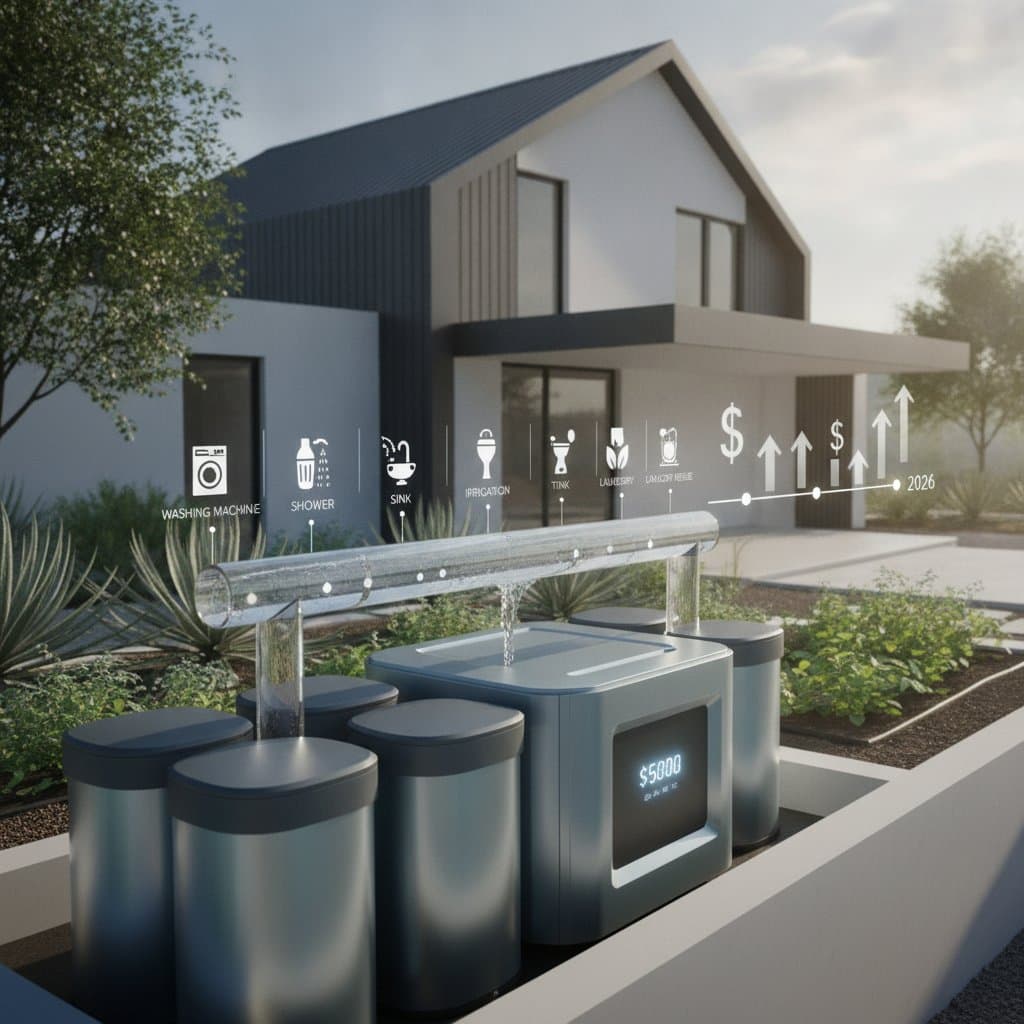
Greywater Costs and Permits for 2026 Homes
Homeowners increasingly seek ways to reduce utility expenses while embracing sustainable practices. Greywater systems capture water from sources such as showers, sinks, and laundry appliances, then redirect it for uses like landscape irrigation or toilet flushing. Grasping the nuances of greywater costs and permits proves essential for those contemplating such installations in 2026, as these factors influence both initial outlays and ongoing efficiencies.
Understanding Greywater System Costs
Greywater systems vary widely in sophistication, from basic diversion setups to integrated plumbing solutions. Overall expenses hinge on factors like system scale, daily water throughput, and the extent of professional involvement. Homeowners must weigh these elements to align investments with household needs and local conditions.
DIY Greywater Costs
Individuals with basic skills can assemble straightforward systems at a fraction of professional rates. Essential expenditures cover:
- Materials: Expect $300 to $1,500 for items including PVC pipes, surge tanks, mulch basins, and basic filters.
- Tools: Standard plumbing supplies like wrenches and sealants often suffice, though a submersible pump might add $100 to $300.
- Time Investment: Experienced users complete assembly in 8 to 20 hours, spread over a weekend; novices face steeper learning curves and potential rework.
Such systems suit limited applications, particularly subsurface irrigation for non-edible landscapes, minimizing health risks from direct contact.
Professional Greywater Installation Costs
Engaging certified specialists guarantees adherence to codes and optimal performance. Services encompass:
- Initial Assessment: Experts evaluate plumbing layouts, greywater sources, and site drainage, often charging $200 to $500 for consultations.
- Labor Charges: Skilled work constitutes 40 to 60 percent of totals, with rates of $75 to $150 per hour.
- Specialized Components: Advanced setups include treatment tanks, UV disinfection units, and automated diverters, pushing costs from $2,000 to $10,000 for a typical four-person household.
These installations excel in reliability, especially for subsurface or indoor reuse scenarios.
Key Factors Affecting Pricing
Several variables shape final expenses:
- System Configuration: Passive gravity systems cost $500 to $2,000 but restrict use to sloped sites; powered variants with pumps range from $3,000 to $8,000 for versatile distribution.
- Household Scale: Larger families produce 50 to 100 gallons daily, necessitating robust storage and filtration that inflate budgets by 20 to 50 percent.
- Site-Specific Challenges: Poor drainage soils demand engineered leach fields, adding $1,000 or more.
- Regulatory Fees: Permit applications run $100 to $500, with inspections at $200 to $400.
- Ongoing Upkeep: Annual maintenance budgets of $100 to $300 cover filter replacements and pump servicing.
Anticipating these influences helps in budgeting accurately.
Long-Term Cost Implications of DIY Choices
Initial savings from self-installation appeal to many, yet flawed designs invite complications like bacterial growth or pipe failures. Remediation expenses frequently exceed $1,000, eroding early advantages. Professional oversight, though pricier at outset, delivers enduring durability and regulatory assurance.
DIY vs Professional: Making the Right Choice
Decisions between self-directed and expert-led projects rest on personal capabilities, scope, and jurisdictional rules. Each path presents distinct trade-offs in expense, reliability, and simplicity.
Advantages of DIY Greywater Systems
- Reduced upfront spending, often under $1,000 for modest designs.
- Tailored adaptations for specific garden zones or low-flow needs.
- Hands-on learning that builds confidence in home maintenance.
Limitations of DIY Greywater Systems
- Potential non-compliance with plumbing standards, risking fines up to $5,000.
- Elevated chances of pathogen exposure without certified filtration.
- Shorter operational life, averaging 5 to 10 years without expert tweaks.
Advantages of Professional Installations
- Full alignment with health and ecological guidelines.
- Incorporation of high-grade, warrantied equipment for 15 to 20 years of service.
- Minimized downtime from issues like blockages or inefficiencies.
Limitations of Professional Installations
- Elevated costs, starting at $3,000 for basic configurations.
- Scheduling constraints tied to contractor workloads.
- Extended timelines due to bureaucratic reviews, sometimes 4 to 8 weeks.
Assessing Skills and Required Tools
Those proficient in basic hydraulics and soil work can handle diverter valves and basin construction. Beginners benefit from professional guidance to navigate backflow preventers and pressure testing. Essential implements include trenchers, levels, and leak detectors, with safety gear mandatory.
Time Investment Overview
DIY efforts for a simple irrigation loop span 10 to 15 hours, allowing phased progress. Professional projects, including approvals, extend to 20 to 40 hours of on-site activity, coordinated across teams.
Common Greywater Questions Addressed
Industry professionals field these inquiries regularly, providing clarity on practical aspects.
What Constitutes Greywater?
This category encompasses rinse water from lavatories, bathing, and clothes washing. Blackwater from kitchens or restrooms remains unsuitable due to higher pathogen and nutrient loads.
What Is the Cost of a Standard Greywater System?
Basic diverters start at $400, while comprehensive setups with treatment reach $7,500, scaled to home size and features.
Is a Permit Required for Greywater Systems?
Plumbed connections demand approvals in 90 percent of U.S. jurisdictions; standalone garden diverters may qualify for exemptions.
Which Inspections Apply?
Authorities verify secure piping, overflow safeguards, and clear signage to segregate greywater from potable supplies.
Can Greywater Irrigate Edible Crops?
Direct contact with fruits or leaves poses risks; apply subsurface for root crops like carrots, avoiding overhead methods.
How Frequently Do Filters Require Cleaning?
Monthly checks suffice for light use, escalating to biweekly in hard-water areas to avert reduced flow.
What Maintenance Duties Arise?
Routine protocols involve valve lubrication, tank sediment removal, and pump diagnostics every three months.
Do Seasons Impact Operations?
Winter preparations include drain flushing to avoid ice damage; summer adjustments optimize evaporation rates.
How Do Detergents Affect Greywater?
Opt for phosphate-free formulas under 0.5 percent sodium to safeguard microbial soil balance.
Are Financial Incentives Available?
Utility providers in arid regions rebate up to 50 percent; federal tax credits cover energy-efficient components.
What Indicates an Unreliable Contractor?
Red flags encompass unlicensed status, pressure for quick decisions, or absence of greywater portfolio references.
How Durable Are Greywater Systems?
Properly maintained units endure 15 to 25 years, with modular parts easily upgraded.
Essential Pre-Installation Inquiries
Probe expected ROI through water audits, integration with existing fixtures, and post-install support protocols.
Step-by-Step Guide to Your Greywater Decision
1. Assess Your Household Needs
Quantify daily greywater output via meter readings and map irrigation targets, prioritizing high-evaporation zones.
2. Gauge Your Capabilities
Inventory tools and review local codes; if gaps exist in filtration knowledge, seek consultations early.
3. Compute Comprehensive Expenses
Tally materials at $500 to $2,000, labor at $1,500 to $5,000, and offsets like 30 percent annual bill reductions equating to $200 to $400 yearly savings.
4. Evaluate Potential Risks
Consider health hazards from unfiltered discharge, legal penalties for unpermitted work, and environmental impacts like soil salinization from improper surfactants.
5. Finalize Your Approach
Balance budget against expertise; prototype small-scale tests for DIY viability or solicit multiple bids for professional routes.
Project Preparation Essentials
- Verify zoning laws through municipal offices to preempt delays.
- Sketch piping routes, ensuring 2 percent slopes for gravity flow.
- Allocate 20 percent buffer in budgets for unforeseen site amendments.
- Coordinate inspector visits during key phases like tank placement.
- Secure work zones, protecting landscapes from excavation disruptions.
Achieving Water Efficiency Gains
Implementing greywater diversion cuts freshwater demands by 40 percent, yielding measurable returns on investment within three years. Homeowners realize not only fiscal relief but also contributions to broader conservation efforts, fostering resilient living spaces amid evolving climate challenges.