2026 Greywater Costs: Permits and Savings Essentials
Greywater recycling transforms everyday household wastewater into a valuable asset for irrigation and landscaping. As water scarcity concerns grow, more homeowners turn to these systems to lower utility bills and advance sustainable practices. To proceed effectively, evaluate the associated costs, navigate permit processes, and project long-term financial benefits.
Understanding Greywater System Costs
Costs for greywater systems fluctuate based on scale, intricacy, and configuration. A straightforward laundry-to-landscape arrangement incurs lower expenses compared to comprehensive whole-home setups that incorporate advanced filtration and multi-zone distribution.
DIY Greywater System Expenses
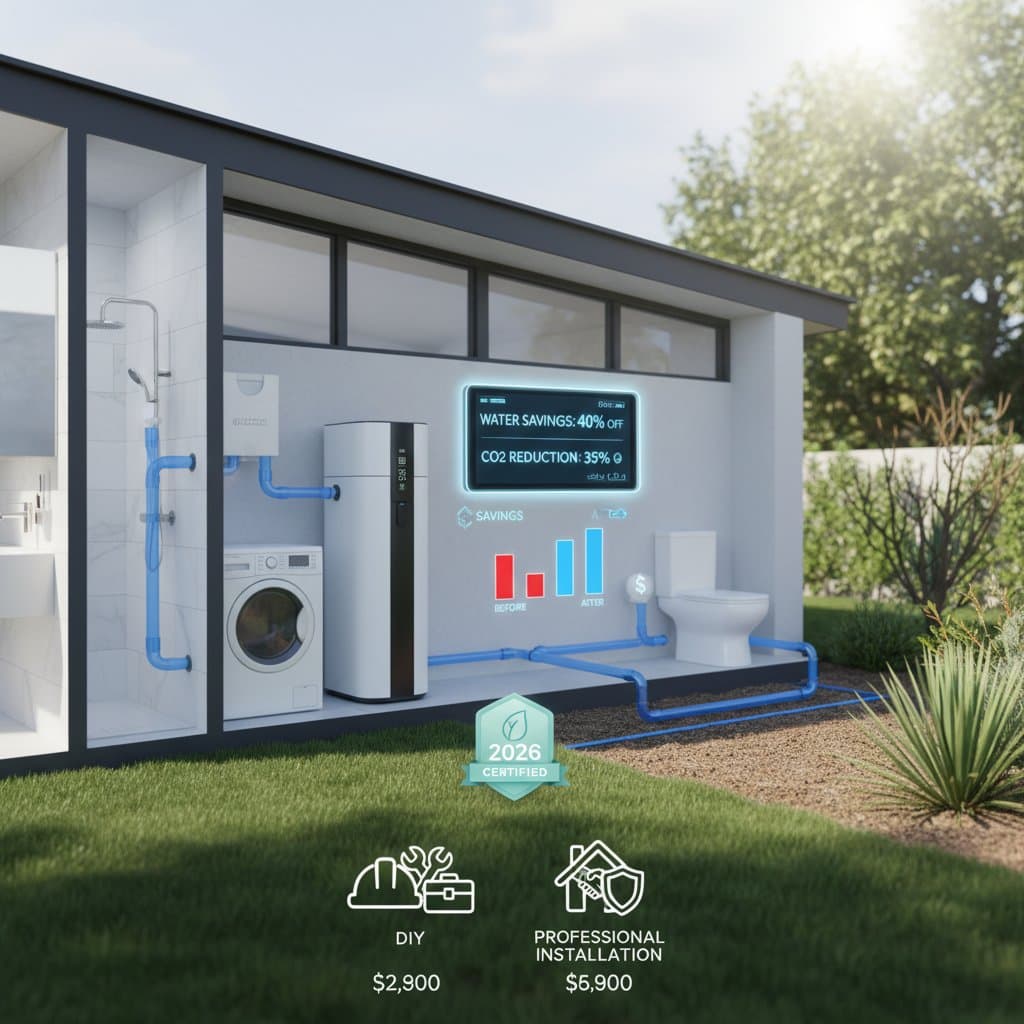
Individuals with foundational plumbing skills can assemble a DIY greywater system for a range from several hundred to several thousand dollars. Key outlays encompass:
- Diverter valves and connectors to reroute water from sources like sinks or washing machines
- Flexible hoses or PVC pipes for conveyance to irrigation areas
- Basic filtration components, particularly for subsurface drip applications
- Surge tanks or barrels to manage flow in expanded configurations
- Essential tools and protective equipment, including cutters, sealants, and gloves
This approach minimizes labor fees but requires meticulous design to prevent health risks or operational breakdowns. Improper grading of drainage lines or incorrect pipe placement may result in leaks, pooling water, or bacterial growth, all of which pose sanitation challenges.
Professional Installation Expenses
Engaging a licensed plumber or greywater expert generally ranges from several thousand dollars upward, influenced by site specifics and system sophistication. Such services often cover:
- Initial assessment and customized system blueprinting
- Structural plumbing alterations, including backflow safeguards
- Integrated filtration and treatment mechanisms
- Post-installation verification and fine-tuning
These installations adhere to prevailing building codes and health guidelines, reducing liability. Although initial investments exceed DIY efforts, eligibility for rebates or incentives frequently recoups a portion of the outlay.
Key Pricing Influences
Multiple elements shape the overall expenditure of a greywater project:
- Quantity of connected appliances: Integrating showers, multiple sinks, and laundry units escalates complexity and cost.
- Configuration variety: Irrigation-focused designs prove more economical than those permitting subsurface or limited indoor applications.
- Property terrain: Elaborate garden layouts or expansive grounds demand extended piping networks.
- Access constraints: Structures with restricted underfloor areas or concrete slabs demand specialized retrofitting techniques.
- Jurisdictional mandates: Fees for approvals and inspections differ across locales, with stricter areas imposing higher administrative burdens.
Homeowners achieve optimal returns by aligning upfront spending with enduring performance, particularly in regions facing elevated water rates.
DIY Versus Professional: Selecting the Optimal Path
The decision between self-installation and expert involvement hinges on technical proficiency, financial parameters, and reuse ambitions.
Advantages of DIY Approaches
- Reduced startup expenditures through elimination of service fees
- Adaptability for phased expansions and personalization
- Hands-on education in water conservation techniques
Limitations of DIY Methods
- Potential breaches of regulatory standards or structural failures
- Absence of formal guarantees or expert troubleshooting
- Extensive time investment in planning, assembly, and upkeep
Advantages of Professional Services
- Assurance of regulatory conformity and environmental safety
- Utilization of premium components and innovative layouts
- Consistent operation backed by manufacturer assurances
Limitations of Professional Services
- Elevated preliminary financial commitment
- Dependencies on contractor availability and project timelines
- Diminished scope for individual modifications
For endeavors linking numerous fixtures or exploring indoor reuse, expert intervention minimizes risks. Basic outdoor irrigation setups often suit DIY capabilities.
Essential Greywater Queries Addressed
What Savings Potential Exists for Homeowners?
Financial gains vary with the volume of conventional watering displaced. Typical reductions in water bills range from 20 to 40 percent following implementation.
Is a Permit Required for Installation?
Affirmative in most areas, particularly for integrations with household plumbing or powered elements. Exemptions may apply to uncomplicated laundry diversions that satisfy minimal safety criteria.
What Elements Comprise a Professional Setup?
Standard inclusions feature bespoke design, plumbing integrations, purification stages, and operational testing to confirm effective drainage and hygienic application.
Do Greywater Systems Pose Safety Concerns?
They remain secure under proper engineering. Sources should limit to light wastewater from lavatories, baths, and laundry; exclude commodes or food preparation areas due to elevated pathogen risks.
What Duration Involves the Installation Process?
Elementary configurations complete in one to two days, whereas intricate builds extend to a week, factoring in approvals and environmental variables.
What Upkeep Demands Arise?
Routine clearing of filters and valves occurs quarterly. Periodic examinations of conduits and emitters detect obstructions or sediment accumulation, preserving functionality.
Do Rebate Programs Exist?
Numerous regional water authorities provide incentives for eco-upgrades like greywater adoption. Consult local providers for active offerings and application procedures.
How Does Greywater Impact Vegetation?
Filtered variants nourish most species effectively. Refrain from application to root-contact edibles like leafy greens to mitigate contamination.
Is Storage of Greywater Advisable?
Brief retention in buffer vessels supports peak-demand scenarios, yet prolonged holding invites bacterial proliferation and unpleasant smells.
How Does Greywater Interact with Septic Infrastructure?
It lightens septic workloads by diverting flows, but direct inputs require jurisdictional clearance to avoid system overloads.
Step-by-Step Decision Framework
- Analyze current water patterns to identify high-impact recycling opportunities.
- Survey plumbing infrastructure and available space for components like reservoirs or lines.
- Solicit estimates from DIY resources and contractors to clarify financial scopes.
- Review municipal ordinances and secure necessary authorizations prior to alterations.
- Map distribution networks to optimize coverage and minimize waste.
Launching Your Greywater Initiative
Initiate by documenting your household's water profile through meter readings over a month. This baseline reveals irrigation dependencies and potential reuse volumes. Next, consult resources from water conservation agencies to align your vision with best practices.
Secure quotes from at least three professionals if opting for expertise, emphasizing their experience with local codes. For DIY pursuits, acquire detailed schematics from reputable guides to ensure structural integrity. Budget an additional 10 to 20 percent for unforeseen adjustments, such as soil amendments for optimal absorption.
Upon completion, monitor system performance via flow logs and bill comparisons to quantify returns. This ongoing evaluation refines efficiency and underscores the investment's role in resilient, water-smart living.