The True Cost of Installing a Greywater System
Greywater systems represent a practical addition to any sustainable home. Wastewater from daily activities such as bathing or laundering often flows unused into sewers. These systems capture and repurpose that water for irrigation or flushing, yielding financial savings and environmental benefits. Before proceeding, evaluate the full installation expenses, necessary permits, and suitability for personal installation.
Functions of a Greywater System
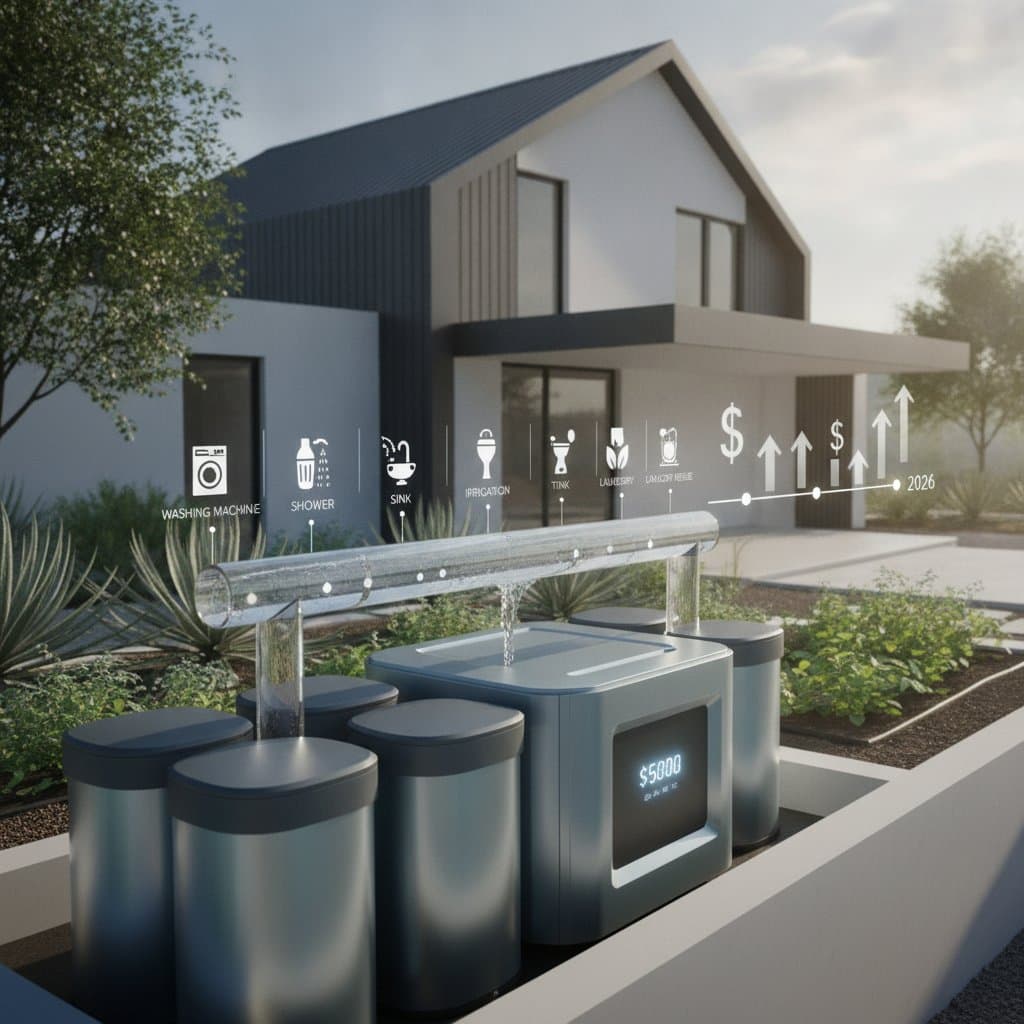
Greywater consists of water from sinks, showers, and washing machines, but excludes toilet or kitchen wastewater. The system collects this water, applies basic filtration, and redirects it for non-potable purposes. Common applications include:
- Landscape irrigation via drip or subsurface lines
- Toilet flushing through dedicated indoor connections
- Temporary storage in tanks ranging from 50 to 250 gallons
Basic setups recover 20 to 40 gallons daily, whereas comprehensive systems manage over 100 gallons.
Cost Overview
Expenses for greywater systems vary based on scale and complexity. Factors such as water volume and integration level influence the total investment.
| System Type | Description | Installed Cost Range | Ideal Application |
|---|---|---|---|
| Laundry-to-Landscape | Routes washing machine output directly to outdoor irrigation with basic filtration | $800 to $2,000 | Compact yards and straightforward DIY efforts |
| Single-Fixture | Gathers water from one sink or shower source | $1,500 to $3,000 | Moderate gardens or targeted reuse |
| Whole-House | Links multiple sources with advanced filtration and tanks | $5,000 to $15,000 | Complete site irrigation or new constructions |
| Greywater for Toilet Reuse | Incorporates indoor plumbing for flushing | $8,000 to $20,000 or more | Sophisticated eco-friendly residences |
Plumbing labor adds $70 to $120 hourly. Additional tasks like trenching or tank placement incur $500 to $2,000 extra.
Navigating Permit Requirements
Local regulations govern greywater installations, particularly those altering drain lines. Permits prove essential for systems involving indoor redirection.
Standard requirements encompass:
- Plumbing permits for drain modifications
- Environmental assessments to prevent groundwater risks
- Post-installation inspections verifying backflow safeguards and labeling
Certain areas exempt simple laundry-to-landscape systems from permits if output stays below 250 gallons daily and relies on gravity flow. Contact the local building authority prior to any plumbing alterations.
DIY Installation Versus Professional Services
Individuals skilled in PVC assembly and irrigation basics may handle a laundry-to-landscape system independently. Essential materials include:
- PVC pipe cutter
- 1-inch to 1.5-inch PVC pipes and fittings
- Ball valves for regulating flow
- Sediment filters or mesh screens
- Tools for trenching irrigation paths
Such a project remains under $1,000 with existing tools. However, connections to main drains or pump integrations demand licensed expertise. Improper setups risk leaks, foul smells, or health hazards from contamination.
Pitfalls to Sidestep
Water quality and site conditions shape effective designs. Steer clear of these frequent oversights:
- Incorporating kitchen or toilet effluent, which introduces unsafe pathogens; restrict to sinks, showers, and laundry.
- Neglecting filters, as debris like lint clogs emitters; install screens or mulch basins routinely.
- Excess irrigation leading to plant stress; fit diverter valves to alternate with potable water during wet periods.
- Omitting labels on all greywater lines as "non-potable" to satisfy codes.
- Forcing uphill flow without pumps; maintain a 2 percent downhill gradient for gravity operation.
Accessibility and Safety Features
These systems enhance home accessibility. For instance, burying irrigation lines 12 inches deep minimizes surface obstacles for those with limited mobility. Indoor configurations benefit from wall-mounted shutoff controls.
Key safety measures involve:
- 1-inch air gaps separating greywater from drinking water lines
- Backflow preventers at plumbing junctions
- Sealed tanks resistant to pests and UV degradation
Scenarios for Professional Involvement
Engage experts for projects requiring:
- Multi-fixture connections or internal pipe rerouting
- Tanks exceeding 200 gallons
- Pump or advanced filtration integration
- Certification for code adherence and future property sales
Specialists guarantee compliance and optimal performance.
Enduring Advantages
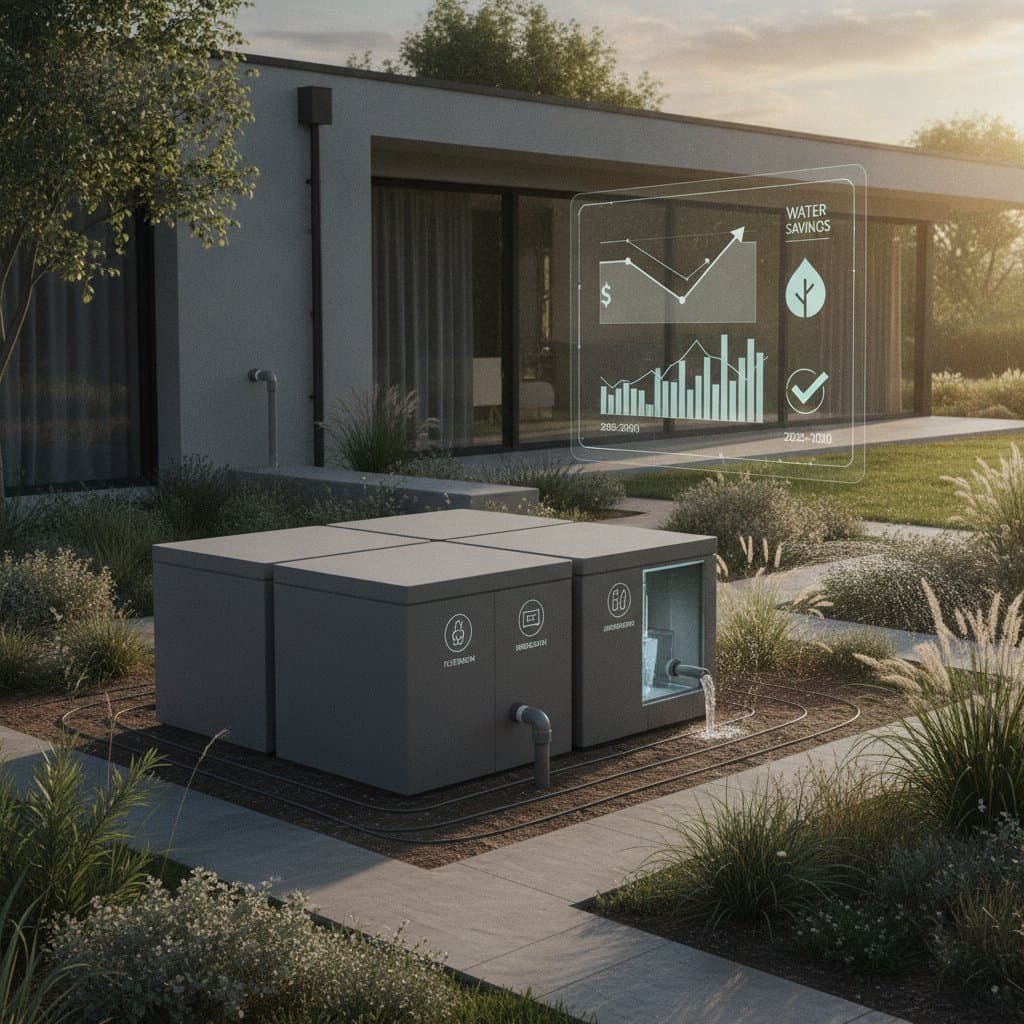
A functional greywater system cuts household water demand by 15 to 40 percent. In high-cost areas, annual savings reach $200 to $500. The nutrient content from soaps benefits landscaping.
Routine upkeep involves filter cleaning quarterly, seasonal line flushing, and valve inspections for blockages.
Steps to Implement Your System
Greywater installation advances both ecological responsibility and household efficiency. Begin with a modest laundry-to-landscape approach if plumbing experience is limited. Observe initial gains, then consult professionals for expanded whole-home solutions.