2026 Greywater Installation: Costs and Rebate Opportunities
Homeowners increasingly focus on efficient water use, storage, and reuse. Greywater systems provide a viable method to decrease utility expenses while advancing sustainable practices. Such installations lower water bills, irrigate landscapes, and preserve community water resources. With expanding rebates and incentives, the economic justification strengthens considerably.
This resource outlines expectations for greywater installation, associated costs, applicable rebates, and decisions regarding DIY or professional approaches.
Average Costs for Greywater Installation
Greywater system expenses vary based on scale, configuration, and filtration sophistication. A basic laundry-to-landscape setup may cost several hundred dollars for self-installation, whereas a comprehensive home system with pumps and advanced filtration can exceed several thousand dollars.
Typical Price Ranges
- Laundry-to-landscape systems: $500 to $2,500
- Whole-house systems: $5,000 to $15,000
- Filtration and storage add-ons: $800 to $3,000
- Professional design and permits: $300 to $1,500
These figures encompass equipment, piping, valves, filters, and initial labor. Expenses increase with requirements for trenching or significant plumbing modifications. When home plumbing proves accessible and landscapes lie close to greywater origins, installation simplifies and reduces costs.
A Los Angeles resident, highlighted in YouTube's Home Water Reuse Project, achieved approximately 25 percent savings on overall water bills following whole-house system installation. The owner recovered the investment within four years through consistent rebates and diminished utility consumption.
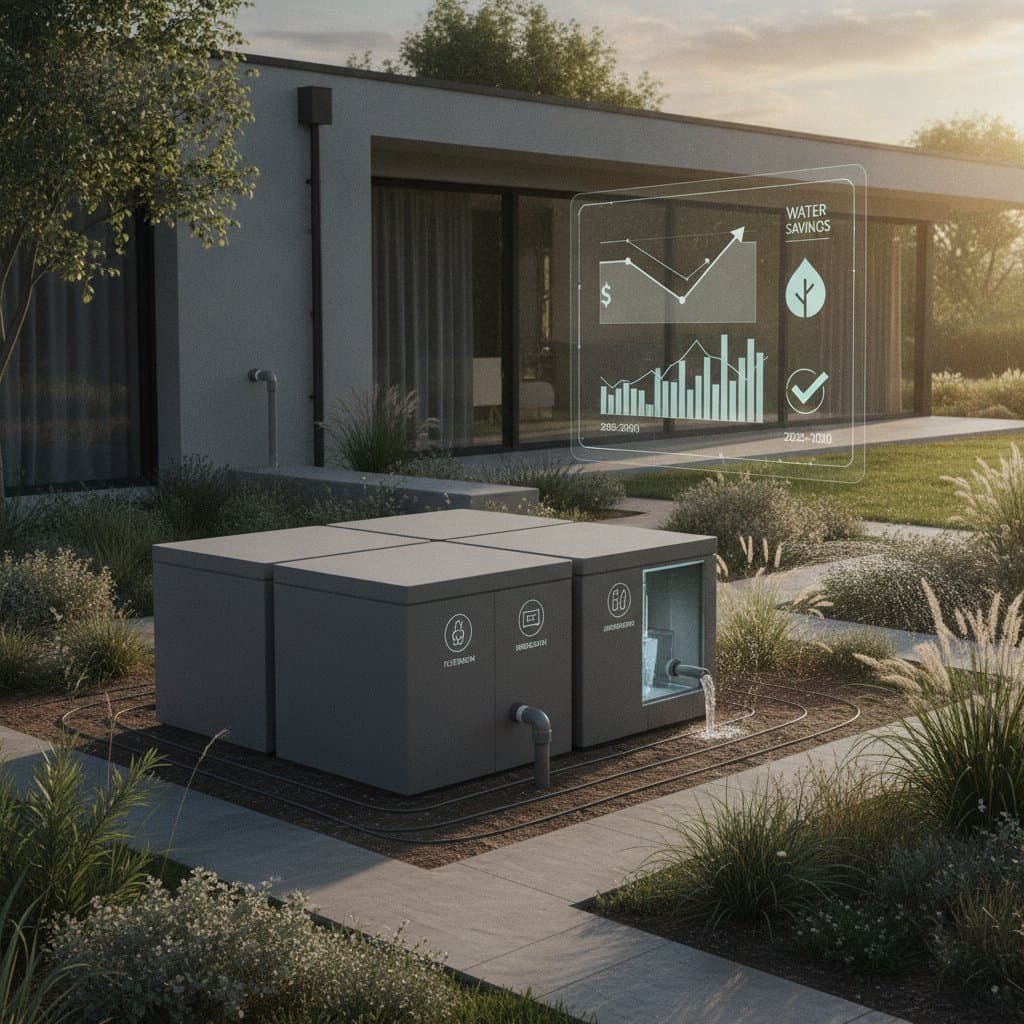
Key Components of a Greywater System
An effective system comprises interconnected elements that safely collect, filter, and dispense water.
- Collection lines: Gather greywater from showers, sinks, or washing machines.
- Diverter valve: Directs water alternately to sewer lines or the greywater network.
- Filtration unit: Eliminates lint, soap remnants, and particles prior to reuse.
- Distribution system: Channels water to irrigation areas or toilets.
- Storage tank (optional): Retains treated water for temporary storage.
Opt for durable components to avoid blockages and enhance performance. Manufacturers such as Aqua2Use and Water Wise supply modular kits that facilitate setup and ongoing care.
Cost Savings and Payback Period
Greywater systems typically diminish household water consumption by 20 to 40 percent, contingent on residence size and regional climate. For a monthly water bill of $100, monthly savings range from $20 to $40 post-installation. These reductions accumulate substantially over years.
Research disseminated on LinkedIn by a water efficiency specialist indicated that city dwellers with mid-tier systems recouped investments in five to seven years. Residents in arid regions attained payback more swiftly owing to elevated local water tariffs.
Factors Influencing Payback
- Water rates: Elevated tariffs accelerate recovery.
- Rebate amount: Substantial incentives compress timelines.
- System size: Compact systems achieve breakeven sooner.
- Maintenance needs: Consistent filter maintenance sustains optimal operation.
Calculate potential savings by multiplying average monthly water volume by the local rate, then applying estimated reductions. Numerous utilities furnish complimentary online tools for precise projections.
Maintenance and Upkeep
Sustaining greywater system efficiency demands regular attention. Clean filters every few months and inspect valves for leaks or accumulations. Flush storage tanks periodically to avert odors or sediment buildup.
Routine Maintenance Tips
- Examine filters and clean or replace them as required.
- Verify diverter valves ensure correct flow paths.
- Flush lines yearly to clear soap and mineral deposits.
- Select mild detergents to safeguard plant health.
- Observe irrigation zones for standing water or over-saturation.
Homeowners handle most tasks independently. Should flow diminish or odors arise, engage a specialist for prompt diagnostics.
Safety and Code Considerations
Municipal regulations govern greywater management to safeguard public health and aquifer integrity. Standard mandates involve subsurface application, avoidance of contact with consumable vegetation, and prevention of drainage onto adjacent lands.
Confirm system designs align with plumbing and ecological standards. Permits become necessary for multi-source connections or tank integrations.
Organizations like the Greywater Action network and local water conservation departments offer detailed compliance protocols.
Choosing the Right System for Your Home
System selection hinges on site configuration, family size, and consumption patterns.
For modest households, a laundry-to-landscape configuration yields solid benefits with reduced intricacy. This option suits regions with year-round irrigation needs.
For expansive sites, a whole-house arrangement maximizes savings. It supports irrigation across diverse zones and, with adequate filtration, indoor applications such as toilet flushing.
Assess irrigation requirements and plumbing ease. Consult a professional to align system specifications with property attributes.
Steps to Install and Maximize Benefits
Greywater systems represent a strategic investment yielding reduced expenses, vitalized landscapes, and ecological advantages. Integrate rebates, thoughtful planning, and diligent upkeep to minimize waste and bolster home durability.
Initiate by consulting your municipality's rebate repository and utility conservation initiatives. Obtain quotes from licensed installers and seek client testimonials. For DIY efforts, review schematic diagrams and participate in community sustainability sessions prior to acquiring components.
Post-installation, monitor usage across multiple billing periods to quantify savings. Leverage insights to refine irrigation timing or scale up the system.
Greywater reuse stands as a pragmatic enhancement for residences confronting escalating utilities. Through deliberate preparation and incentive utilization, diminish consumption, nurture greenery, and conserve regional supplies simultaneously.