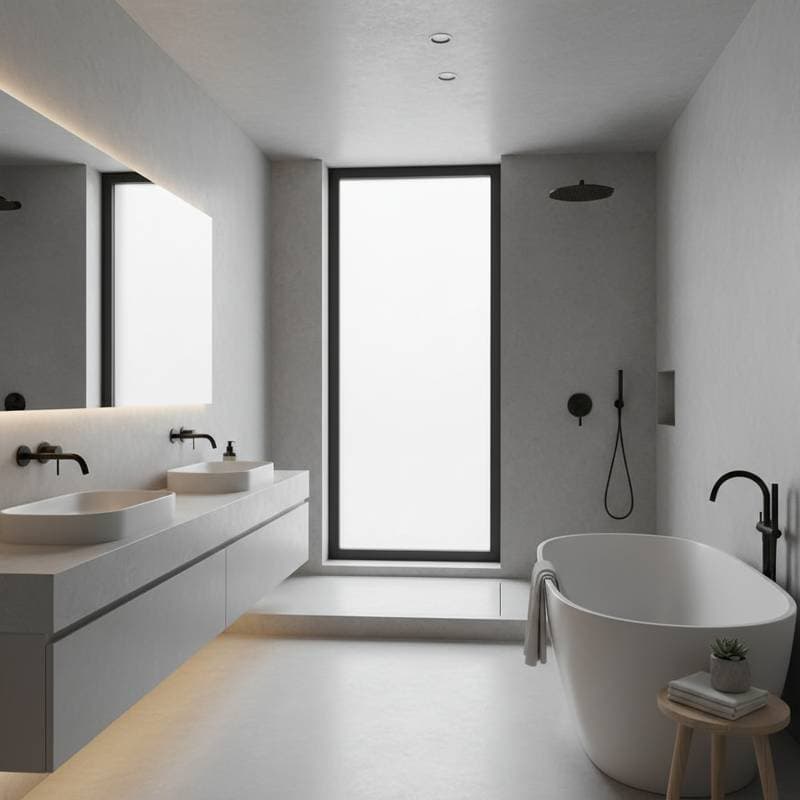
Microcement Bathroom Costs: $90 to $150 Per Square Foot in 2026
A seamless bathroom surface provides a modern appearance, simplifies cleaning, and promotes visual tranquility. Microcement achieves this effect more effectively than most other finishes. It forms a continuous layer over walls, floors, and even furniture, eliminating visible joints or grout lines. Before committing to microcement for the entire bathroom, homeowners require a thorough understanding of costs, influencing factors, and alignment with renovation objectives.
This guide details essential information for homeowners on microcement bathroom pricing. It covers costs per square foot, installation specifics, maintenance requirements, and scenarios where professional services justify the investment.
What Sets Microcement Apart
Microcement consists of a thin decorative coating composed of cement, fine aggregates, polymers, and color pigments. Applied in layers measuring 2 to 3 millimeters thick, it adheres to stable surfaces such as tile, plaster, or concrete. After sealing, the material becomes waterproof and exceptionally durable, rendering it suitable for moisture-prone environments.
The primary advantage lies in its seamless appearance. In contrast to tile, microcement eliminates grout lines that accumulate dirt or moisture. It supports a contemporary aesthetic compatible with minimalist or industrial designs. Homeowners frequently apply it to floors, walls, and integrated shower spaces to establish uninterrupted visual continuity.
Overview of Costs
Professionally installed microcement for a full bathroom, encompassing walls and floors, typically ranges from $90 to $150 per square foot. For a compact 50-square-foot bathroom, the total expense falls between $4,500 and $7,500. A larger 120-square-foot master bathroom may incur costs of $10,000 to $18,000.
These estimates account for materials and labor. Floor-only applications cost $70 to $100 per square foot. Wall-only projects range from $80 to $130 per square foot, influenced by surface preparation complexity and required coats.
Cost Breakdown by Surface
| Surface Type | Average Cost per Sq. Ft. | Typical Total Area | Estimated Total Cost |
|---|---|---|---|
| Floor only | $70 to $100 | 35 to 70 sq. ft. | $2,500 to $6,000 |
| Walls only | $80 to $130 | 70 to 120 sq. ft. | $5,600 to $15,600 |
| Shower enclosure | $95 to $140 | 25 to 40 sq. ft. | $2,400 to $5,600 |
| Complete bathroom | $90 to $150 | 80 to 150 sq. ft. | $7,200 to $22,500 |
These figures represent professional installations with appropriate sealing and waterproofing. DIY efforts reduce material expenses but frequently result in irregular finishes or moisture problems due to improper application.
Factors Influencing Pricing
Multiple elements determine the final cost of microcement in a bathroom.
Surface Preparation
Microcement requires a clean, stable, and dry substrate for bonding. In bathrooms with existing tile, installers may remove loose sections, level irregularities, or apply a bonding primer. Such preparation adds $5 to $15 per square foot, based on the current surface condition.
Application Complexity
Flat floors incur lower costs than curved shower niches or built-in benches. Elements like corners, slopes, and integrated drains demand additional time and skill, increasing labor expenses. Budget an extra $500 to $1,000 for detailed or custom configurations.
Number of Coats
Standard applications involve three to five layers: primer, base coat, finishing coat, and sealer. Premium or textured finishes necessitate additional layers. Each extra coat extends labor by approximately 10 to 15 percent.
Sealer Selection
Polyurethane serves as the conventional topcoat, though advanced sealers resistant to stains or chemicals command higher prices. Opting for a superior sealer increases costs by $3 to $5 per square foot but extends the interval between resealing by up to double.
Labor Rates and Location
Expenses differ by region and contractor proficiency. Certified microcement specialists charge $50 to $80 per hour. In urban settings with elevated living expenses, prices approach the higher range.
DIY Options and Required Tools
Applying microcement independently proves feasible yet requires meticulous attention and efficiency. The material cures rapidly, leaving trowel imperfections visible post-sealing. A DIY kit for a modest bathroom costs $500 to $1,000, though achieving uniformity demands specialized tools and expertise beyond most homeowners' reach.
For limited projects like a vanity top or accent wall, essential items include:
- Steel finishing trowels in two sizes for base and top coats
- Mixing paddle and drill
- Primer and bonding agent
- Microcement mix and pigment
- Polyurethane sealer and roller
- Fine sanding pads
- Protective gloves and respirator mask
Test on a small section initially. Streaks, pinholes, or inconsistent color post-sealing signal inadequate application or preparation.
Benefits of Professional Installation
Experienced installers deliver results that conserve time and prevent future expenses. They apply layers correctly, avert water ingress, and ensure color uniformity. Engage professionals for:
- Wet areas including showers, tubs, or floors with radiant heating
- Uneven or damaged substrates
- Custom color blends for premium finishes
- Warrantied waterproofing
Select certified microcement experts over general contractors. Inquire about their sealing methods, curing durations, and upkeep advice prior to commencement.
Pitfalls to Sidestep
Minor application errors compromise microcement's aesthetics and longevity. Common oversights include:
- Omitting surface preparation: Dust, oils, or residues undermine adhesion, leading to delamination.
- Over-application: Limit each coat to 1 to 2 millimeters; thicker layers crack during drying.
- Disregarding curing environment: Maintain consistent temperature and humidity; swift drying produces bubbles.
- Inappropriate sealer choice: Select waterproof variants for moist zones.
- Overlooking upkeep: Reseal periodically to sustain protection.
Address cracks or fading promptly with the installer. Superficial issues often permit localized refinishing without full removal.
Ongoing Maintenance Strategies
Microcement demands minimal upkeep yet benefits from routine care. Clean with pH-neutral solutions using soft mops or microfiber cloths. Steer clear of abrasives, bleach, or acids.
Refresh with wax or sealer every two to three years, more frequently in busy spaces. This preserves sheen and wards off water damage.
Buff minor scratches with fine sandpaper before resealing. Professionals can repair deeper damage through patching and recoloring, avoiding comprehensive reapplication.
Accessibility and Safety Features
Incorporate slip resistance via textured finishes or matte sealers. For households with children or seniors, select sealers achieving an R10 rating for adequate grip without roughness.
Microcement facilitates seamless floor-to-shower transitions, eliminating barriers. This approach enhances elegance while adhering to universal design standards for accessibility.
Microcement Versus Other Materials
| Material | Average Cost per Sq. Ft. | Grout Lines | Maintenance | Style Flexibility |
|---|---|---|---|---|
| Porcelain tile | $15 to $40 | Yes | Moderate | High |
| Natural stone | $50 to $100 | Yes | High | High |
| Epoxy resin | $70 to $120 | No | Low | Moderate |
| Microcement | $90 to $150 | No | Low | High |
Tile and stone endure in popularity, yet microcement excels in continuity. It unifies floors, walls, and fixtures with a single material, simplifying cleaning and balancing visuals. The elevated price corresponds to the specialized workmanship involved.
Strategies for Effective Budgeting
Control expenses through these measures:
- Restrict application to focal zones like floors and shower walls
- Handle preliminary cleaning and sanding independently
- Select stock colors over bespoke shades, avoiding a 10 to 15 percent premium
- Obtain quotes from multiple certified applicators, evaluating sealing and warranties alongside price
- Time projects for slower seasons to secure discounted rates
Strategic planning typically yields 10 to 20 percent savings while upholding standards.
Emerging Trends in Microcement Design
Design preferences favor warm neutrals such as clay, sand, and taupe to temper microcement's industrial tone. Pair with wood vanities or matte fixtures for balance. Achieve a spa ambiance by extending surfaces to seating or tubs without interruption.
Polished surfaces persist, but matte options rise for concealing water spots. Layering subtle shade variations during application adds depth while retaining minimalism.
Steps to Implement Your Project
Microcement suits renovations prioritizing clean lines, resilience, and modernity. Although initial outlay exceeds tile, enduring benefits include extended service life, simplified care, and enduring style.
Secure material samples for desired color and texture. Verify the installer's waterproofing protocol and allocate funds for periodic resealing. Proper execution yields a luxurious, cohesive space resilient to family demands for years.