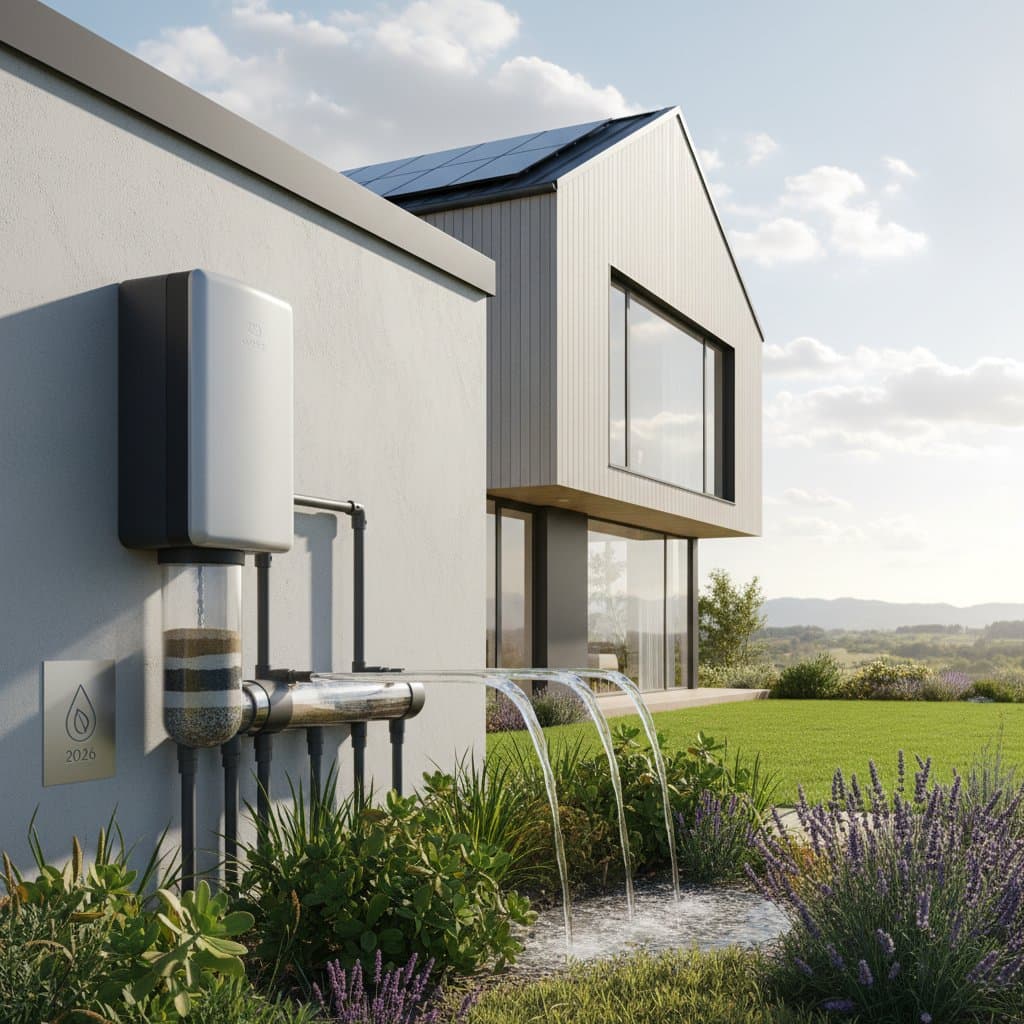
2026 Greywater Installation: Costs, Permits, and Long-Term Savings
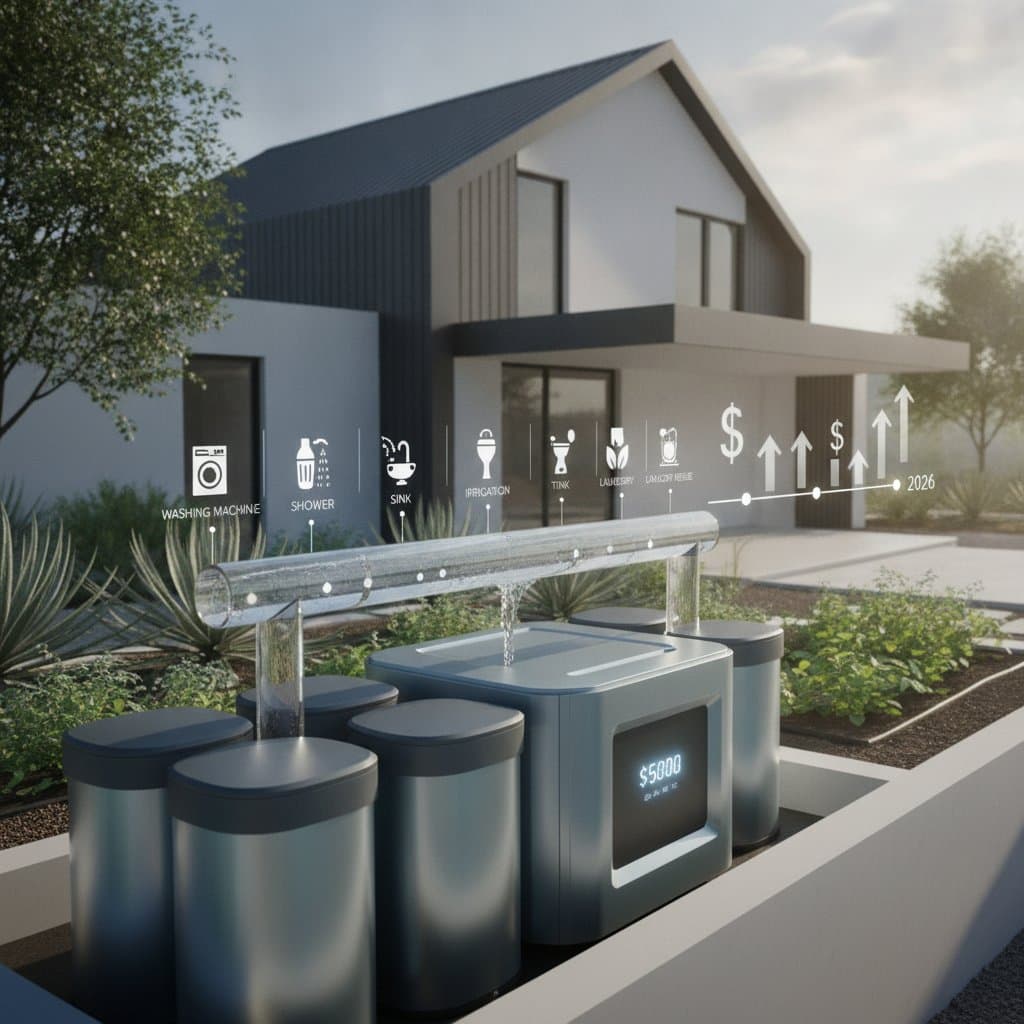
Reusing household water represents a practical approach to reducing utility bills and conserving local resources. Greywater systems capture lightly soiled water from sinks, showers, and laundry appliances, then redirect it for irrigation or toilet flushing. Homeowners benefit from decreased waste, enhanced garden vitality, and sustained reductions in monthly expenses. Although installation requires careful planning, permits, and upfront investment, the system delivers enduring returns over decades.
Primary System Types
Selecting the appropriate greywater configuration hinges on available space, terrain features, and existing plumbing infrastructure. Residential properties typically align with one of three fundamental designs.
-
Gravity-Fed Systems
These configurations utilize natural slope and gravitational force to transport water from collection points to irrigation zones or storage reservoirs. They prove ideal for single-level residences and involve lower initial expenses due to minimal mechanical components. -
Pumped Systems
In scenarios where elevation differences prove insufficient, a compact pump facilitates water movement. Such setups accommodate level landscapes or multi-story structures, ensuring reliable distribution. -
Advanced Filtered and Treated Systems
Equipped with sophisticated filtration mechanisms, retention tanks, and disinfection processes, these variants enable indoor applications like toilet replenishment or laundry cycles. They demand greater investment but expand reuse possibilities.
Consulting a licensed plumber or specialized installer allows for property-specific assessments. Certain designs integrate seamlessly with current drainage networks, whereas others integrate most effectively during initial construction phases.
Navigating Permits and Regulatory Compliance
Local jurisdictions establish distinct guidelines governing greywater implementation. Plumbing permits become mandatory for integrations involving indoor plumbing, while outdoor applications may necessitate landscape evaluations. Certain regions exempt basic laundry-to-landscape setups from comprehensive approvals, provided they adhere to separation distances and sanitary protocols.
Initiate the process by reaching out to the municipal building department or environmental authority. Inquire specifically about:
- Designated discharge locations
- Required pipe burial depths and identification markings
- Essential backflow prevention measures
- Setback distances from water wells or food-producing vegetation
- Site-specific soil percolation capacities
Authorities frequently supply illustrative schematics and pre-inspection protocols. Incorporating these elements during preliminary planning minimizes delays and circumvents expensive modifications.
Critical Safety Advisory: Prohibit any linkage between greywater conduits and drinking water supplies. Ensure all piping receives prominent labeling to avert cross-contamination risks.
Illustrative Residential Case Study
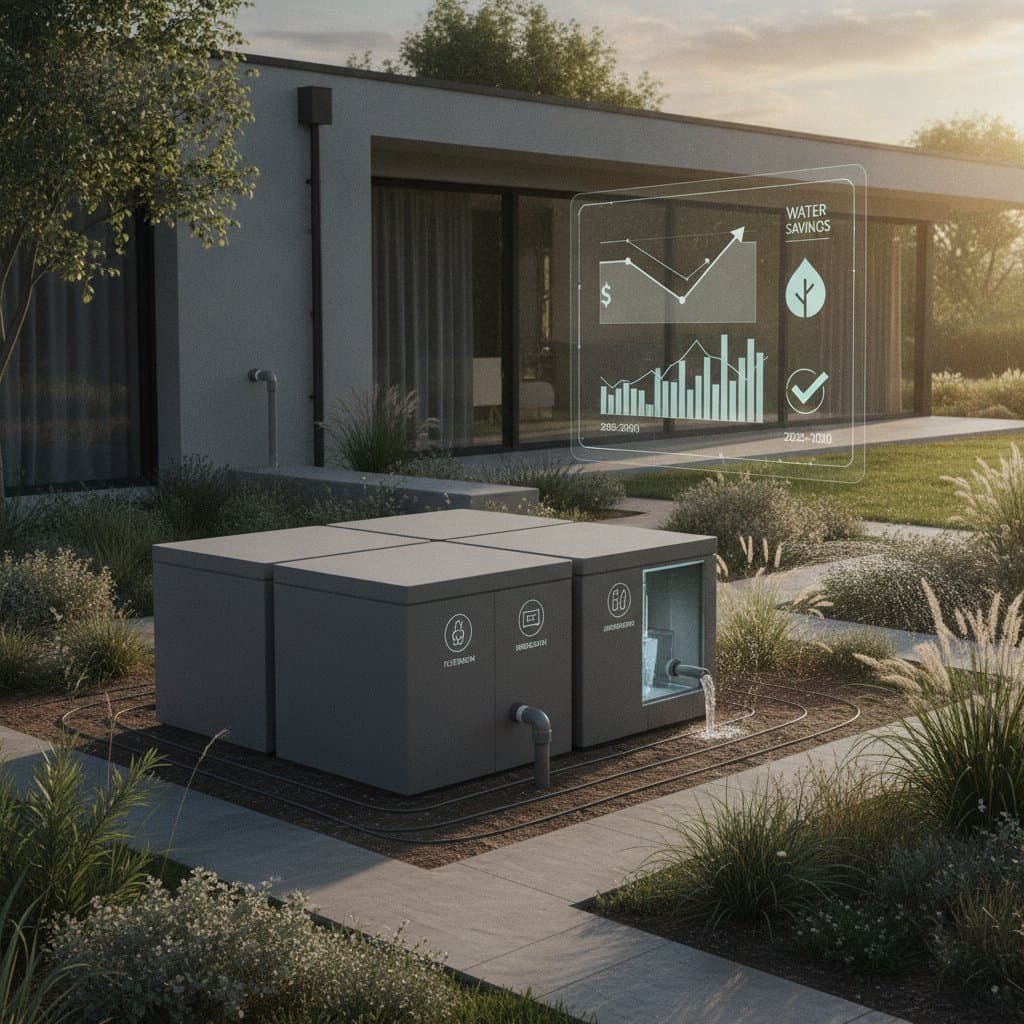
Consider a family in an arid suburban neighborhood who deployed a pumped greywater apparatus connected to dual bathroom fixtures and the washing machine outlet. The collected water nourishes fruit-bearing trees and decorative plantings via subsurface drip irrigation. Post-installation, their exterior water consumption diminished by approximately 40 percent. During peak dry periods, the household maintains consistent watering schedules without surpassing allocation thresholds. The investment recouped through bill reductions within several years, with the infrastructure demonstrating robust durability absent significant interventions.
This scenario aligns with data compiled by regional sustainability organizations monitoring domestic water recovery initiatives. Consistent upkeep yields commendable longevity and efficiency in the majority of documented installations.
Comprehensive Installation Process
Step 1: Assess Eligible Water Sources
Catalog fixtures generating suitable greywater, prioritizing showers, bathtubs, and laundry outputs. Exclude kitchen sinks or dishwashers, which introduce higher contaminant levels.
Step 2: Examine Plumbing Configuration
Survey accessible junctions beneath fixtures or adjacent to appliance hookups. Engage a professional plumber to identify secure integration points that preserve system integrity.
Step 3: Outline Distribution Pathways
Chart conveyance routes toward target application areas, such as landscaped beds or lavatory tanks. Optimize path lengths to curtail energy demands from pumping.
Step 4: Determine System Specifications
Base selections on topographic gradients, intended applications, and financial parameters. Incorporate storage reservoirs for properties with expansive green spaces to stabilize supply volumes.
Step 5: Secure Necessary Approvals
Present detailed blueprints delineating conduit trajectories, anti-backflow apparatus, and effluent dispersal areas to regulatory bodies.
Step 6: Execute and Validate Setup
Licensed technicians affix piping, propulsion units, and purification elements, followed by rigorous leak detection and hydraulic equilibrium testing.
Step 7: Instruct Household Participants
Affix identification to controls and access panels. Convey guidelines on permissible inputs to safeguard operational efficacy.
Step 8: Observe and Refine Operations
Log reservoir capacities, servicing frequencies, and output metrics. Adjust disbursement velocities to achieve uniform saturation across usage zones.
Greywater Versus Rainwater Harvesting: A Comparative Analysis
Both methodologies promote water conservation through collection and repurposing, yet they diverge in origin and logistical demands. Greywater derives from routine domestic functions, offering consistent daily yields, whereas rainwater harvesting relies on precipitation patterns, yielding variable seasonal outputs. Integrating the two approaches maximizes resilience and utility.
| Aspect | Greywater Systems | Rainwater Harvesting |
|---|---|---|
| Origin | Domestic fixture effluents | Rooftop surface runoff |
| Supply Frequency | Continuous, activity-dependent | Weather-contingent, episodic |
| Processing Needs | Optional screening and sanitization | Debris filtration and storage |
| Primary Applications | Landscape irrigation, lavatory recharge | Horticultural use, surface cleaning, emergency reserves |
Coordinated deployment of dual systems often streamlines infrastructure, as communal conduits and reservoirs offset incremental expenditures.
Insights from Industry Professionals
Seasoned plumbers and eco-conscious architects regard greywater diversion as among the most accessible sustainability enhancements for established dwellings. Online communities dedicated to residential modifications reflect escalating adoption, particularly in water-scarce locales. Participants frequently note that modest diverter units from laundry sources yield tangible fiscal relief within initial operational quarters.
Quotable Perspectives
- "Each gallon repurposed equates to one less drawn from municipal supplies."
- "Greywater transformation converts routine outflows into dependable assets."
- "Untended filters accumulate debris, pumps degrade prematurely, and conduits require periodic clearing. Oversight undermines potential gains swiftly."
Advancing Your Greywater Initiative
Embarking on a greywater project commences with a thorough site evaluation and regulatory consultation. Budget for professional involvement to ensure compliance and performance. Anticipate initial outlays ranging from $1,500 for basic gravity models to $10,000 for comprehensive treated variants, offset by 30 to 50 percent reductions in water charges over time. Regular maintenance, including quarterly filter inspections and annual pump checks, sustains efficiency. By adopting greywater reuse, homeowners contribute to broader environmental stewardship while securing personal economic advantages.