The Simple Fall Filter Swap That Saves Energy
When cool weather arrives, most homeowners concentrate on sealing windows, inspecting furnaces, and preparing for extended heating periods. One straightforward action to enhance comfort and reduce energy expenses receives little attention. Replacing the HVAC filter during the fall routine lowers utility bills, enhances air quality, and prolongs system longevity. The procedure requires only a few minutes, yet delivers benefits that persist through the season.
Why Fall Represents the Optimal Time for Air Filter Replacement
Throughout summer, filters capture substantial amounts of pollen, dust, and pet dander while air conditioners operate frequently. By fall, these filters frequently become obstructed. A soiled filter restricts airflow, compelling the system to consume additional power for air circulation. This added stress diminishes efficiency, elevates energy expenses, and accelerates wear on the blower motor.
Fall introduces distinct indoor air challenges. Windows remain closed for longer durations, humidity decreases, and heating systems activate once more. A new filter enables the HVAC system to manage these shifts effectively. Optimal airflow maintains uniform room temperatures, minimizes allergens, and averts dust accumulation in vents and ducts.
Energy Savings Supported by Evidence
The U.S. Department of Energy indicates that substituting a clogged filter reduces energy consumption by as much as 15 percent. Professionals in the HVAC field, sharing insights on platforms such as Reddit and Quora, report comparable outcomes from practical applications. Homeowners who monitor energy bills following a filter replacement observe tangible reductions within one billing period. This compact filter component qualifies as one of the most economical maintenance elements in a residence.
Impact of a Clogged Filter on System Performance
As a filter accumulates debris, the HVAC system encounters greater resistance in moving air. This limitation heightens demands on the fan, resulting in inconsistent heating or cooling. Prolonged operation under such conditions causes the blower motor to labor excessively, potentially leading to overheating or early failure. Restricted airflow occasionally produces frozen coils or furnace short cycling. These malfunctions prove costly to repair, though routine filter care prevents them entirely.
Filter replacement safeguards against failures while elevating indoor air quality. A pristine filter captures minute particles, including pollen and dust mites, with greater efficacy. Such filtration alleviates allergy symptoms and imparts a fresher quality to the home environment.
Selecting the Appropriate Filter for the System
Filters differ in thickness, composition, and efficiency ratings. The predominant rating scale employs MERV, denoting Minimum Efficiency Reporting Value. Elevated MERV values signify superior particle capture, though not every residence benefits from the highest options.
- MERV 1-4: Fundamental fiberglass varieties that intercept large particles. Suitable for aging systems or leased properties.
- MERV 5-8: Pleated designs that enhance control of dust and pollen. Provide an effective equilibrium of airflow and filtration for typical households.
- MERV 9-12: Advanced filters that seize smaller allergens. Recommended for residences with pets or individuals prone to allergies.
- MERV 13-16: Filtration levels comparable to medical facilities, targeting ultrafine particles. Appropriate solely for systems engineered to accommodate reduced airflow.
Prior to selecting a higher MERV filter, consult the system manual. Excessive restriction may paradoxically increase energy demands. HVAC specialists often advise MERV 8 through MERV 10 for domestic applications as a reliable intermediate choice.
Step-by-Step Instructions for Replacing an HVAC Filter
- Deactivate the system. Prioritize safety by powering down the HVAC unit via the thermostat prior to accessing the filter area.
- Identify the filter housing. This compartment typically resides behind a return air vent, within the blower assembly, or adjacent to the furnace intake.
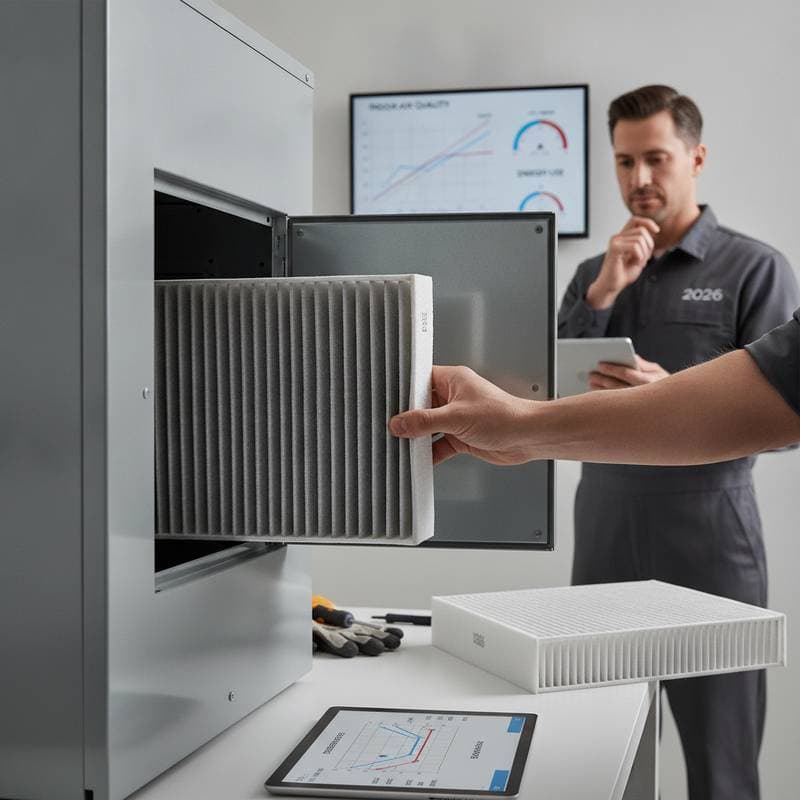
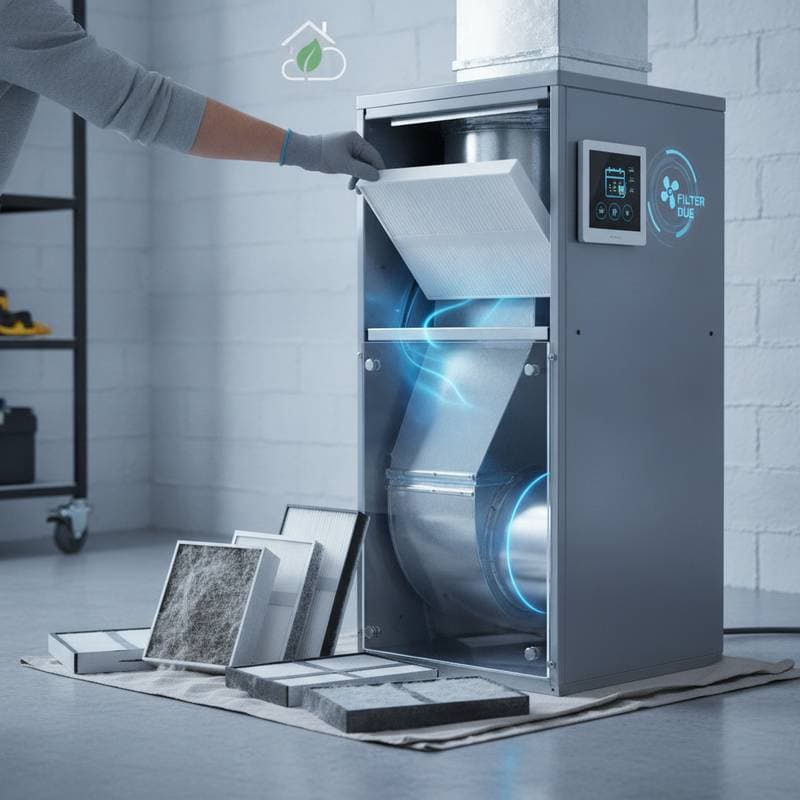
- Extract the existing filter. Withdraw it gently to minimize dust dispersal.
- Verify dimensions. Measurements appear on the filter frame. Procure an exact match for the replacement.
- Examine airflow orientation. Directional arrows on the frame specify air progression. Align them toward the furnace or air handler.
- Install the new filter. Ensure a secure fit with no peripheral gaps.
- Secure the compartment and reactivate the system. Reapply power and confirm unobstructed airflow.
This sequence generally concludes in under ten minutes. Maintaining spare filters simplifies adherence to a maintenance timetable.
Recommended Replacement Intervals
Optimal frequency varies according to household habits, system utilization, and surrounding conditions.
- Monthly: Residences featuring pets, tobacco use, or allergy sensitivities.
- Every 60 to 90 days: Standard households lacking unique factors.
- Every 120 days: Seasonal properties or systems with minimal operation.
Seasonal transitions serve as practical cues for filter inspection. Performing swaps in fall and spring sustains consistent performance annually. Homeowners benefit from calendar notifications or affixed reminders on HVAC equipment.
DIY Filter Replacement Compared to Professional Service
For the majority of homeowners, filter substitution constitutes an accessible self-directed task. No specialized implements or expertise prove necessary. Nevertheless, integrating it with a professional evaluation yields advantages. In a seasonal service visit, a technician assesses airflow metrics, examines ductwork, and confirms operational efficiency. This dual strategy minimizes energy consumption and forestalls expensive interventions.
Complex configurations, such as variable-speed blowers or advanced furnaces, warrant technician verification of filter compatibility. An unsuitable selection may alter system pressures and invalidate warranties.
Financial Aspects and Enduring Benefits
Basic fiberglass filters cost mere dollars, while premium pleated versions reach thirty dollars. Even premium selections recoup expenses rapidly through energy conservation. A solitary replacement often compensates for its expense via bill reductions in one to two months.
Obstructed filters escalate operational costs by overworking the blower. They further abbreviate equipment durability, prompting repairs surpassing hundreds of dollars. Consistent replacement functions as preventive coverage. A clean filter shields vital components and promotes maximal efficiency.
Safety and Air Quality Implications
Pristine filters advance health beyond energy optimization. Fall confines families indoors, amplifying dust from heating operations. A renewed filter eliminates suspended irritants prior to their dissemination.
A filter displaying gray or black discoloration upon removal signals potential dust overload or mold proximity. Prompt duct and vent examinations for dampness or residue avert respiratory issues and preserve salubrious interiors.
Establishing a Reliable Maintenance Routine
Homeowners frequently overlook filters until air quality or efficiency wanes. A structured schedule mitigates this oversight. Digital reminders or automated delivery subscriptions facilitate compliance.
Such regularity curtails energy loss and ensures seamless HVAC function across seasons. It also guarantees purified, comfortable air.
Protecting System Longevity
Allocating ten minutes for a fall filter exchange represents an uncomplicated method to safeguard comfort and finances. Advantages surpass air purity. Expect diminished bills, reduced repair probabilities, and extended equipment service life.
Schedule the upcoming replacement promptly. The HVAC system rewards this diligence with dependable, efficient operation throughout the season.