Essential Fall HVAC Filter Replacement: Timing and Selection Guide
As temperatures drop and heating systems activate, HVAC units face increased demands. Fall presents the perfect opportunity to inspect and replace air filters. Fresh filters enhance indoor air quality, prolong equipment durability, and optimize performance during heating months. Homeowners often neglect this maintenance, yet it serves as a key defense against expensive breakdowns and poor air circulation.
The Importance of Fall Filter Changes
Summer air conditioning cycles accumulate dust, pollen, and debris in filters. A clogged filter entering fall hampers airflow, forcing the heating system to labor excessively. This strain elevates energy consumption and accelerates wear on vital components, such as the blower motor.
Timely replacement resets the system for reliable operation. It also allows detection of early wear indicators, like unusual noises or reduced output. View this task as preparation for sustained warmth and efficiency when winter approaches.
Indicators and Schedule for Filter Replacement
Inspect filters monthly and replace them every one to three months, adjusted for household factors and filter type. Environments with high dust, pets, or allergens demand shorter intervals.
Recognize these signals for immediate action:
- Visible dust accumulation near vents or on household surfaces
- Weakened airflow from supply registers
- Unexpected increases in utility bills despite steady usage
- Dusty or musty odors emanating from the system
- Obvious soiling or darkening on the filter media
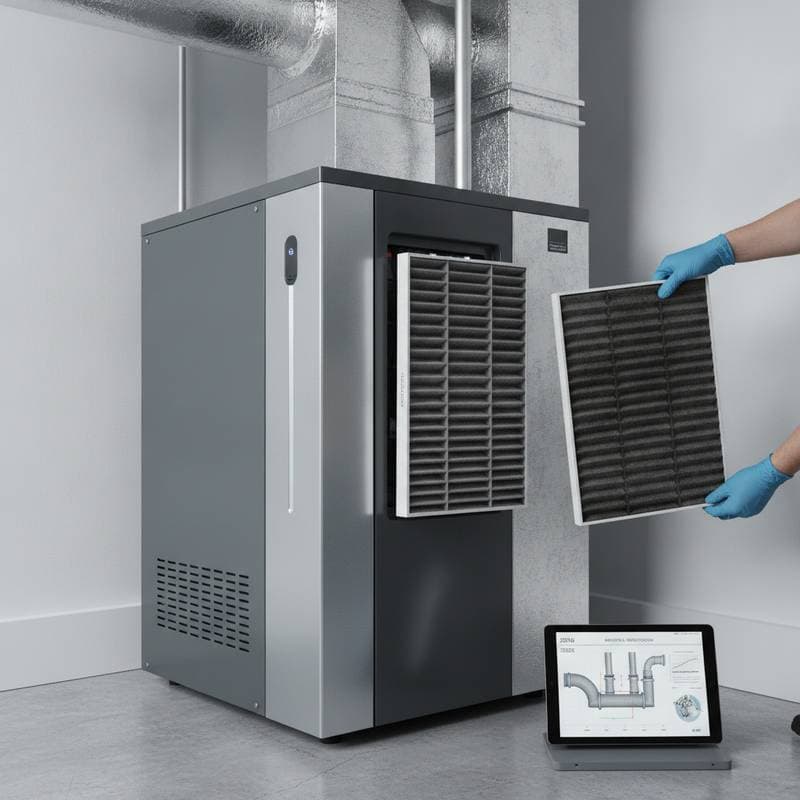
In pollen-heavy regions or during nearby construction, accelerate the schedule to monthly replacements. Before proceeding, power down the HVAC unit. Extract the old filter gently to minimize dust dispersal, and record the dimensions from its frame for accurate procurement.
Selecting the Appropriate HVAC Filter Type
Filters differ in construction, capture efficiency, and application. Selection hinges on system specifications and desired air purity levels.
Explore these primary categories:
-
Fiberglass filters
These entry-level options, priced affordably, snare large debris such as lint and pet hair. They prioritize equipment safeguarding over allergen control. -
Pleated filters
Constructed from polyester or cotton media, these snag finer contaminants like pollen, mold, and dander. Higher initial cost yields superior longevity and filtration. -
Electrostatic filters
Static charge draws particles effectively; available as disposables or reusables. Washable variants reduce long-term expenses through periodic rinsing. -
High-efficiency particulate air (HEPA) filters
These excel at trapping ultrafine particles, suiting allergy-prone homes. Verify system compatibility, as their density may impede airflow in standard setups.
Opt for filters aligned with manufacturer guidelines to prevent undue resistance and potential damage.
Decoding MERV Ratings for Optimal Choice
MERV, or Minimum Efficiency Reporting Value, quantifies filtration prowess on a scale of 1 to 20. Elevated ratings denote enhanced particle capture.
- MERV 1-4: Targets coarse dust and fibers for basic defense.
- MERV 5-8: Addresses common household irritants including pollen and pet allergens.
- MERV 9-12: Elevates protection for allergy sufferers or dust-sensitive environments.
- MERV 13-16: Reserves for specialized uses; risks airflow reduction in residential systems.
Residential applications thrive with MERV 8 to 12, balancing thoroughness and system compatibility. Exceeding recommendations without verification may overburden the unit.
Detailed Guide to Filter Replacement
This procedure requires minimal tools and time. Follow these steps precisely for safety and effectiveness.
-
Power down the HVAC system.
Disconnect power at the breaker to eliminate operational risks. -
Access the filter slot.
Common locations include the return air plenum or furnace cabinet; consult your unit's manual if unsure. -
Extract the existing filter.
Slide it free while observing airflow arrow orientation on the frame. -
Install the replacement.
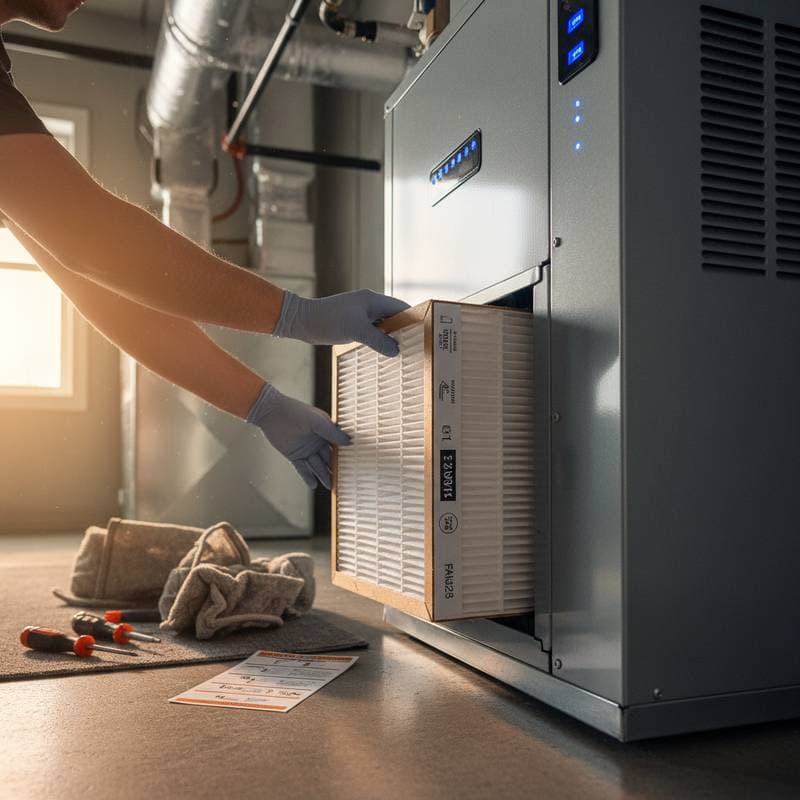
Align new filter arrows with system airflow direction for optimal function. -
Confirm fit and reactivate.
Ensure no gaps allow bypass, then restore power and monitor initial operation.
Affix an installation date label to track future needs.
Balancing Costs with Efficiency Gains
Fiberglass filters start at a few dollars each, whereas advanced pleated models reach twenty dollars or higher. Premium selections offset expenses via reduced energy draw and deferred repairs. Efficient filtration eases motor workload, curbing electricity use and extending service life.
Inquire about filter services within professional maintenance contracts. Seasonal visits often encompass replacements, inspections, and cleanings, streamlining upkeep.
Comprehensive Fall Maintenance Routine
Filter changes form one element of proactive care. Integrate these actions for comprehensive preparation.
- Remove foliage and obstructions from condenser coils
- Examine ducts for insulation breaches or disconnections
- Calibrate thermostat settings for heating transition
- Listen for rattles, hums, or scents signaling issues
- Book technician evaluation for any anomalies
Implement this protocol pre-freeze to avert disruptions and sustain reliability.
Safeguard System Performance Through Routine Care
Regular filter attention fortifies air purity and equipment resilience. Tailor selections to specific needs: pleated or electrostatic for allergen management, fiberglass for straightforward protection.
Dedicate time this fall to this vital task. Such diligence yields pristine air, moderated bills, and uninterrupted comfort amid seasonal shifts.