Optimal Fall Aeration Timing: The Role of Soil Temperature
A lush, vibrant lawn enhances any home landscape, yet prolonged exposure to foot traffic, mowing, and seasonal weather often leads to soil compaction that hinders grass root health. Fall aeration addresses this issue by creating channels for air, water, and nutrients to penetrate deeper into the soil. Proper timing ensures roots strengthen before winter dormancy, preventing weed invasion and promoting even growth.
Why Fall Aeration Benefits Cool-Season Grasses
Aeration involves extracting small plugs of soil to alleviate compaction and thatch accumulation. For cool-season grasses such as Kentucky bluegrass, tall fescue, and perennial ryegrass, fall aligns with their peak growth phase. Warm soil temperatures support root expansion, while milder air conditions minimize stress on the grass blades.
This process improves water absorption, reduces runoff, and prepares the lawn for winter resilience. Warm-season varieties like Bermuda and zoysia thrive with spring aeration instead, as their growth slows in cooler months.
Essential Conditions for Effective Aeration
Target these factors for successful aeration:
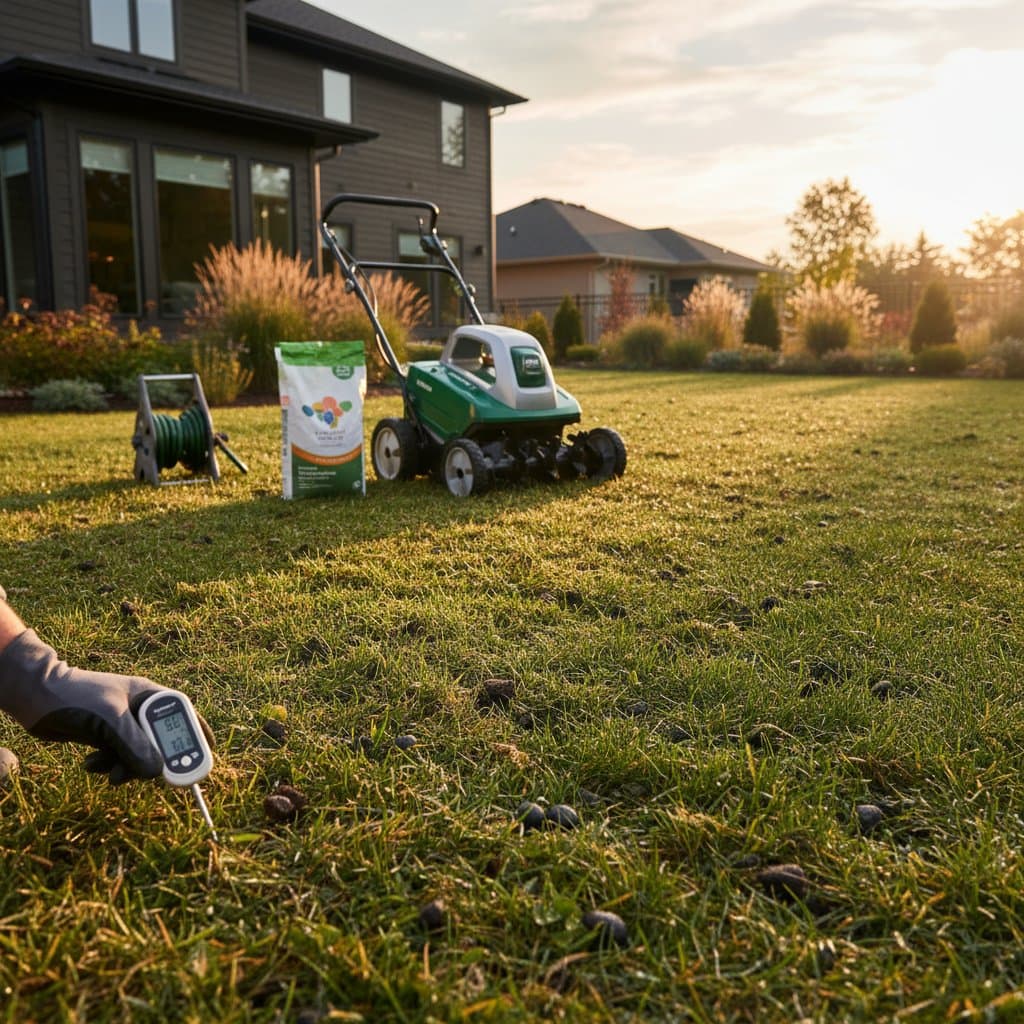
- Soil temperature between 50 and 65 degrees Fahrenheit in the top four inches to encourage root activity.
- Actively growing grass free from heat or drought stress.
- Moist soil that yields to aerator tines without becoming waterlogged, enabling penetration of two to three inches.
- Plans to overseed or apply fertilizer within seven days post-aeration.
When conditions align, the extracted cores facilitate direct access for essential resources to the root zone.
Indicators That Your Lawn Requires Fall Aeration
Soil type, usage patterns, and maintenance habits influence aeration frequency. Annual treatment suits most lawns, but certain signs signal an immediate need:
- Surface puddling after rainfall due to poor infiltration.
- Thin or spongy grass despite consistent irrigation.
- Resistance to a screwdriver or probe beyond two inches of depth.
- Bare spots in high-traffic zones like pathways or play areas.
- Thatch layer exceeding half an inch in thickness.
Lawns with heavy pet, child, or furniture activity demand yearly fall intervention to sustain vitality.
Assessing Soil Compaction Prior to Aeration
Confirm compaction through simple tests to justify the effort. Insert a screwdriver or six-inch soil probe into several spots; effortless entry indicates adequate looseness. Resistance within the first two inches points to compaction issues.
Alternatively, use a trowel to extract a core and examine root penetration. Roots extending three to four inches signal healthy conditions, while shallower depths highlight the need for aeration to enhance oxygen circulation.
Selecting the Appropriate Aeration Equipment
Homeowners face choices between spike and core aerators, each suited to specific scenarios.
| Aerator Type | Mechanism | Ideal Use Case | Penetration Depth |
|---|---|---|---|
| Spike Aerator | Solid tines create holes | Mild compaction, compact lawns | 1 to 2 inches |
| Core (Plug) Aerator | Extracts soil and thatch plugs | Significant compaction | 2 to 3 inches |
Core aerators outperform spikes by removing material rather than displacing it, yielding better long-term results. Rent units from equipment rental centers for 60 to 100 dollars daily, or engage professionals charging 75 to 200 dollars based on lawn size.
Detailed Aeration Process for Optimal Outcomes
Follow these steps to maximize aeration effectiveness:
- Irrigate the lawn one day in advance to soften the soil without creating mud.
- Flag underground utilities, irrigation lines, and obstacles to prevent damage.
- Pass the aerator over the lawn in two crossing patterns, first north-south, then east-west, for uniform coverage.
- Allow the soil plugs to remain on the surface; they decompose within a week, enriching the soil.
- Apply overseeding and a starter fertilizer right after to leverage the open channels.
- Provide light daily watering for the following week to aid seed establishment and plug breakdown.
This methodical approach accelerates lawn recovery and density before seasonal dormancy.
Pitfalls to Sidestep During Aeration
Common errors can undermine aeration benefits. Steer clear of these issues:
- Attempting aeration on parched soil, which limits tine depth; pre-moisten as needed.
- Neglecting pre-aeration debris removal, as thick thatch obstructs equipment.
- Relying on spike aerators for clay-heavy soils, which may exacerbate compaction.
- Delaying until growth ceases, leaving insufficient recovery time before frost.
- Postponing overseeding beyond the optimal window, as seeds require three weeks of growth prior to cold snaps.
For guidance on local conditions, seek input from turf experts or lawn care providers before proceeding.
Budget and Practicality of DIY Aeration
Most homeowners with yards under a quarter acre can handle aeration independently. Rental costs for a core aerator typically range from 60 to 100 dollars for a half-day, supplemented by 25 to 40 dollars for seeds and fertilizer. Allocate two to four hours for the task.
Professional services, priced at 75 to 200 dollars for up to 10,000 square feet, include equipment handling and potential add-ons like seeding. Opt for pros if dealing with slopes, roots, or larger properties to ensure efficiency.
Accommodations for Ease and Safety
For those with mobility challenges, tow-behind core aerators compatible with riding mowers reduce physical strain while maintaining effective depth. Wear sturdy closed-toe footwear and gloves during operation, and avoid inclines greater than 15 degrees. In confined spaces, manual coring tools allow targeted treatment of problem areas without full-yard machinery.
Aeration Schedules Tailored to Grass Varieties
Match aeration to growth cycles for each grass type:
| Grass Type | Preferred Season | Additional Guidance |
|---|---|---|
| Kentucky Bluegrass | Fall | Schedule from late summer to early fall |
| Perennial Ryegrass | Fall | Pair with overseeding to boost thickness |
| Tall Fescue | Fall | Supports rapid root repair pre-winter |
| Bermuda | Spring | Skip fall to align with active phase |
| Zoysia | Spring | Perform only during full greening |
Mixed lawns should follow the schedule of the prevailing grass type.
Integrating Overseeding and Fertilization Post-Aeration
The fresh cores create ideal pockets for seeds, enhancing germination rates through superior soil contact. Select varieties matching your existing turf, and broadcast at recommended rates. Follow with a balanced starter fertilizer to supply phosphorus for root establishment, then maintain even moisture without overwatering.
Achieving a Thriving Spring Lawn Through Fall Care
Timely fall aeration, combined with precise soil temperature monitoring and follow-up treatments, lays the foundation for resilient turf. Test your soil conditions, secure suitable tools, and execute the process diligently to witness denser, greener results emerge in the new season.