Essential Fall Chimney Inspections to Prevent Fires
As autumn arrives and cooler weather sets in, many homeowners turn to their fireplaces for comfort. The crackle of a fire adds warmth to gatherings, yet this enjoyment depends on a well-maintained chimney. Without proper care, issues like creosote buildup or structural weaknesses can lead to smoke problems, reduced efficiency, or devastating fires.
A systematic fall inspection routine addresses these risks head-on. Homeowners can perform basic checks themselves while scheduling professional services for thorough evaluation. This approach not only protects your property but also ensures optimal performance throughout the heating season.
Step 1: Conduct a Visual Exterior Inspection
Begin your assessment outside the home to spot obvious problems. This step requires no special tools and can reveal issues before they escalate.
Examine the chimney stack for signs of instability, such as leaning sections, missing bricks, or deteriorating mortar. Freezing temperatures can exacerbate small cracks, leading to larger structural failures. Note any spalling, where bricks flake due to moisture exposure.
Next, verify the condition of the chimney cap. This protective cover prevents water, leaves, and wildlife from entering the flue. If the cap shows rust, bends, or gaps, replace it promptly to avoid internal corrosion.
Inspect the flashing around the base where the chimney meets the roof. This metal seal blocks water intrusion; look for loose, rusted, or separated pieces that could allow leaks. Finally, check the crown at the top for cracks or erosion. Apply a high-quality sealant to minor fissures to repel moisture.
If you observe any concerning damage, halt further use and consult a professional immediately.
Step 2: Perform an Interior Visual Check
Move inside to evaluate accessible parts of the fireplace and firebox. Use a flashlight to illuminate dark areas and identify potential hazards.
Look for soot accumulation on the firebrick or hearth. Excessive buildup indicates poor combustion or inadequate cleaning. Check the smoke chamber above the firebox for loose mortar or bulging walls, which signal heat damage.
Examine the damper, the metal plate that controls airflow. Ensure it opens and closes smoothly without sticking. A faulty damper can cause smoke backflow or energy loss. Lubricate hinges if needed, but replace the unit if it appears warped or corroded.
Pay attention to the area around the fireplace. Clear away combustible materials like furniture or rugs that sit too close, maintaining at least 36 inches of clearance to reduce fire spread risks.
Step 3: Clean Out Creosote Buildup
Creosote, a tar-like residue from wood smoke, poses the greatest fire risk in chimneys. It accumulates over time and ignites easily under high heat.
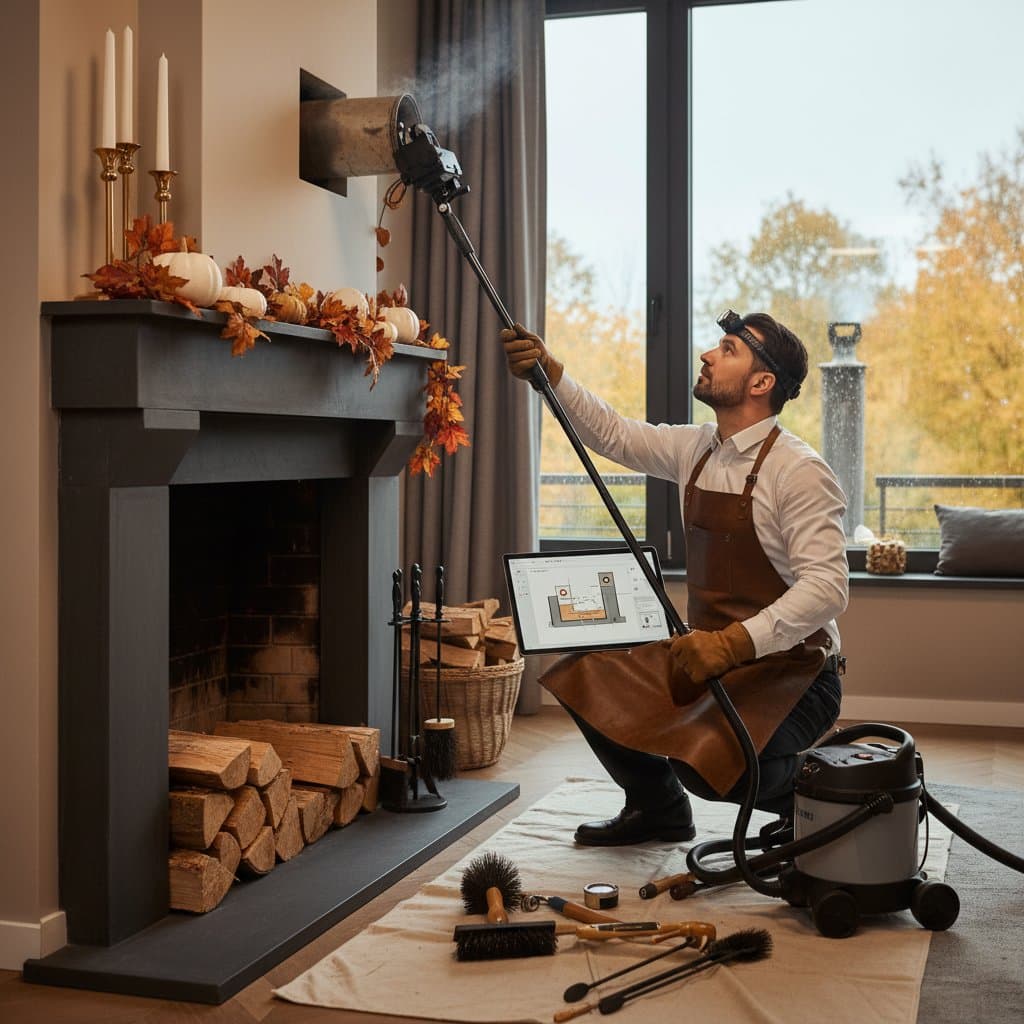
Schedule a professional sweep if you used the fireplace last season, as DIY cleaning rarely reaches all areas. For light use, remove visible ash from the firebox with a shovel and dispose of it in a metal container outside.
Understand creosote stages: Stage 1 appears as soot, Stage 2 as drippy tar, and Stage 3 as thick glaze. Each requires specific removal techniques, from brushing to chemical treatments. Aim to keep buildup under 1/8 inch thick for safety.
After cleaning, inspect the flue for remaining deposits. Regular maintenance every one to three years, depending on fuel type, keeps the system clear and efficient.
Step 4: Test for Adequate Draft
Proper draft pulls smoke and gases out of the home, preventing indoor pollution. Test this function early in the season to confirm readiness.
With the damper open, ignite a small bundle of newspaper in the firebox. Observe the smoke: it should rise steadily into the flue without billowing back into the room. Poor performance suggests blockages or imbalances.
If draft is weak, warm the chimney first. Roll newspaper into a torch, light it, and hold it near the flue opening for 30 to 60 seconds. This heats the air inside, creating natural upward movement.
Factors like tall trees nearby or downdrafts from wind can affect performance. If issues persist, a professional can adjust the system or install draft inducers.
Step 5: Evaluate the Chimney Liner
The liner shields the home from corrosive flue gases and intense heat. Different materials, such as clay tiles or metal, demand specific care.
Use a flashlight and mirror to peer up the flue from the firebox. Search for fractures, spalling, or corrosion that could compromise integrity. Heat escaping through a flawed liner risks igniting nearby combustibles.
Clay liners often crack from thermal stress, while metal ones may perforate over time. If damage appears, request a video scan from a certified sweep to assess the full length.
A sound liner enhances airflow and reduces creosote formation. Proactive replacement, though expensive, averts far costlier home repairs from fire or structural harm.
Step 6: Inspect for Blockages and Pests
Chimneys attract debris and animals, creating dangerous obstructions. Fall preparation includes clearing these to restore full functionality.
From the top, use a long pole or brush to dislodge leaves, nests, or branches. Listen for rattles or look for droppings that indicate squirrel, bird, or rodent activity.
Install or repair chimney screens to deter future intrusions. If live animals occupy the space, engage a pest control specialist to remove them humanely before proceeding.
Blockages not only hinder draft but also trap creosote, accelerating deterioration. Annual checks minimize these surprises.
Step 7: Assess for Moisture Intrusion
Water entry weakens masonry and promotes mold growth. Detect and mitigate it to preserve chimney longevity.
Sniff for damp, earthy odors emanating from the fireplace. Visually scan for water stains, efflorescence (white, powdery deposits), or softened bricks.
Moisture often stems from faulty caps, crowns, or flashing. In wet climates, apply breathable waterproofing to exterior surfaces after cleaning.
Persistent dampness can dissolve mortar bonds, leading to collapses. Address sources quickly to avoid escalating repairs.
Step 8: Schedule Professional Services
While DIY steps cover basics, experts provide comprehensive analysis. Opt for certified chimney sweeps adhering to industry standards.
A standard visual inspection reviews all visible components. For complex cases, like recent modifications or fire events, choose a more detailed camera probe.
Professionals measure clearances to combustibles, test for leaks, and certify compliance with building codes. Book early fall appointments to sidestep peak-season delays.
Regular professional care identifies subtle issues, extends system life, and supports insurance requirements for fireplace users.
Budgeting for Ongoing Maintenance
Investing in chimney care pays dividends in safety and savings. Preventive actions cost less than emergency fixes.
Typical annual cleaning runs a few hundred dollars, far below the thousands for liner replacement or fire restoration. Factor in costs for caps, sealants, and minor repairs.
Create a seasonal fund covering inspections, waterproofing, and part updates. Track expenses in a log to monitor patterns and plan ahead.
This strategy ensures your fireplace delivers reliable warmth without unexpected disruptions.
Practical Strategies for Chimney Longevity
Maintain a service record noting dates, findings, and actions taken. This history aids professionals and tracks maintenance intervals.
Monitor operating temperatures with a flue thermometer to avoid overheating. Opt for seasoned hardwoods that burn cleanly and produce less creosote.
Install a tight-sealing damper to conserve heat when idle. Keep fires modest and well-aerated to minimize residue.
Store fuel in elevated, covered racks to prevent moisture absorption. In rainy regions, prioritize professional waterproofing every few years.
By integrating these habits, homeowners safeguard their chimneys against common threats, fostering years of safe, enjoyable use.