Prepare Your Chimney for Safe Fall Fires
A warm fire enhances a cool autumn evening, yet smoke entering the living space or undetected creosote accumulation can lead to chimney fires. As cooler weather arrives and fireplaces resume use, proper chimney maintenance ranks among critical home safety measures. Through targeted preparation, thorough inspections, and appropriate tools, homeowners maintain safe fireplace operation throughout the season.
The Importance of Chimney Maintenance
An overlooked chimney poses risks beyond minor annoyances. It may release carbon monoxide, permit animal nesting, or accumulate debris that ignites fires. Data from the National Fire Protection Association indicates thousands of annual home fires originate in unmaintained chimneys. Creosote, a tar-like residue from wood combustion, serves as the primary cause.
Homeowners address this by inspecting and cleaning the chimney prior to the initial fire. Regardless of fuel type, wood or gas, evaluate components for obstructions, fractures, and water damage.
Conduct a Thorough Visual Inspection
Effective chimney preparation commences with an inspection. Homeowners perform a preliminary check before engaging certified professionals.
Inspect the Exterior Components
Circumvent the home to examine the chimney from base to summit. For brick or stone constructions, verify solid mortar joints without cracks or displaced bricks. Metal chimneys require secure, corrosion-free flashing at the roof intersection.
- Elevation Standards: The chimney extends at least three feet above the roof surface and two feet above any nearby structures within ten feet.
- Crown Design: The uppermost concrete layer slopes outward from the flue to direct water away.
- Protective Cap: Install a cap featuring wire mesh to block precipitation, foliage, and wildlife.
Address loose mortar or deterioration immediately by arranging repairs prior to fireplace activation.
Assess the Interior Flue
Direct a flashlight into the flue from the fireplace interior. Identify dark, glossy deposits on the lining, indicative of creosote; layers exceeding one-eighth inch present ignition hazards. Detect blockages such as branches, bird nests, or fractured masonry. Absence of visible light from the top signals obstruction.
Options for Cleaning: Professional and DIY Approaches
Homeowners manage light maintenance independently, yet comprehensive cleaning demands certified expertise.
| Cleaning Method | Required Tools | Suggested Interval | DIY Suitability | Approximate Cost |
|---|---|---|---|---|
| Surface Brushing | Chimney brush, extension poles | After several uses | Feasible with care | $30 to $80 for equipment |
| Complete Sweep | Rotary tool, vacuum system, camera | Annually per season | Professional recommended | $150 to $350 |
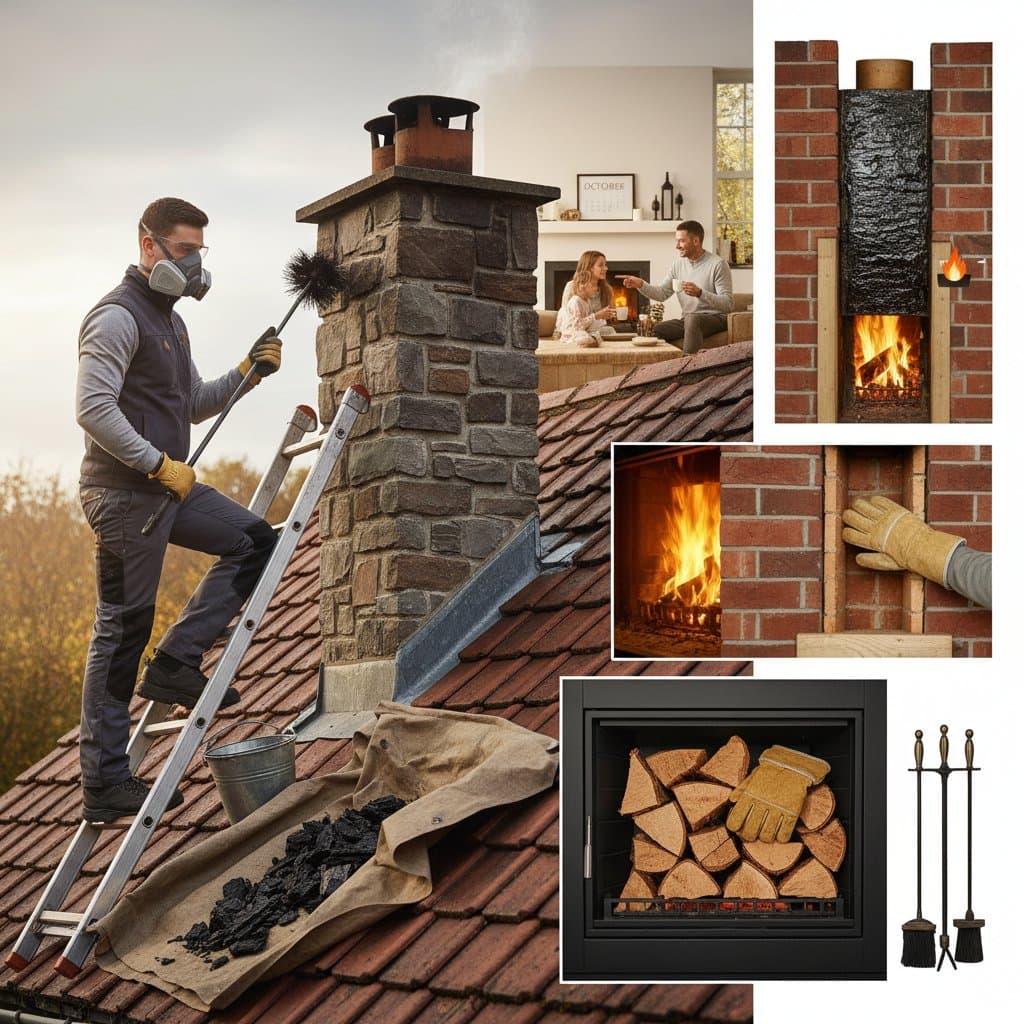
For DIY efforts, equip with protective eyewear, hand coverings, and respiratory masks. Select a brush matching the flue size, typically six to eight inches for standard residences. Maneuver the brush from roof or base, scrub vigorously, and remove residue with an industrial vacuum. Avoid standard household vacuums, as soot inflicts damage.
Addressing Frequent Chimney Challenges
Well-cared-for chimneys encounter issues periodically. Early detection minimizes future expenses.
Managing Creosote Accumulation
Wood smoke cools and adheres within the flue, forming this adhesive material. Increased thickness heightens combustion danger. Select seasoned hardwoods with under 20 percent moisture; a $25 meter confirms suitability. Refrain from combusting refuse or resinous softwoods, which generate excess smoke.
Resolving Draft Inefficiencies
Room-filling smoke suggests venting failure. Confirm the damper operates fully and the flue dimensions align with the firebox. Flue area equals approximately one-tenth of the firebox; a 20-by-24-inch opening (480 square inches) necessitates a 48-square-inch flue.
Mitigating Water Intrusion
Moisture undermines chimney integrity silently. Fractured crowns, absent caps, or faulty flashing permit infiltration, causing brick spalling and metal corrosion. Apply permeable sealants to masonry and replace compromised flashing without delay.
Key Tools for Ongoing Maintenance
Regular fireplace users benefit from a dedicated maintenance kit. Assemble these items for efficiency.
- Flue Brush: Matched to specific diameter
- Connecting Rods: For full-length access
- Illumination Device: Flashlight or head-mounted light
- Containment Materials: Drop cloths and heavy-duty vacuum
- Wood Tester: Meter for moisture levels
- Protective Equipment: Gloves, eyewear, and masks
Store the kit accessibly for preseason checks.
Indicators for Professional Intervention
Engage certified sweeps for substantial creosote (over one-eighth inch), damaged liners, or structural flaws. The Chimney Safety Institute of America lists qualified experts. Services encompass camera examinations and detailed condition reports, fulfilling insurance prerequisites.
Professionals verify regulatory adherence, such as two-inch clearances from combustibles for masonry and precise venting for gas units per manufacturer guidelines.
Safety and Accessibility Factors
Limited mobility precludes ladder use; opt for annual professional service with height-appropriate gear. In households with young children or seniors, secure a robust screen extending 12 inches high across the full opening to block sparks and embers.
Pitfalls to Sidestep in Maintenance
Numerous issues arise from basic errors. Prevent these to sustain system reliability.
- Omitting Yearly Checks: Off-season accumulation of nests or debris occurs regardless of usage.
- Employing Damp Fuel: High-moisture wood fosters smoke and residue.
- Overlooking Minor Fractures: Heat and water exacerbate small defects rapidly.
- Damper Neglect: Closed positions during operation confine smoke indoors.
- Cap Oversight: Unprotected tops admit weather and intruders.
Prompt corrections prove more economical than extensive flue or interior repairs.
Planning Maintenance Expenditures
Annual professional services range from $150 to $350. Repair costs fluctuate: a new cap at $75, flue relining in thousands. Proactive budgeting averts unexpected outlays.
Optimize spending by:
- Combining with furnace or vent cleanings.
- Timing appointments in low-demand periods.
- Storing fuel properly to lessen residue and prolong intervals.
Implement Seasonal Chimney Care Now
Chimney upkeep enhances safety and enjoyment, though it lacks glamour. A pristine system promotes efficient draft, reduced emissions, and reliable warmth. Perform preseason evaluations, eliminate creosote, and monitor deterioration to circumvent heating hazards.
Tackle minor tasks with confidence using proper tools. Delegate thorough cleanings or suspected issues to experts. Proactive measures ensure peaceful fireside moments, free from flue concerns.