Don't Skip Fall Chimney and Fireplace Prep Steps
A fireplace can make a home feel warm and inviting, but only if it is safe and ready for use. Many homeowners forget that chimneys and fireplaces need seasonal care, especially before cool weather arrives. Skipping fall prep can lead to problems like smoky fires, drafts, or even chimney fires. A few hours of attention now can save expensive repairs later and keep your family safe all season long.
Why Fall Chimney Maintenance Matters
When you burn wood, tiny particles called creosote collect inside the chimney flue. Over time, this buildup thickens and becomes highly flammable. Even a small amount can ignite under high heat. The National Fire Protection Association recommends annual inspection and cleaning to prevent fires and carbon monoxide leaks. If you notice any odor, smoke backup, or slow-starting fires, those are signs that your chimney needs care.
Fall is the best time for maintenance because you can address issues before regular use begins. Professional appointments fill up quickly once temperatures drop, so scheduling early ensures your system is ready when you want that first cozy fire.
Quick Answer: What You Need to Do
Here is the short list for fall fireplace and chimney prep:
- Schedule a professional inspection and cleaning
- Check the chimney cap and flashing for damage
- Test the damper to confirm smooth operation
- Clean out ash and debris from the firebox
- Stock up on properly seasoned firewood
- Install or test carbon monoxide and smoke detectors near the fireplace
These steps form the foundation of safe and efficient fireplace use. The details matter, so let us break down each one.
Step 1: Schedule a Chimney Inspection and Cleaning
Every chimney needs a professional inspection at least once a year. Certified chimney sweeps use specialized brushes and vacuums to remove creosote, soot, and blockages. They also check for cracks or deterioration in the flue liner. Even small cracks can allow heat to escape into walls, creating fire hazards.
What to Expect During Inspection
A typical inspection follows levels set by the Chimney Safety Institute of America:
- Level 1: Basic visual check for homeowners who use the same system without changes.
- Level 2: Required when you change fuel type, add a new insert, or buy a new home.
- Level 3: In-depth inspection that may involve removing sections to examine concealed damage.
Cost and Timing
Professional cleaning usually costs between $150 and $350, depending on chimney height and buildup. The technician will often perform minor repairs, such as sealing small cracks or tightening flashing, during the same visit. Plan for about one hour of service for a standard single-flue system.
DIY Feasibility
While you can buy chimney cleaning kits with flexible rods and brushes, DIY cleaning only works for short, straight chimneys. Complex systems or tall roofs require professional equipment and safety gear. If you choose the DIY route, always wear a dust mask, goggles, and gloves, and never attempt to clean from the roof unless you are experienced with ladder safety.
Step 2: Inspect the Chimney Cap and Flashing
The chimney cap, typically a metal or stainless steel guard, keeps rain, animals, and debris out of the flue. Even a small gap can let water seep into the chimney, causing rust or masonry damage. Look for bent screens, missing screws, or rust stains. Replace damaged caps immediately with models that include spark arrestors, which prevent embers from escaping the chimney top.
Flashing, the metal seal where the chimney meets the roof, should be intact and tight. Loose flashing often leads to leaks that appear as ceiling stains around the fireplace. Apply high-temperature silicone sealant for small gaps, or call a roofer for major repairs.
Step 3: Test and Clean the Damper
The damper is the movable plate that controls airflow inside the chimney. When open, it allows smoke to escape. When closed, it prevents drafts and heat loss. Over time, soot and rust can make it difficult to move. Open and close it fully to ensure smooth operation. If it sticks, clean the edges with a stiff brush and mild detergent. A damper that does not seal properly can waste significant energy by letting warm indoor air escape up the flue.
Step 4: Clean Out the Firebox
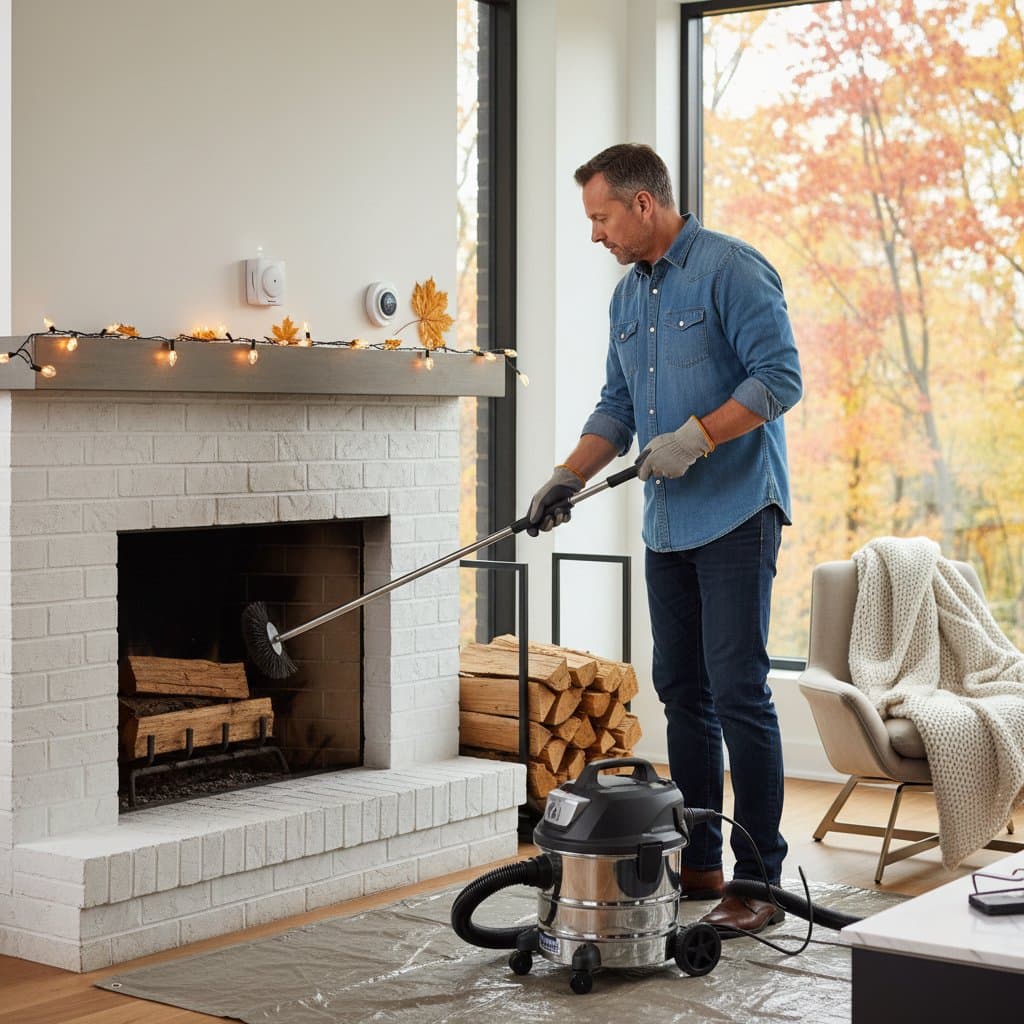
Before lighting your first fire, clear out old ashes and debris. Leave about one inch of ash at the bottom for insulation, but remove anything beyond that. Use a metal shovel and bucket, never plastic, since hot embers can remain hidden for hours. Vacuum with a shop vac rated for ash, not a regular household vacuum, which can clog or ignite dust inside the motor.
Check the firebrick and mortar joints inside the firebox. Cracks larger than one-quarter inch should be repaired using refractory cement, which withstands high temperatures. Replace any loose bricks to prevent heat from reaching the firebox walls.
Step 5: Prepare the Right Firewood
Good firewood makes a big difference in performance. Wood should be seasoned for at least six months, meaning it has been split, stacked, and air-dried. Moisture content should be below 20 percent. You can check this with an inexpensive moisture meter. Wet wood smokes excessively, creates more creosote, and produces less heat.
Firewood Storage Tips
- Stack logs at least 12 inches off the ground to prevent rot.
- Maintain 6 inches of air space between rows for ventilation.
- Cover the top of the stack but leave the sides open for airflow.
Hardwoods like oak, maple, and hickory burn longer and cleaner than softwoods such as pine or spruce. Keep a small supply of kindling nearby for easy starts.
Step 6: Check Smoke and Carbon Monoxide Detectors
Every fireplace should have detectors within 10 feet of the hearth area. Test them monthly and replace batteries as needed. Carbon monoxide is invisible and odorless, and buildup can occur even with an open damper if the flue is partially blocked. Modern combination detectors alert for both smoke and gas, providing layered protection.
Common Mistakes to Avoid
Even experienced homeowners can overlook small details that affect safety and efficiency. Watch out for these common errors:
- Burning treated or painted wood: These release toxic fumes and damage the flue.
- Skipping annual inspections: Creosote buildup can reach dangerous levels after only a few months of heavy use.
- Blocking air vents: Proper ventilation is crucial for clean burning and smoke control.
- Using wet firewood: Excess moisture reduces heat output and speeds up creosote formation.
- Ignoring rust or water stains: These often signal hidden leaks that worsen over time.
Avoiding these mistakes ensures your fireplace performs safely and efficiently all winter.
Accessibility and Safety Considerations
If you have limited mobility or find ladder work difficult, schedule a full-service chimney company that offers inside and outside inspection. Many provide camera-based evaluations from the hearth, eliminating the need for roof access. For households with children or pets, install a sturdy fireplace screen at least 18 inches away from the opening to prevent accidental burns. Maintain a clear zone free of furniture, curtains, or rugs within 36 inches of the firebox for safety compliance.
Tools and Supplies for Basic DIY Maintenance
You can handle smaller tasks yourself with a few simple tools:
- Metal ash bucket with lid
- Long-handled fireplace shovel and brush
- Heavy-duty gloves
- Flashlight or headlamp for flue inspection
- Refractory cement for patching
- Moisture meter for firewood
Always wear eye protection when working with ash or soot, and keep a fire extinguisher within reach of the fireplace area.
When to Call a Professional
Hire a certified chimney sweep or mason if you notice any of the following:
- Persistent smoke even with the damper open
- Crumbling mortar or loose bricks
- Strong creosote odor
- Rust on the damper or firebox
- Water stains on ceilings or walls near the chimney
A professional can perform smoke tests, camera inspections, and structural assessments that go beyond what homeowners can safely do.
Cost Planning and Maintenance Frequency
Budgeting for chimney care helps prevent larger expenses later. Typical annual maintenance costs include:
| Service Type | Frequency | Typical Cost Range |
|---|---|---|
| Chimney inspection | Once per year | $100 to $200 |
| Chimney cleaning | Once per year | $150 to $350 |
| Minor mortar repair | As needed | $100 to $300 |
| Cap replacement | Every 5 to 10 years | $100 to $250 |
These numbers vary by location and chimney height, but they provide a reasonable guide for setting your seasonal budget.
Pro Tips for Long-Term Fireplace Enjoyment
Schedule maintenance in early fall to avoid peak-season delays. Use a chimney liner if your home has an older masonry chimney to enhance safety and efficiency. Monitor for unusual sounds or smells during fires, and address them promptly. These habits extend the life of your fireplace while minimizing risks and costs.