Why Fall Chimney Checks Stop Winter Fire Risks
A cozy fire on a cold evening offers comfort until smoke backs up or a chimney fire erupts unexpectedly. Homeowners often overlook how chimneys accumulate soot, creosote, and debris over time. A fall chimney inspection addresses these issues before they escalate into winter emergencies. Scheduling this check before the heating season begins safeguards the home, family, and heating system.
Why Fall Is the Ideal Time for a Chimney Check
Cool weather arrives after months of chimney inactivity. Birds might nest in the flue, moisture damages the lining, and creosote from the previous winter thickens. Fall inspections allow time for repairs before temperatures plummet and service providers become overwhelmed. This timing avoids igniting a fire in a dirty or obstructed chimney, a leading cause of residential fires.
Certified chimney sweeps examine several key areas during the inspection:
- Creosote buildup exceeding one-eighth inch in thickness
- Cracked flue tiles or gaps in mortar joints
- Loose or absent chimney caps
- Blockages caused by nests, leaves, or dislodged masonry
- Water stains or efflorescence indicating leaks
Addressing these findings promptly ensures the chimney functions reliably when needed most.
The Hidden Danger of Creosote
Creosote forms as a sticky, tar-like residue when smoke cools and condenses in the chimney. Even a thin layer ignites at approximately 1000 degrees Fahrenheit, allowing flames to travel rapidly up the flue. The National Fire Protection Association advises cleaning once buildup reaches one-eighth inch. Homeowners frequently underestimate the speed of accumulation, especially when burning unseasoned wood, maintaining slow-burning fires, or closing the damper prematurely.
Professional sweeps employ stiff brushes and vacuum systems to eliminate creosote without risk. Individuals who burn wood regularly benefit from a mid-season inspection to monitor and control buildup. This proactive approach maintains chimney integrity throughout the year.
Common Problems a Chimney Inspection Catches Early
Chimneys appear straightforward externally, yet they comprise multiple interconnected components. Fall inspections reveal issues like:
- Cracked flue liners: Minor hairline cracks expose surrounding framing to heat, risking ignition over time.
- Damaged chimney crowns: The concrete top, designed to repel rain, erodes and permits water infiltration, leading to freeze-thaw cycles that worsen damage.
- Missing caps or screens: These absences allow animals and debris to enter, causing blockages and unpleasant odors.
- Poor draft performance: Lingering smoke or backdrafts signal problems with flue sizing or damper seals.
Resolving these concerns proves simpler and less expensive prior to the heating season. Early detection preserves structural stability and operational efficiency.
DIY vs. Hiring a Professional
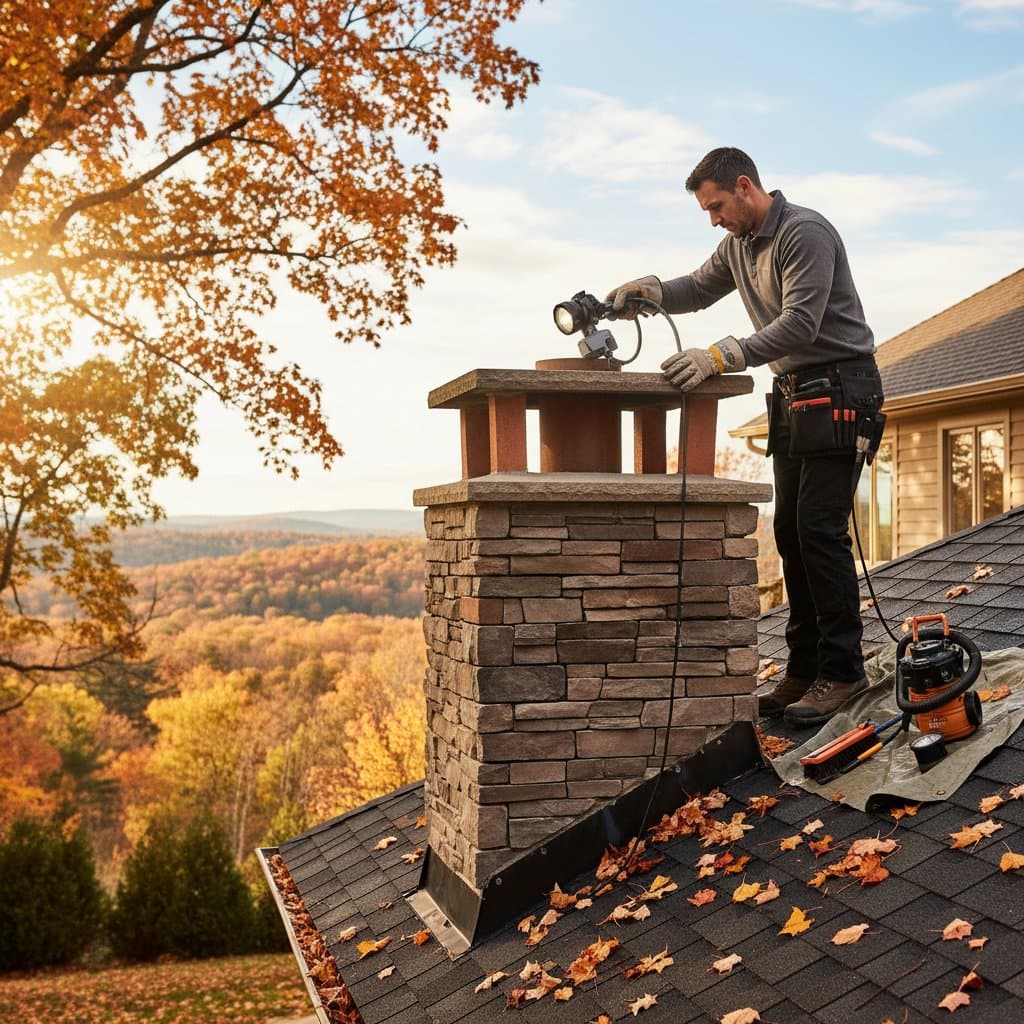
Some homeowners consider performing a basic chimney check independently. A simple visual examination using a flashlight from the firebox proves feasible. Observe for shiny black deposits, loose bricks, or visible obstructions; if present, contact a professional immediately. Certified technicians utilize advanced equipment, including rotary brushes, video cameras, and soot vacuums, to access all areas securely.
Professional tools encompass:
- Industrial-grade wire brushes matched to flue dimensions
- High-powered vacuums equipped with HEPA filters
- Video inspection systems to identify internal cracks
- Moisture meters to detect water penetration
Inspections generally range from 100 to 300 dollars, based on chimney height and condition. Consistent professional maintenance avoids extensive structural repairs that may cost thousands.
Common Mistakes Homeowners Make
Fall chimney checks mitigate several preventable issues:
- Overlooking inspections for gas fireplaces. Gas units generate moisture and residue that corrode liners over time.
- Relying on chimney cleaning logs instead of sweeps. These products loosen deposits but fail to remove them thoroughly.
- Disregarding minor leaks. Ceiling water stains near the chimney often indicate flashing failure rather than roof problems.
- Burning trash or treated wood. Such materials release chemicals that hasten creosote buildup and harm metal parts.
Steering clear of these errors enhances fireplace efficiency and improves indoor air quality. Vigilance in fuel selection and maintenance routines supports long-term safety.
Accessibility and Safety Considerations
Homeowners with mobility challenges face risks when attempting roof access or high flue inspections. Numerous chimney services provide video-based evaluations, displaying live footage on a tablet from indoors. For homes with gas inserts or electric units, technicians assess vent pipes and seals without requiring roof entry. Verify that contractors hold certification from the Chimney Safety Institute of America or an equivalent body.
This approach ensures thorough evaluations while prioritizing personal safety. Accessible options make professional care viable for all households.
When to Schedule Repairs
Inspections uncovering cracked liners, deteriorated mortar joints, or corroded dampers demand immediate repairs. Exposure to water and freezing conditions accelerates damage progression. Replacing a stainless steel flue liner costs between 800 and 2000 dollars, varying by height and configuration. Sealing the chimney crown or installing a new cap ranges from 150 to 400 dollars.
These measures safeguard the entire heating system against progressive decline. Timely interventions extend the lifespan of chimney components and reduce future expenses.
Steps to Prepare Your Chimney for Safe Winter Use
Begin by selecting a certified professional through reputable directories or local recommendations. Clear the area around the fireplace and ensure easy access to the roof if needed. After the inspection, follow any recommended cleaning or repair schedules to optimize performance.
Regular upkeep transforms the chimney into a reliable heat source. This preparation delivers peace of mind, allowing families to enjoy warm evenings without concern for hidden hazards.