Why Fall Chimney Checks Are Life-Saving
A cozy fire on a chilly evening provides perfect comfort until hidden chimney problems transform that warmth into danger. Many homeowners overlook yearly chimney inspections and view them as minor maintenance tasks. In truth, a neglected flue leads to fires, carbon monoxide leaks, and expensive structural damage. A fall chimney check focuses on more than efficiency; it prioritizes family safety.
The Real Danger Behind a Dirty Chimney
When wood burns, smoke carries unburned particles that adhere to the chimney's inner walls. Over time, this residue, known as creosote, accumulates. Layers thicker than one-eighth of an inch create a serious fire hazard. The National Fire Protection Association reports that chimney fires reach temperatures exceeding 2,000 degrees Fahrenheit, sufficient to crack masonry and ignite nearby wooden framing.
Carbon monoxide presents an equally grave risk. A blocked or damaged chimney allows these dangerous gases to flow back into the home. Because carbon monoxide lacks odor and color, residents often fail to detect it until symptoms such as dizziness or headaches emerge. Regular inspections and cleanings eliminate these silent threats before they worsen.
What a Fall Chimney Inspection Includes
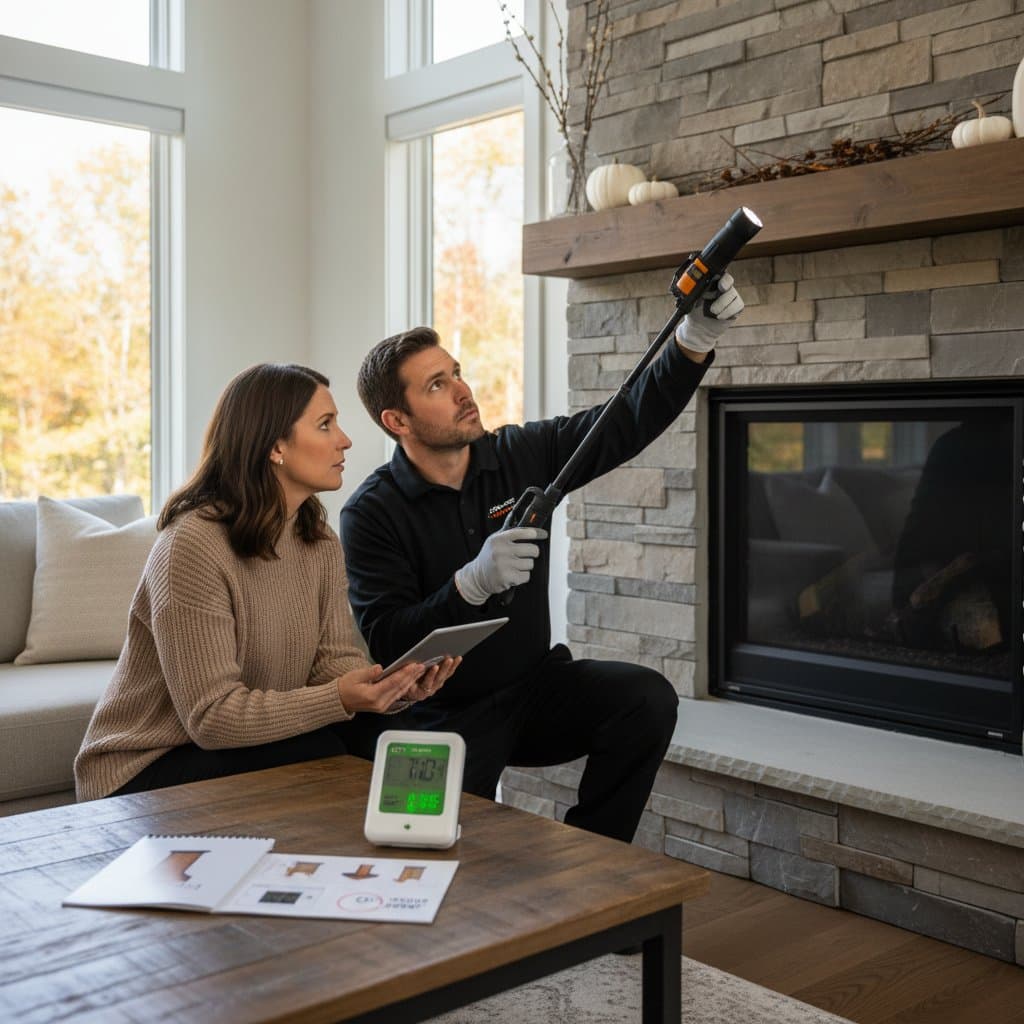
A thorough inspection examines more than surface-level soot. Certified chimney sweeps adhere to a comprehensive checklist that addresses safety and performance. The process reveals issues that affect both immediate hazards and long-term chimney health.
Here is what professionals typically inspect:
- Creosote buildup: Removal becomes necessary for any layer exceeding one-eighth of an inch.
- Flue obstructions: Items such as birds' nests, fallen leaves, or dislodged masonry restrict airflow.
- Cracks or gaps: Minor fractures in the liner expose combustible materials to excessive heat.
- Damper function: A damper that fails to open or close properly leads to energy loss and poor draft.
- Cap and crown condition: Absent or deteriorated caps permit moisture entry and animal intrusion.
- Masonry stability: Weakened mortar joints or crumbling bricks compromise the structure's integrity.
Inspections generally last one to two hours, depending on the chimney's height and design. For a standard single-flue chimney, costs range from 100 to 300 dollars for both inspection and cleaning. More intricate multi-flue systems or elevated exterior stacks may incur fees up to 500 dollars.
DIY vs. Professional Service
Homeowners can conduct a basic visual examination, but comprehensive assessment demands specialized equipment. A flashlight and mirror allow inspection of visible soot or blockages near the firebox. However, certified technicians deploy cameras that navigate the entire flue length to detect concealed cracks or obstructions.
Professionals recommend annual service for fireplaces used more than once weekly during cold months. Select a licensed chimney sweep certified by the Chimney Safety Institute of America. These experts furnish official reports suitable for insurance purposes, unlike informal DIY efforts.
Common Mistakes Homeowners Make
Well-meaning homeowners occasionally commit errors that heighten risks. Steer clear of these pitfalls to maintain chimney safety:
- Relying on chemical cleaners rather than manual brushing. Such products merely loosen superficial soot and prove ineffective against thick creosote deposits.
- Dismissing faint smoke odors. Lingering scents frequently indicate partial blockages or trapped moisture within the flue.
- Omitting inspections because the fireplace appears clean. Creosote accumulates in inaccessible depths beyond visual reach.
- Burning unseasoned wood. Damp logs generate excessive smoke and accelerate creosote formation. Opt for wood with moisture content under 20 percent.
Accessibility and Safety Considerations
Individuals with respiratory conditions require particular vigilance regarding chimney maintenance. Inadequate draft or subtle blockages degrade indoor air quality. For older residents, ladder access to inspect roof-level components poses significant hazards. Professionals, equipped with harnesses and safety equipment, handle such tasks securely.
During scheduling, inquire whether the technician can verify the functionality of smoke and carbon monoxide detectors in the same visit. These complementary systems enhance overall home protection.
Scheduling Your Fall Inspection
Incorporate a chimney inspection into your fall home maintenance routine before temperatures plummet. Book appointments early, as certified sweeps fill schedules rapidly with the onset of cold weather. Maintain records of inspections, including details of any repairs performed. After each use, clean the fireplace thoroughly and secure the damper once embers extinguish.
View your chimney as an essential home system warranting proactive care. This modest investment averts substantial damage and ensures safe, enjoyable fires throughout the season.