DIY Versus Professional: Informed Choices for Fall Furnace Maintenance
Cooler mornings signal the need to prepare your furnace before winter arrives. A system lacking attention can increase energy consumption, elevate expenses, and fail during critical moments. Homeowners must decide between performing basic upkeep personally or engaging a qualified technician, based on familiarity with maintenance, system age, and risk tolerance.
Essential Overview
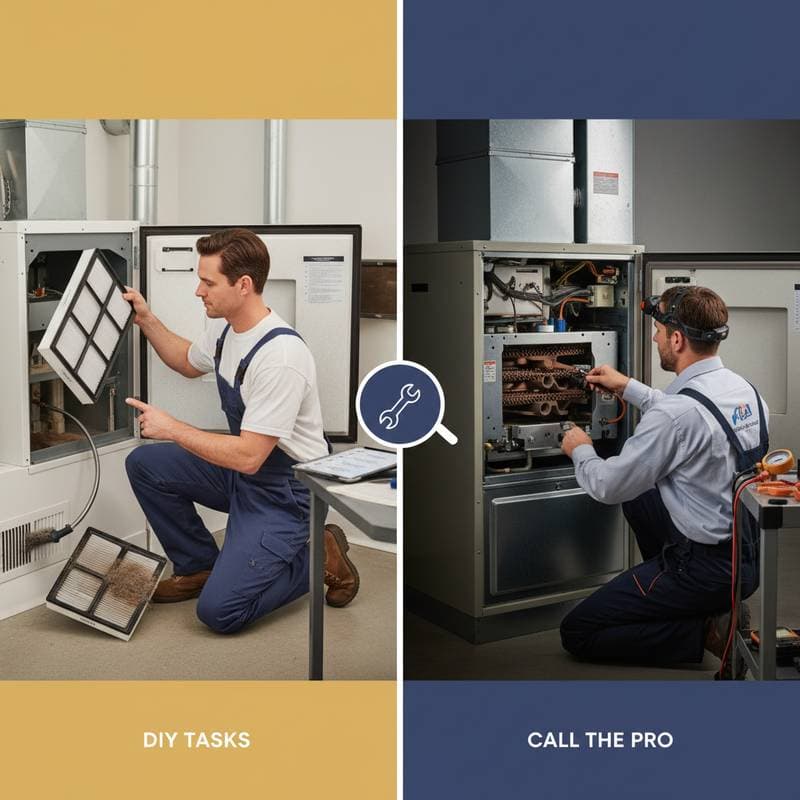
Homeowners can manage straightforward tasks including filter replacement, thermostat verification, and exterior vent cleaning without issue. Tasks involving gas connections, electrical components, or internal mechanisms demand the skills of a licensed HVAC specialist. Professional inspections generally range from $100 to $300, varying by equipment type and geographic area. Such services deliver reassurance and optimize performance, justifying the expenditure.
Importance of Regular Furnace Maintenance
Unexamined furnaces diminish in efficiency over time. Accumulation of dust, obstructed vents, or improperly aligned burners can impair operation by up to 15 percent, per energy efficiency studies from the National Kitchen & Bath Association. Scheduled maintenance reduces utility costs and prolongs equipment life by multiple years. Manufacturers advise yearly servicing to uphold warranty conditions.
Safe DIY Maintenance Tasks
Focus DIY efforts on preventive measures and surface cleaning, avoiding any adjustments to core functions. The following steps suit most homeowners with minimal tools.
1. Replace or Clean the Air Filter
Perform this task every one to three months.
Filters commonly measure 16x20 inches to 20x25 inches.
Select pleated options with a MERV rating of 8 to 11 to balance particle capture and air circulation.
Clogged filters hinder airflow, forcing the furnace to strain. Shut off power to the unit prior to filter removal. Ensure the directional arrow on the new filter faces the blower assembly.
2. Vacuum the Cabinet Exterior and Interior
Employ a vacuum equipped with a soft brush to clear dust from the blower area and surrounding vents. Maintain a clearance of at least 30 inches around the unit for adequate airflow. Avoid introducing liquids or chemical cleaners into the enclosure.
3. Examine the Thermostat
Switch the thermostat to heating mode and increase the setting by three degrees. The furnace activates within one to two minutes under normal conditions. If response fails, install fresh batteries or inspect wiring connections after removing the faceplate.
4. Verify Vents and Registers
Inspect all supply and return vents throughout the residence to ensure they remain unobstructed and dust-free. Restrictions lead to inconsistent temperatures and added system stress. Attach a vacuum hose to extract lint, pet fur, or other accumulations.
5. Test Carbon Monoxide Detectors
Install detectors within 10 feet of every sleeping area in homes with gas furnaces. Change batteries biannually and conduct monthly tests. Functional alarms provide vital early warnings against potential hazards.
Scenarios Requiring Professional Intervention
Certain furnace elements pose significant risks without proper certification. Gas valves, ignition sources, burners, and wiring demand expert handling. Technicians utilize precise instruments, such as manometers for pressure assessment and combustion analyzers for emission evaluation.
Components of a Professional Inspection
| Service | Description | Typical Duration |
|---|---|---|
| Burner inspection | Cleans and adjusts burners for optimal combustion | 20 minutes |
| Blower evaluation | Assesses motor current and lubricates fan blades | 15 minutes |
| Safety mechanism test | Validates limit switches and ignition sequences | 10 minutes |
| Gas pressure check | Confirms appropriate fuel flow for secure use | 10 minutes |
| Heat exchanger review | Identifies fissures that risk carbon monoxide leaks | 15 minutes |
Experts furnish a detailed report outlining inspections and suggested actions. This record supports warranty claims if future issues arise.
Evaluating Costs and Benefits
DIY methods limit expenses to filters and simple supplies, often totaling under $30 annually. This approach economizes but overlooks concealed problems, heightening potential dangers.
Professional evaluations cost $100 to $300, influenced by model and locale. Early detection averts failures that repair at $500 to $1,500. Annual pre-winter appointments benefit most households.
For units exceeding ten years in age, expert scrutiny reveals subtle deterioration. A fractured heat exchanger, undetectable visually, presents severe health threats if ignored.
Pitfalls to Sidestep
Neglecting filter updates represents the primary source of system overload and elevated consumption.
Positioning obstacles near return vents impairs circulation and performance.
Ill-fitting filters permit contaminants to circulate unchecked.
Overlook atypical sounds at your peril; vibrations or hums indicate possible imbalances or breaches.
Refrain from unauthorized internal modifications, as these invalidate protections and introduce dangers.
Steering clear of these errors sustains optimal function and security during frigid periods.
Accommodations for Accessibility and Safety
Select waist-level filter compartments for ease if mobility limits access. Magnetic tools simplify vent handling. Voice-activated smart thermostats assist those unable to reach traditional models. Label emergency shutoffs prominently and position them accessibly.
Opt for alarms featuring audio announcements and tactile feedback to address sensory challenges. Prioritize protection over ease in all adaptations.
Essential Tools for Home Maintenance
- Flashlight to illuminate concealed areas
- Vacuum cleaner with brush accessory
- Assorted screwdrivers for panel access
- Spare air filters
- Soft cloths for wiping surfaces
- Dilute soap solution for external cleaning
These items suffice for routine care. Advanced diagnostics necessitate specialized professional apparatus.
Tailoring Your Maintenance Strategy
Consider these factors to select the appropriate path:
-
Are you adept at recognizing furnace components?
-
Does warranty coverage apply, or has the unit aged beyond optimal performance?
-
Could a mid-winter failure severely impact your routine?
Implementing Your Plan
Align your decision with personal capabilities and system needs. Basic DIY actions enhance reliability while professional oversight safeguards against unseen threats. Consistent care ensures a warm, efficient home through the coldest months, minimizing surprises and maximizing comfort.