
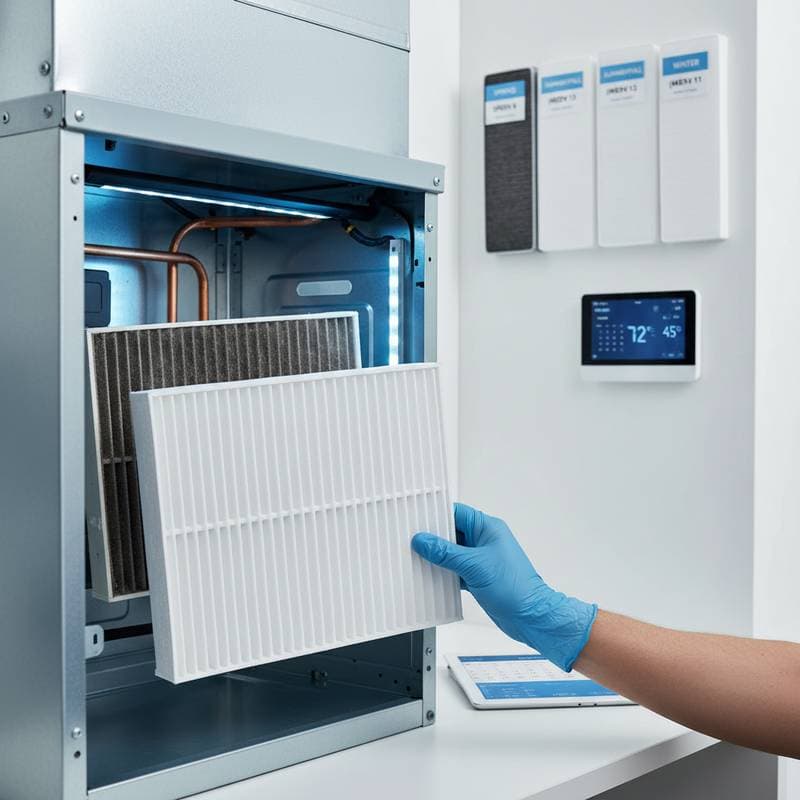
Quarterly Filter Rotations: Enhance HVAC Efficiency in 2026
Clean air filters represent the most straightforward and cost-effective measure to maintain optimal HVAC performance. Homeowners often overlook the significant energy losses and increased expenses resulting from clogged filters that accumulate dust, pet hair, and pollen. By adopting quarterly filter rotations, individuals can restore proper airflow, elevate indoor air quality, and decrease operating costs by up to 15 percent.
This guide details the implementation of a seasonal filter schedule to maximize HVAC efficiency, offers guidance on selecting appropriate filters, and outlines expectations for annual maintenance. Such practices not only extend equipment lifespan but also ensure consistent comfort throughout the year.
Understanding Seasonal Air Quality Variations
Air quality fluctuates with the seasons, requiring filters to adapt to varying demands. These changes influence the rate at which filters accumulate debris and the overall strain on the HVAC system.
- Spring: Pollen levels surge alongside rising dust, posing challenges for allergy sufferers. Install a fresh filter to capture these microscopic particles and prevent their distribution throughout living spaces.
- Summer: Intense cooling cycles cause the system to operate continuously, accelerating filter clogging. Quarterly replacements become critical to sustain unrestricted airflow during peak usage.
- Fall: Debris from falling leaves, mold spores, and outdoor particles infiltrate through ventilation points, intensifying filter workload.
- Winter: Heating operations stir up indoor dust, while sealed windows limit natural ventilation. A clean filter promotes effective air circulation and preserves freshness.
Tailoring filter changes to these seasonal patterns optimizes system efficiency and safeguards respiratory health by minimizing airborne contaminants.
Establishing a Quarterly Filter Maintenance Schedule
A well-defined schedule promotes reliability and simplifies upkeep for any HVAC system. Regular reminders for quarterly inspections or replacements help avert airflow restrictions before they impact performance.
Divide the year into four distinct phases for targeted maintenance:
- Early spring: Swap the filter in advance of pollen peaks to prepare for increased outdoor allergens.
- Early summer: Examine the filter for dirt accumulation and replace it to support heightened cooling demands.
- Early fall: Update the filter to handle the transition to heating and accumulating outdoor residues.
- Early winter: Install a new filter to facilitate clean air movement during extended indoor confinement.
Households with pets or multiple occupants should perform monthly visual checks, even if full replacements align with the quarterly timeline. Professionals note that pet-heavy environments can saturate filters at double the speed compared to others.
Step-by-Step Guide to DIY Filter Replacement
Most filter replacements require minimal effort and can be accomplished in under 15 minutes using basic household tools. This process empowers homeowners to maintain their systems independently.
Follow these precise steps for a seamless update:
- Power down the HVAC unit. Shutting off the system avoids dispersing dust particles into the ductwork.
- Identify the filter slot. Look for it adjacent to the return air grille or within the blower assembly.
- Extract the used filter. Remove it gently to contain any loose debris.
- Note the dimensions. Refer to the markings on the frame for exact length, width, and depth when purchasing a substitute.
- Position the new filter correctly. Align the directional arrows toward the blower to match the airflow path.
- Reactivate the system. Operate it briefly to verify smooth, unobstructed air movement.
Should unusual noises like whistling emerge or airflow appear inconsistent post-installation, reassess the filter fit. Adhere strictly to the manufacturer's specifications for size and material thickness to prevent operational issues.
Resolving Frequent Filter and Airflow Challenges
Even with diligent care, certain problems may arise. Addressing them promptly restores system balance.
Issue: Premature filter clogging
Resolution: Investigate potential dust contributors, including ongoing renovations, intense pet fur, or drafts from unsecured windows. Opt for pleated filters boasting elevated MERV ratings to enhance particle capture without excessive resistance.
Issue: Diminished airflow despite a recent filter change
Resolution: Examine ductwork and vent openings for obstructions. Clean registers thoroughly and reposition any obstructing furniture or carpeting.
Issue: Filter deformation or displacement
Resolution: Confirm compatibility of filter dimensions and secure the access panel firmly. Excessive fan pull can dislodge undersized or fragile media; select reinforced options if needed.
Realizing Long-Term HVAC Benefits
Quarterly filter rotations deliver tangible advantages, from heightened efficiency and reduced energy expenditures to superior indoor air purity. Routine adherence curbs debris accumulation, shields components from wear, and upholds stable temperatures across seasons.
Those who maintain this discipline frequently observe stronger air circulation, diminished service needs, and substantial utility savings. Whether performing tasks personally or integrating them into professional servicing, the outcome remains consistent: pristine filters underpin superior HVAC functionality.




