2025 Attic Insulation: Strong Returns, Costs, and Energy Benefits
Upgrading attic insulation ranks among the most effective methods to reduce energy bills and enhance home comfort. Homeowners who evaluate return on investment find that insulation projects deliver substantial payback through energy savings, better indoor temperatures, and increased property values. For those considering energy-efficient improvements, attic insulation warrants careful consideration.
The Importance of Attic Insulation
Attics serve as major pathways for heat loss during winter and heat gain in summer, disrupting the home's overall temperature regulation. Inadequate insulation permits conditioned air to escape, compelling heating and cooling systems to operate more intensively. This leads to elevated energy use and inconsistent comfort across different levels of the home.
Energy experts indicate that properly installed attic insulation can reduce heating and cooling expenses by as much as 15 percent. Savings fluctuate based on geographic location and current insulation quality, yet the benefits remain reliable enough to position attic upgrades as a leading energy enhancement option.
Calculating Return on Investment for Attic Insulation
Homeowners assess insulation upgrades by the speed at which they recoup costs. Return on investment for these projects typically ranges from 60 to 120 percent, influenced by local climate, selected materials, and prevailing energy prices. Consequently, the investment often recovers within two to five years via reduced utility bills.
Beyond immediate financial gains, insulation enhances a home's market appeal. Prospective buyers prioritize energy-efficient features, and real estate professionals highlight recent insulation updates alongside modern heating systems or energy-efficient windows as key advantages.
Material Costs and Options
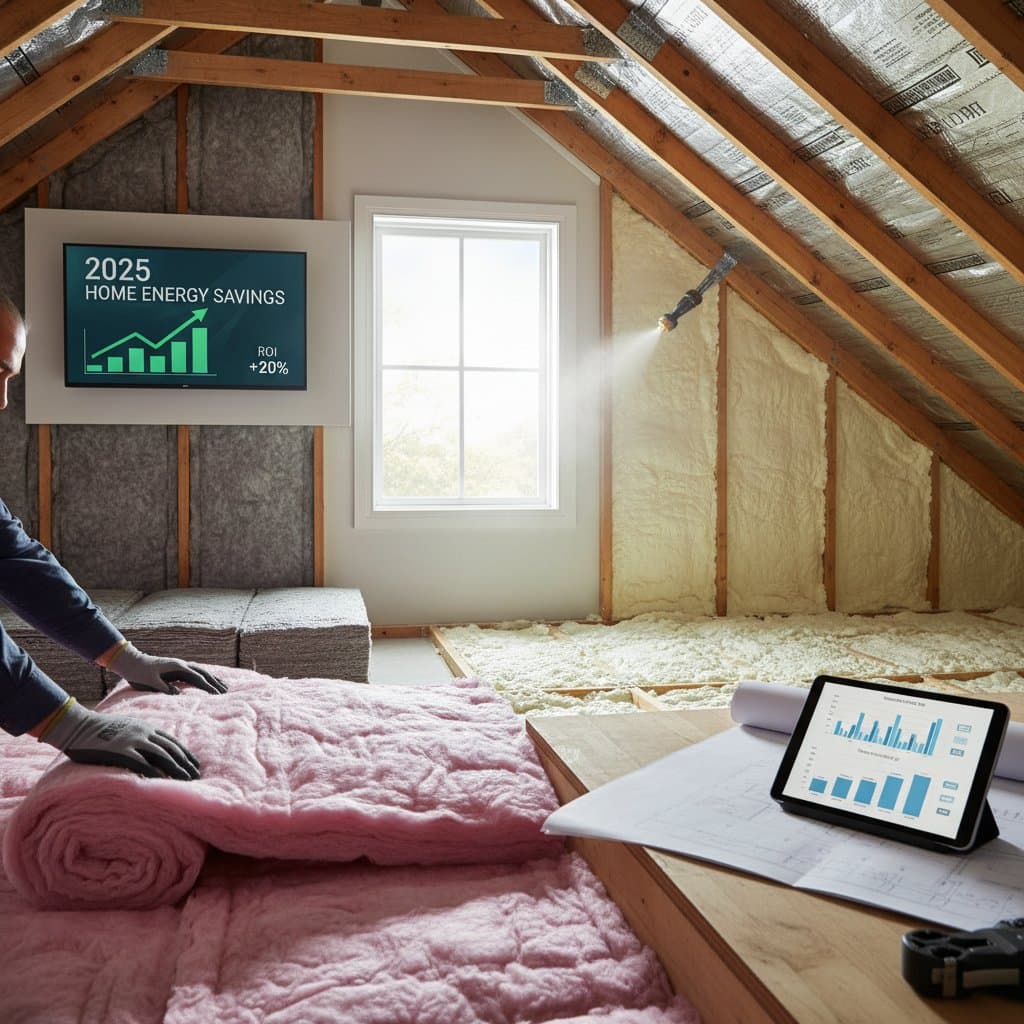
Attic insulation expenses depend on the material selected, regional labor rates, and attic dimensions. The following outlines popular choices and associated budgeting considerations.
Fiberglass Batt Insulation
This budget-friendly option costs approximately $0.50 to $1.50 per square foot installed. It suits DIY efforts due to straightforward application, though expert installation guarantees uniform coverage. Fiberglass provides reliable thermal resistance, yet imprecise cutting may result in minor voids.
Blown-In Cellulose
Derived from treated recycled paper, cellulose excels at filling irregular spaces around electrical wiring and beams. Installation costs range from $1.00 to $2.00 per square foot. Professionals deploy pneumatic equipment to distribute it evenly, minimizing labor duration and improving air barriers.
Spray Foam Insulation
As a high-end solution, spray foam adheres to surfaces and seals gaps completely, with costs between $2.50 and $4.00 per square foot. It yields superior long-term savings through maximal energy retention. Closed-cell variants also bolster structural integrity and resist moisture, ideal for aging homes with drafts.
Mineral Wool
Known for superior fire and sound insulation, mineral wool ranges from $1.50 to $3.00 per square foot. Homeowners seeking enhanced safety and reduced noise transmission often select it despite the elevated expense.
Choosing Between DIY and Professional Installation
The choice between self-installation and hiring experts hinges on experience, attic layout, and safety concerns. DIY approaches cut labor expenses but demand appropriate tools, safety equipment, and knowledge of ventilation principles.
DIY suits scenarios where:
- The attic features accessible joists and ample space for movement.
- The task involves layering batts or rolls over existing insulation.
- No underlying issues like moisture or drafts exist.
Professional services prove essential when:
- Spaces are confined or irregularly shaped.
- Potential problems such as mold, pests, or dampness are present.
- Specialized methods like spray foam or blown-in applications are required.
Experts frequently incorporate air sealing, elevating overall performance. They evaluate ventilation systems and confirm compliance with building regulations, ensuring optimal results.
Steps to Prepare the Attic
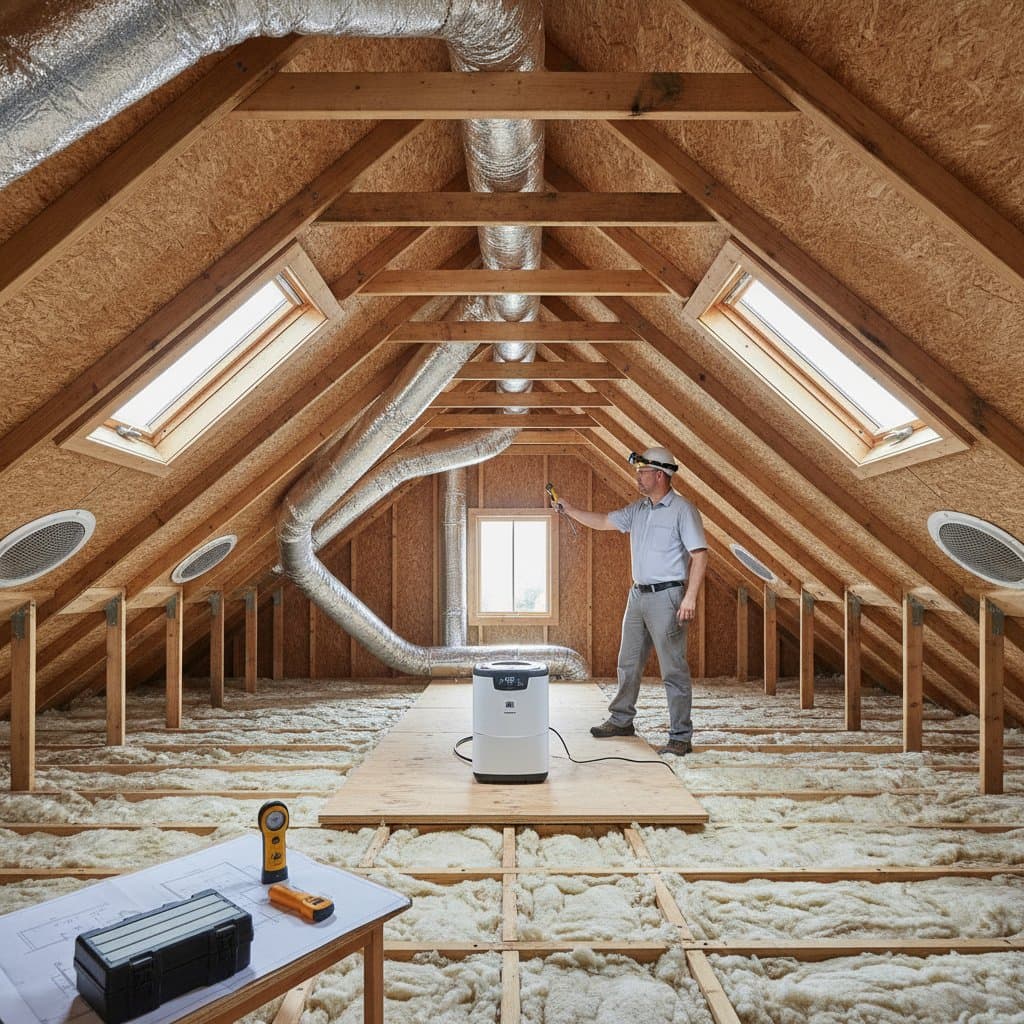
Thorough preparation underpins enduring insulation effectiveness. Prior to installation, examine the attic for roof leaks, water damage, and breaches near vents or flues. Apply caulk or foam sealant to close these gaps. Verify that soffit vents and baffles allow proper airflow to avert condensation and ice dams in cooler areas.
Evaluate current insulation thickness as well. Specialists advise R-values of R-38 to R-60 for attics, adjusted for climate zone. Additions become beneficial if levels fall short of these standards.
Key Energy and Comfort Advantages
Attic insulation curbs heat transfer, yielding direct reductions in heating and cooling demands. Energy Star guidelines suggest savings of 10 to 20 percent on annual energy expenditures following comprehensive sealing and insulation. In harsher climates, these figures may exceed expectations.
Additional advantages encompass:
- Enhanced Comfort: Uniform temperatures eliminate drafts and temperature variations.
- Extended HVAC Lifespan: Systems endure longer with reduced operational cycles.
- Sound Attenuation: Materials absorb external noise and internal reverberations.
- Sustainability Gains: Eco-friendly options like recycled cellulose lessen environmental impact.
Many residents observe decreased HVAC runtime and steadier humidity post-upgrade, amplifying value through these secondary effects.
Financing and Incentive Strategies
Projects scale from modest additions to comprehensive overhauls, with professional installations averaging $1,500 to $4,000 for typical attics. DIY supplies for similar spaces range from $300 to $1,200, varying by material and depth.
Federal tax credits and utility rebates frequently cover 10 to 30 percent of costs for qualifying upgrades, including insulation, sealing, and ventilation. Consult local energy agencies or national programs to identify applicable incentives that lower out-of-pocket expenses.
Pitfalls to Sidestep in Installation
Improper techniques undermine even quality materials. Refrain from compressing insulation, which diminishes its insulating capacity. Maintain clear soffit vents to avoid moisture entrapment. Utilize protective attire during handling of fiberglass or cellulose, and ensure recessed lights are insulation-contact rated before covering.
Overlooking air sealing represents a frequent error. While insulation resists conduction, unsealed leaks permit air movement. Address seals first to achieve peak performance.
Indicators for Upgrading or Replacing Insulation
Persistent attic extremes in temperature or escalating bills signal insulation deficiencies. Further cues include evident gaps, damp spots, or settled material. Legacy insulation often compacts, exposing sections to energy loss.
Schedule an inspection to determine if topping up suffices or full replacement is necessary. Infrared imaging helps pinpoint inefficiencies, guiding precise interventions.
Sustaining Insulation Performance
Regular attic inspections preserve investment value. Monitor for pest activity, dampness, or material compression. Keep vents free and insulation arid. During roof work, shield insulation from fallout and water exposure.
Effective attic insulation fosters sustained savings, comfort, and equity growth. Homeowners realize rapid, reliable gains from this foundational upgrade when executed with precision.