2025 Tank Versus Tankless Water Heater Replacement Costs
A sudden failure in your water heater can disrupt daily routines, prompting a quick decision on replacement options. Homeowners face the choice between conventional tank units and modern tankless systems. Each delivers hot water effectively, yet they vary significantly in initial expenses, energy consumption, installation demands, and overall value. Grasping these distinctions enables informed selections that align with specific household requirements.
Initial Purchase and Installation Expenses
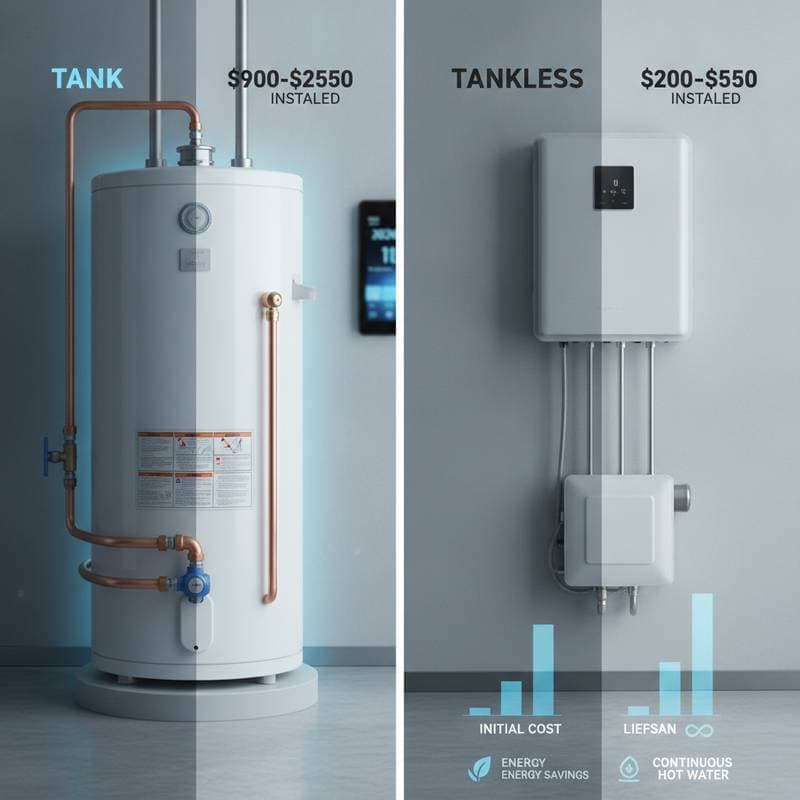
Standard tank water heaters present the more affordable entry point, with total installed costs ranging from $600 to $1,800. Factors such as unit capacity, typically measured in gallons from 30 to 80, and fuel source—gas or electric—influence the final price. Gas-fired tanks often approach the upper limit due to robust components, while electric versions remain somewhat lower in cost.
Tankless water heaters demand a greater upfront commitment, with installation fees spanning $2,500 to $4,800. Premium condensing models, which capture exhaust heat for added efficiency, may surpass $5,000. This premium stems from the unit's advanced technology and the need for professional adjustments to existing infrastructure, including potential expansions to gas lines or electrical panels.
Home improvement professionals frequently note that retrofitting older homes for tankless operation involves evaluating flow rates—measured in gallons per minute—to match household demand. For instance, a family of four requires at least 7-9 GPM capacity, which might necessitate circuit upgrades costing $500 or more.
Energy Consumption and Ongoing Operational Expenses
Tankless systems excel in efficiency by activating only during hot water draws, eliminating the constant energy drain of standby losses. Traditional tanks, by contrast, maintain a reservoir at set temperatures around the clock, leading to unnecessary fuel or electricity use. This on-demand approach in tankless units typically cuts energy consumption by 20 to 35 percent.
For an average household using 64 gallons of hot water daily, these savings equate to $100 to $200 annually on utility bills, based on national average rates of $0.13 per kWh for electricity or $1.50 per therm for gas. High-efficiency tank models, featuring enhanced insulation like foam cores, narrow this gap but rarely match the precision of tankless performance.
Consider your local energy costs and usage habits; homes in colder climates or with multiple bathrooms benefit most from tankless efficiency, as they handle simultaneous demands without temperature drops.
Durability, Maintenance Needs, and Repair Considerations
Expect a tank water heater to operate reliably for 8 to 12 years under normal conditions. Internal corrosion from water minerals often limits this span, particularly without annual sediment removal. Tankless units, constructed with durable heat exchangers often made of stainless steel, endure 20 years or longer with routine upkeep.
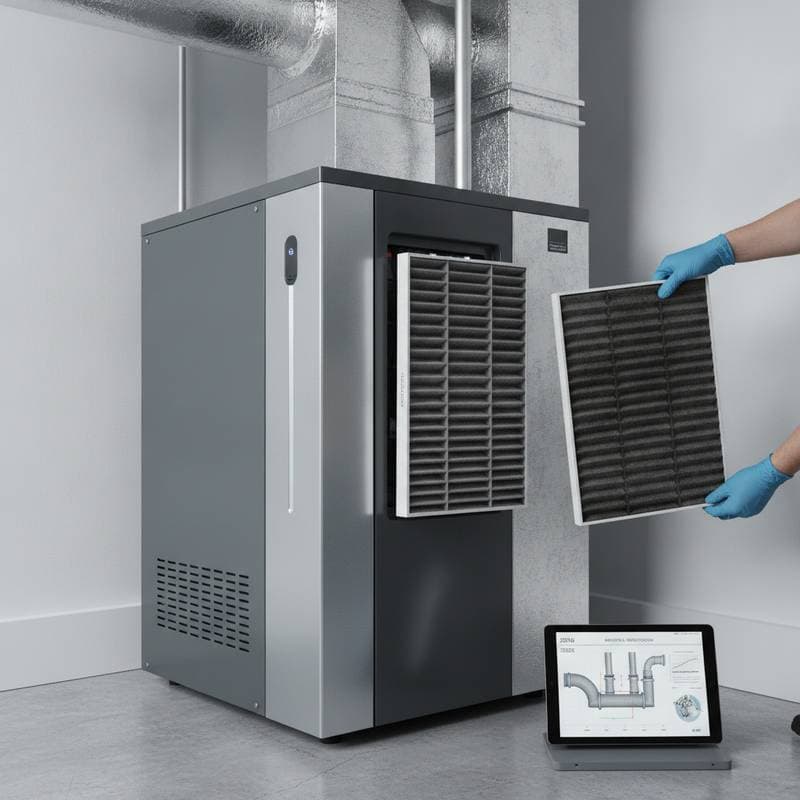
Both types require preventive care to maximize lifespan. Tanks benefit from annual flushing to clear mineral deposits, a process that takes about 30 minutes and prevents efficiency drops of up to 20 percent. Tankless models need descaling every 1 to 3 years, depending on water hardness; installing a whole-home softener for $800 to $2,000 can minimize this task.
Repair dynamics differ as well. Tankless systems allow modular part replacements, such as flow sensors or igniters, often under $300 per fix. Tanks, once the anode rod or lining degrades, typically warrant full unit swaps rather than piecemeal repairs.
Installation Processes, Space Demands, and Home Compatibility
Replacing a tank unit proceeds swiftly, often within four to six hours, if the new model matches the old one's specifications. Position these units in dedicated spaces like garages or closets, ensuring proximity to drains to manage potential leaks safely. Space needs range from 2 to 4 square feet, plus clearance for ventilation.
Tankless installations extend to one or two days, involving assessments of gas pressure (requiring 199,000 BTU minimum for gas models) or amperage (up to 150 amps for electric). Their compact design—often under 2 feet tall—suits wall mounting in kitchens or laundry areas, reclaiming floor space. However, conversions between fuel types add $1,000 or more for line rerouting and code-compliant venting.
Evaluate your home's layout early; older structures may need structural reinforcements for wall mounts, while apartments favor electric tankless options to avoid gas modifications.
Ecological Footprint and Financial Incentives
The on-demand nature of tankless heaters reduces wasted energy, lowering carbon emissions by up to 30 percent compared to tanks. This aligns with broader sustainability goals, appealing to environmentally conscious owners. Gas tankless models further minimize emissions through efficient combustion.
Financial perks include rebates from utilities, often $300 to $800, and federal tax credits up to $600 under energy efficiency programs. These incentives effectively bridge the cost divide, making tankless adoption more accessible for qualifying installations.
Weighing Long-Term Value for Your Household
The decision hinges on your anticipated tenure in the home and daily hot water volume. For short-term residents or low-usage scenarios, like single-occupant dwellings, a tank provides simplicity and immediate savings. Larger families or those planning to remain 10 years or more often recoup tankless investments within 5 to 7 years via reduced bills and extended service.
Calculate potential payback by tallying annual savings against the $3,000 premium; tools like online efficiency calculators can personalize this based on your zip code and habits.
Steps to Optimize and Sustain Your Water Heater
Select a certified installer through local associations to ensure compliance and warranty validity, typically 6 to 12 years for tanks and up to 15 for tankless. Post-installation, set temperatures to 120 degrees Fahrenheit to balance comfort and safety, potentially saving another 10 percent on energy.
Schedule professional inspections annually, focusing on pressure relief valves and insulation integrity. These practices not only prolong equipment life but also safeguard against unexpected failures, preserving your investment for years of reliable service.