Stop Roof Moss Damage with Spring DIY Fixes
A green layer of moss may appear picturesque on a cottage roof, yet it gradually erodes shingles and diminishes the roof's longevity. Spring introduces extended daylight and regular precipitation, fostering ideal conditions for moss proliferation. Address the issue promptly to maintain roof integrity, ensure clear gutters, and shield the home from leaks and decay.
Why Roof Moss Poses a Serious Threat
Moss retains moisture akin to a sponge. As it accumulates between shingles, the trapped water infiltrates the materials and sustains dampness for extended periods. This process eventually results in:
- Shingle degradation through the breakdown of protective granules
- Water infiltration as moss dislodges shingles and reveals the underlayment
- Structural decay in the roof decking and fascia boards
- Gutter blockages caused by falling moss fragments
A modest moss accumulation can shorten the roof's service life by multiple years. Early intervention during spring minimizes the scope and expense of subsequent repairs.
Quick Answer: The Most Effective Spring Solution
The optimal spring approach to roof moss involves manual removal combined with preventive treatment. Begin by safely clearing the surface, then apply a moss-inhibiting agent to curb regrowth amid seasonal humidity. Allocate a single clear weekend, assemble safety equipment, and adhere to a systematic process to safeguard both the roof and personal well-being.
Step 1: Inspect and Prepare
Prior to ascending, circle the property to identify moss concentrations, dark streaks, or warped shingles. Focus on shaded regions, such as the north-facing side or areas beneath overhanging limbs, which serve as primary moss habitats.
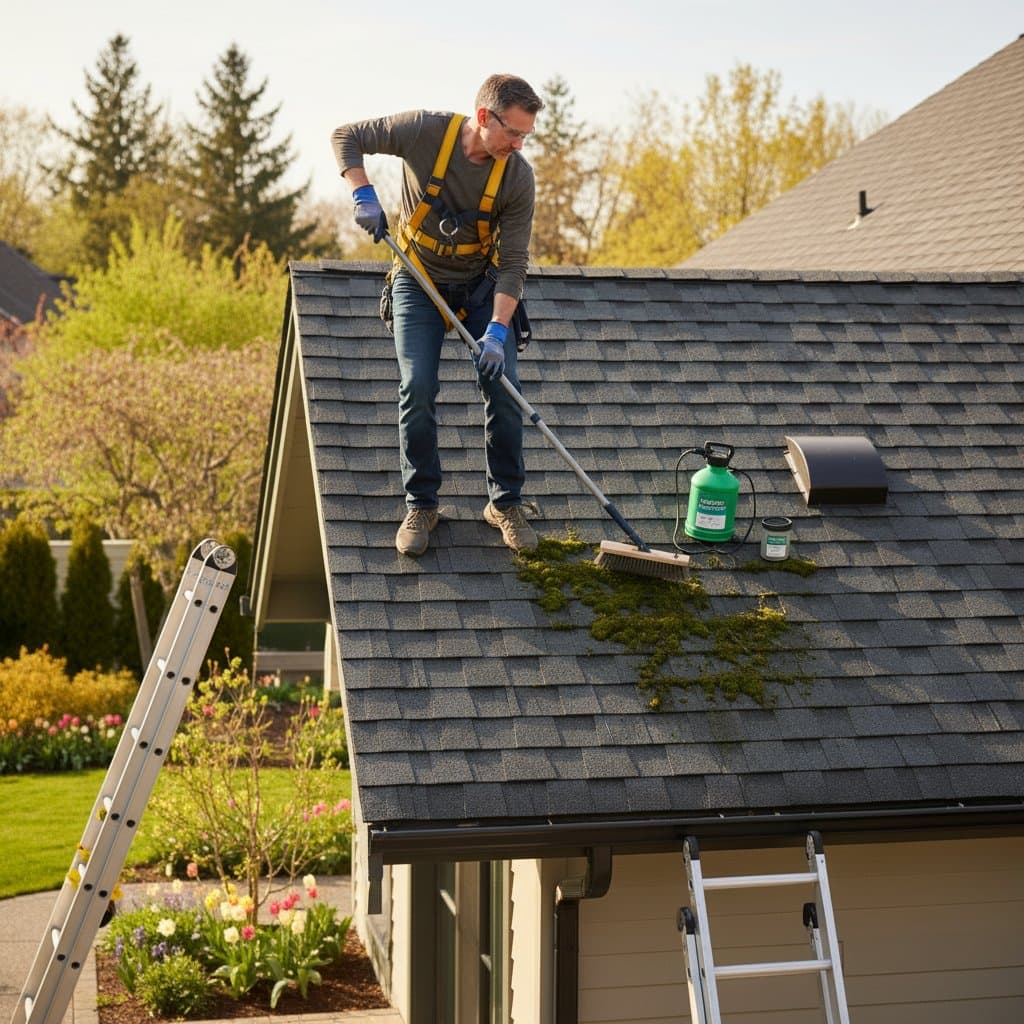
Essential items include:
- A robust ladder rated to support the user's weight plus an additional margin
- A safety harness firmly secured to a stable anchor point
- Footwear with non-slip soles
- A garden hose equipped with an adjustable spray nozzle
- A plastic scraper or soft-bristle brush
Avoid employing metal tools or high-pressure washers, as these can harm shingles and invalidate manufacturer warranties.
Step 2: Manual Moss Removal
Commence at the roof's peak and proceed downward. This method ensures that water and debris do not infiltrate beneath the shingles. Employ light strokes with the brush to dislodge moss clusters.
- Maintain a shallow brush angle of approximately 45 degrees
- Refrain from scraping into the shingle surface
- Rinse areas with low-pressure water intermittently
For substantial, resistant patches, allow them to air-dry for 24 hours. Dehydrated moss often fragments and detaches with minimal effort.
Step 3: Apply a Moss-Control Solution
Following the removal of visible moss, administer a moss-killing solution to halt future development. Options include:
| Type | Active Ingredient | Coverage | Best For |
|---|---|---|---|
| Liquid moss remover | Zinc sulfate or potassium salts | 500 to 1,000 sq ft per gallon | Large roofs |
| Dry powder treatment | Zinc or copper compounds | 1 lb per 100 sq ft | Spot treatment |
| DIY mix | 1 part bleach to 3 parts water | Variable | Small roofs or limited moss |
Apply the solution via spraying or scattering on an overcast, dry day, allowing it to penetrate for several hours prior to any rainfall. Shield adjacent vegetation with plastic sheeting and dilute any runoff to protect surrounding landscaping.
Step 4: Prevent Future Moss Growth
With the roof cleared, implement measures to deter recurrence. Moss flourishes in shaded, humid settings, so enhancements to illumination and circulation yield significant benefits.
- Prune tree branches to maintain at least 6 feet of clearance from the roof perimeter
- Clear gutters regularly to facilitate unobstructed water drainage
- Install zinc or copper strips along the ridge, positioned at intervals of 2 to 3 feet
- Evaluate attic ventilation to eliminate moisture accumulation under the roof sheathing
A zinc strip, measuring roughly 2 inches in width, disperses metal ions during rainfall. These ions effectively suppress moss and algae for multiple seasons.
Common Mistakes to Avoid
Even diligent homeowners may encounter pitfalls during the process. Steer clear of these frequent oversights:
- Employing a pressure washer: Such devices erode protective granules and compromise shingle strength
- Neglecting safety equipment: Roofs become hazardous, particularly post-moss clearance
- Handling chemicals imprudently: Excess application may discolor exterior surfaces or harm flora
- Overlooking initial indicators: Minor moss areas expand rapidly in elevated humidity
For roofs with extensive moss or steep inclines, engage a professional roof cleaning service equipped with appropriate harnesses and eco-friendly products.
Accessibility and Safety Considerations
Owners of single-story residences can typically manage roof sections using a reliable extension ladder. Roofs steeper than a 6:12 pitch, where the rise measures 6 inches per 12 inches of horizontal run, warrant professional assistance. Ensure a companion remains on the ground to steady the ladder and manage rinsing operations.
Maintain a minimum 10-foot distance from power lines or skylights during work. Utilize a ground-fault circuit interrupter (GFCI) for any electrically powered spraying devices to mitigate electrocution hazards.
Cost and DIY Feasibility
The expense for DIY moss removal ranges from $30 to $80 for materials, varying by roof dimensions. Hiring professionals typically costs $250 to $600 for average households. Opt for expert intervention on aged or delicate roofs to avert unintended harm.
Individuals with intermediate DIY experience can execute the cleaning, rinsing, and treatment phases. Affixing zinc strips or upgrading ventilation might necessitate fundamental woodworking skills.
Sustaining Roof Health Year-Round
After treatment, conduct routine evaluations to preserve the roof's condition. Inspect for moss accumulation each spring and late autumn. Clear foliage and refuse following inclement weather, with particular attention to shaded valleys. Biannual 30-minute assessments can avert repair costs amounting to hundreds of dollars.