Save Big with Greywater: Costs and Permits Uncovered
Homeowners seeking practical methods to reduce water bills and minimize waste increasingly adopt greywater systems. These setups redirect lightly soiled water from sinks, showers, and laundry machines for uses such as irrigation or toilet flushing, rather than allowing it to flow into sewers. When installed correctly, such systems conserve thousands of gallons annually, decrease utility expenses, and ease pressure on public water infrastructure. Before proceeding, individuals must grasp installation costs, permitting necessities, and strategies for long-term efficiency.
Understanding What Greywater Is
Greywater refers to wastewater generated from household fixtures including bathroom sinks, bathtubs, and washing machines. This category excludes toilet water or kitchen sink discharge, which qualifies as blackwater and demands specialized handling. Due to the presence of soaps and organic materials, greywater requires filtration and careful distribution to prevent health risks from contamination.
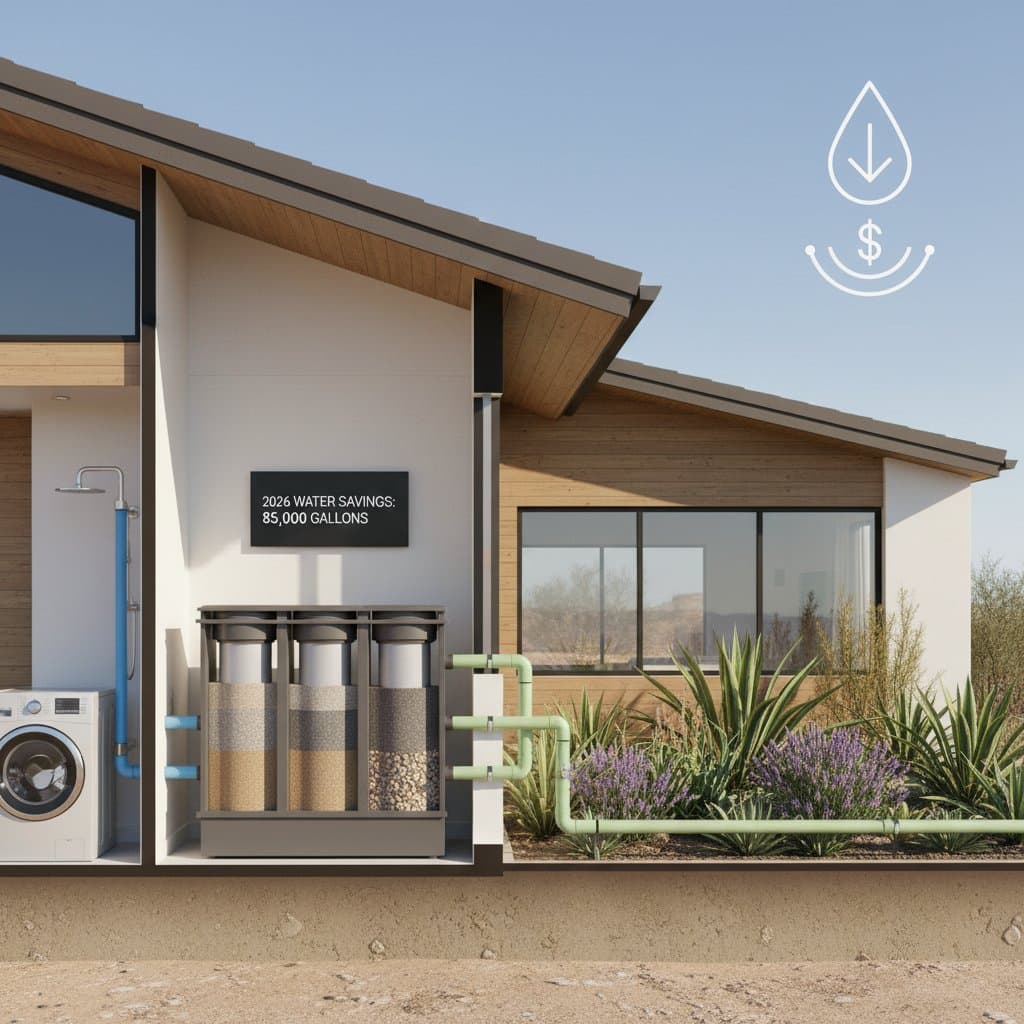
Basic configurations gather greywater, apply filtration, and channel it toward irrigation networks or storage reservoirs. Advanced variants process the water for indoor applications like toilet replenishment. Selection hinges on the volume of water targeted for reuse and the configuration of existing plumbing.
Average Cost of Greywater Systems
Costs for greywater systems fluctuate based on design intricacy, regional plumbing standards, and property scale. A straightforward laundry-to-landscape arrangement, which channels washing machine output to garden beds, ranges from $500 to $2,000. This includes essential components like hoses, adapters, and filters, and represents one of the simplest options with minimal plumbing modifications.
Comprehensive whole-house systems, which capture and redirect water from various sources, typically fall between $5,000 and $15,000. These encompass storage tanks, filtration units, pumps, and expert labor. Premium models featuring sophisticated purification and remote monitoring capabilities may surpass $20,000.
Labor constitutes a substantial share of expenses, particularly where excavation or pipe reconfiguration proves necessary. Professional rates generally span $75 to $150 per hour, varying by location. Those proficient in plumbing basics may reduce outlays by managing certain tasks independently, provided they adhere to permit and inspection protocols.
Factors That Affect Pricing
Multiple elements influence the overall expenditure:
- System Size and Design: Expansive residences with numerous bathrooms or extensive irrigation areas necessitate additional piping, oversized tanks, and enhanced filtration.
- Soil and Landscape Type: Sites with dense clay soils often require customized drainage solutions or subsurface drip irrigation to ensure uniform dispersal.
- Local Regulations: Fees for permits and inspections differ across municipalities. Certain regions promote greywater adoption through rebates, whereas others enforce rigorous compliance measures.
- Existing Plumbing Layout: Properties with readily accessible plumbing facilitate cost-effective retrofits. In contrast, vintage structures may demand extensive work to access concealed pipes.
- Automation and Monitoring: Features such as sensors for automatic diversion between greywater and potable sources enhance usability but elevate expenses.
Permit and Code Requirements
All greywater installations must conform to municipal plumbing codes to safeguard public health and avert environmental hazards. Most locales mandate permits for modifications to drainage or water reuse pathways. The approval sequence generally includes submitting designs for review, undergoing on-site inspections, and securing operational clearance.
Smaller installations, such as laundry-to-landscape designs, sometimes qualify as exempt from full permitting if they satisfy criteria like:
- Exclusive application to below-ground irrigation.
- Absence of surface spraying or accumulation.
- Incorporation of a diversion valve to revert flow to sewer lines when required.
Complex setups involving indoor reuse or multi-fixture integration invariably demand formal permits. Anticipate fees of $150 to $800 for processing and verification. Early consultation with the local building authority avoids expensive revisions post-purchase.
DIY or Professional Installation?
Modest greywater initiatives suit hands-on approaches. Rerouting a washing machine's output to landscaping via flexible hoses, adapters, and basic filters presents moderate challenges for plumbing novices.
Larger projects involving tanks, pumps, or buried lines benefit from licensed specialists, who ensure adherence to sanitary norms, backflow prevention, and soil percolation standards. Local codes frequently stipulate professional involvement for such scale.
DIY Difficulty Rating:
- Laundry-to-landscape: Easy to Moderate
- Whole-house gravity-fed: Moderate
- Pump-based or filtered systems: Advanced
Expected Savings and Payback Period
Effective greywater systems diminish residential water consumption by 25 to 40 percent. Realized economies vary with regional utility rates and irrigation needs. In high-cost water districts or arid climates, recovery of investment occurs in five to seven years. Lower-rate areas extend this timeline, yet ecological advantages persist.
Numerous utilities and conservation programs provide rebates offsetting 10 to 50 percent of upfront costs. Investigating incentives prior to commencement maximizes financial viability.
Maintenance and Operation Tips
Sustained performance demands routine care. Clean or replace filters every three to six months, and flush distribution lines quarterly to avert blockages. For pump-equipped units, examine components monthly for sediment accumulation.
Select biodegradable, greywater-compatible detergents to protect soil and vegetation. Monitor for signs like unpleasant smells or surface ponding, which indicate potential clogs or filtration failures.
Troubleshooting Common Issues
- Clogged Filters: Frequent blockages suggest excessive lint or particulates; add inline traps to appliance outlets.
- Uneven Water Distribution: Inspect emitters and tubing for obstructions from roots or debris in established landscapes.
- Odors or Sludge: These signal inadequate drainage; purge lines with fresh water and verify pipe gradients.
- Pump Failure: Detect irregularities through noise or reduced output; service seals and impellers promptly.
Environmental and Community Benefits
By recycling greywater, households contribute to broader water management efforts, curbing shortages and wastewater volumes. Data from agencies like the EPA indicate potential reductions in community water demands by up to one-third. Such practices not only yield personal savings but also lessen energy demands for treatment and conveyance.
Gardeners often observe enhanced growth in ornamental areas, as residual soap nutrients serve as subtle fertilizers.
Sustaining Long-Term Value
A greywater system represents a strategic investment in fiscal prudence and ecological stewardship. Proper initial setup yields ongoing efficiencies with routine oversight. Track bills to quantify reductions, typically evident within initial months.
Compliance through maintenance upholds code adherence and mitigates risks. For prospective sellers, a documented, operational system enhances marketability, appealing to eco-conscious buyers seeking reduced operating costs and alignment with sustainability trends.
Greywater adoption offers tangible steps toward resource conservation. Begin with targeted appliance redirection or pursue comprehensive integration to foster a resilient, cost-effective residence that safeguards communal water assets.