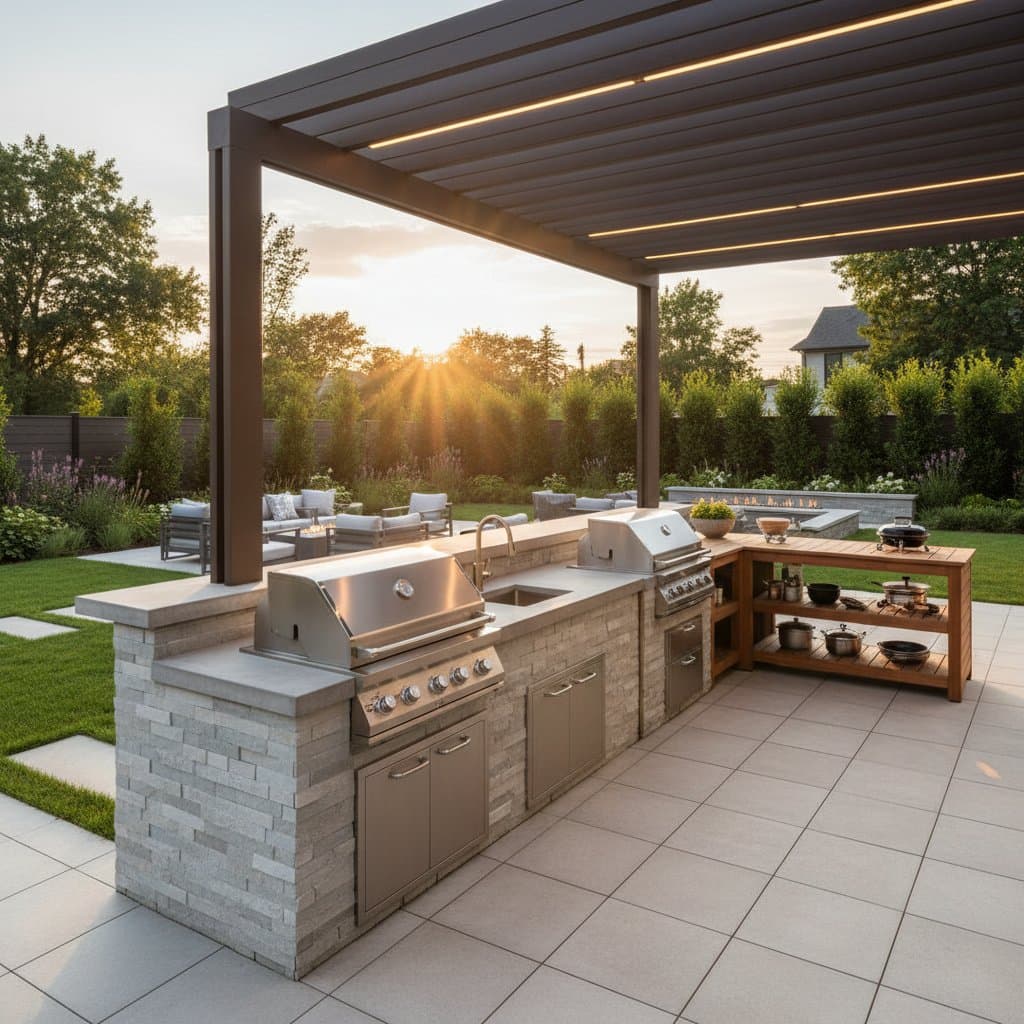
The True Cost of Building an Outdoor Kitchen in 2025
An outdoor kitchen elevates a backyard into a versatile hub for cooking and gatherings. Beyond basic elements like grills and counters, the project encompasses design, utilities, and long-term durability. Homeowners who grasp these components make informed choices that align expenses with functionality and avoid unforeseen costs.
Defining Your Project Scope
Outdoor kitchens differ significantly in scale and features. A basic configuration with a built-in gas grill, minimal counter space, and simple storage typically costs between $5,000 and $12,000. More comprehensive setups, featuring stone surfaces, plumbing, refrigeration, and tailored cabinetry, range from $25,000 to $50,000 or higher. Expansive installations that incorporate shaded seating, ambient lighting, and audio integration can surpass $80,000.
These variations stem from material selections, spatial arrangements, and regional labor rates. To begin, evaluate intended usage: a casual grilling area demands less than a venue for regular hosting. Compile a prioritized list of essentials, such as a sink or refrigerator, and defer non-essentials until budget assessment.
Design and Planning Expenses
Effective design forms the backbone of a resilient outdoor kitchen. Omitting thorough planning frequently leads to corrective expenditures. Engaging a professional designer or landscape architect incurs $500 to $2,500, yielding layouts that optimize appliance placement, airflow, and integration with existing landscapes.
Although online tools offer no-cost alternatives, expert input often yields net savings through foresight on drainage, wiring paths, and scalability. Professionals ensure compliance with site-specific conditions, reducing contractor errors and budget overruns.
Structural Materials and Their Impact
Choices in counters, flooring, and cabinetry profoundly affect expense and resilience. Exposed to elements like heat, rain, and sunlight, outdoor structures demand weather-resistant options over indoor varieties.
Key material categories include:
-
Countertops: Installed concrete runs $60 to $100 per square foot, accommodating unique forms. Granite or natural stone costs $70 to $150 per square foot for superior endurance against weathering. Tile and stainless steel provide economical options at slightly lower rates.
-
Cabinetry: Stainless steel units, prized for longevity, average $500 to $1,200 per linear foot. Alternatives like marine-grade polymers or masonry fall between $300 and $700 per linear foot, balancing affordability with outdoor suitability.
-
Flooring and Foundations: Pavers install at $10 to $25 per square foot; natural stone exceeds $40 per square foot. Leveraging an established patio minimizes foundation outlays.
Structural elements often comprise 40 to 60 percent of the budget. Selecting materials that harmonize initial cost with extended service life averts premature repairs.
Appliances and Functional Equipment
Appliances establish the kitchen's capabilities. Basic built-in grills start at $1,000, while advanced multi-zone models reach $10,000. Additions like smokers, pizza ovens, or side burners contribute hundreds to thousands more.
Standard appliance pricing:
- Built-in gas grill: $1,500 to $7,000
- Compact refrigerator: $400 to $1,200
- Ice maker: $800 to $2,000
- Sink and faucet assembly: $250 to $800
- Pizza oven: $1,500 to $5,000
- Ventilation hood: $700 to $2,500
Account for integration fees and utility hookups, which add $500 to $3,000 based on proximity to the home. Trenching or slab modifications amplify these figures, a detail contractors highlight as commonly overlooked.
Labor and Installation Considerations
Workforce expenses constitute 30 to 50 percent of the total. General contractors bill $50 to $150 hourly; specialists in electrical or plumbing command higher rates for intricate tasks. Masonry for bases and surfaces costs $40 to $100 per square foot.
Partial do-it-yourself efforts lower costs, yet errors in utilities pose safety risks and rectification expenses. Retain certified experts for all connections involving gas, water, or power. A hybrid model, with pros managing core infrastructure and owners adding finishes, optimizes safety and economy.
Permits and Regulatory Adherence
Projects involving utilities necessitate permits, with fees from $200 to $1,000 covering reviews and inspections. Certain locales mandate plans for drainage or fire prevention. Noncompliance risks complications during property resale.
Prior to starting, verify alignment with zoning ordinances, such as setbacks for flames near boundaries. Dedicating time to regulatory review forestalls disruptions and additional work.
Utility Extensions and Site Preparation
Infrastructure for power, gas, and water introduces variability. Electrical runs for outlets and lights cost $1,000 to $3,000. Gas line additions range from $500 to $2,500, influenced by length and terrain. Plumbing for sinks or dispensers adds $1,000 to $4,000.
Panel upgrades, if load capacity proves insufficient, incur $1,500 to $2,500. These foundational investments, often eclipsed by visible features, demand early budgeting to prevent escalations.
Shelter and Environmental Safeguards
Protection from weather extends usability across seasons. Basic pergola assemblies begin at $2,000; bespoke wooden or metallic enclosures surpass $10,000. Screened or glazed additions elevate costs but enhance comfort and ease maintenance.
Such coverings preserve warranties on equipment and prolong material integrity. Thoughtful designs integrate airflow to disperse cooking fumes while guarding against precipitation and rays.
Enhancements for Lighting, Seating, and Details
Illumination and furnishings elevate the area to an inviting retreat. LED options, including paths and accents, add $300 to $1,500. Seating ensembles range from $1,000 to $5,000.
Accessories like planters and storage contribute $500 to $2,000. Strategic lighting boosts evening safety and ambiance, while cohesive details foster a polished, user-friendly environment.
Annual Upkeep and Longevity
Post-construction, routine care sustains performance. Clean stainless surfaces to avert corrosion; seal stone periodically. Inspect grills seasonally for leaks and efficiency. Annual outlays average $200 to $600, varying by materials and locale.
In cold climates, winterize by draining lines and protecting units. Consistent attention prevents accelerated wear and untimely replacements.
Strategies to Optimize Your Budget
To manage costs effectively:
- Phase the build. Initiate with essentials, reserving expansion space for phased additions.
- Opt for modular kits. Prefabricated units deliver premium aesthetics at reduced rates compared to bespoke construction.
- Incorporate existing structures. Anchor to current patios to eliminate base expenses.
- Time purchases strategically. Acquire appliances during off-peak seasons for discounts.
- Layer material grades. Reserve high-end options for traffic zones, employing cost-effective choices elsewhere.
Securing Lasting Value from Your Outdoor Kitchen
Beyond upfront investments, the project's worth hinges on strategic foresight and ongoing stewardship. Allocating for regulations, infrastructure, and care creates a resilient space that enriches outdoor experiences without ongoing financial strain.