Understanding Septic System Replacement Costs in 2025
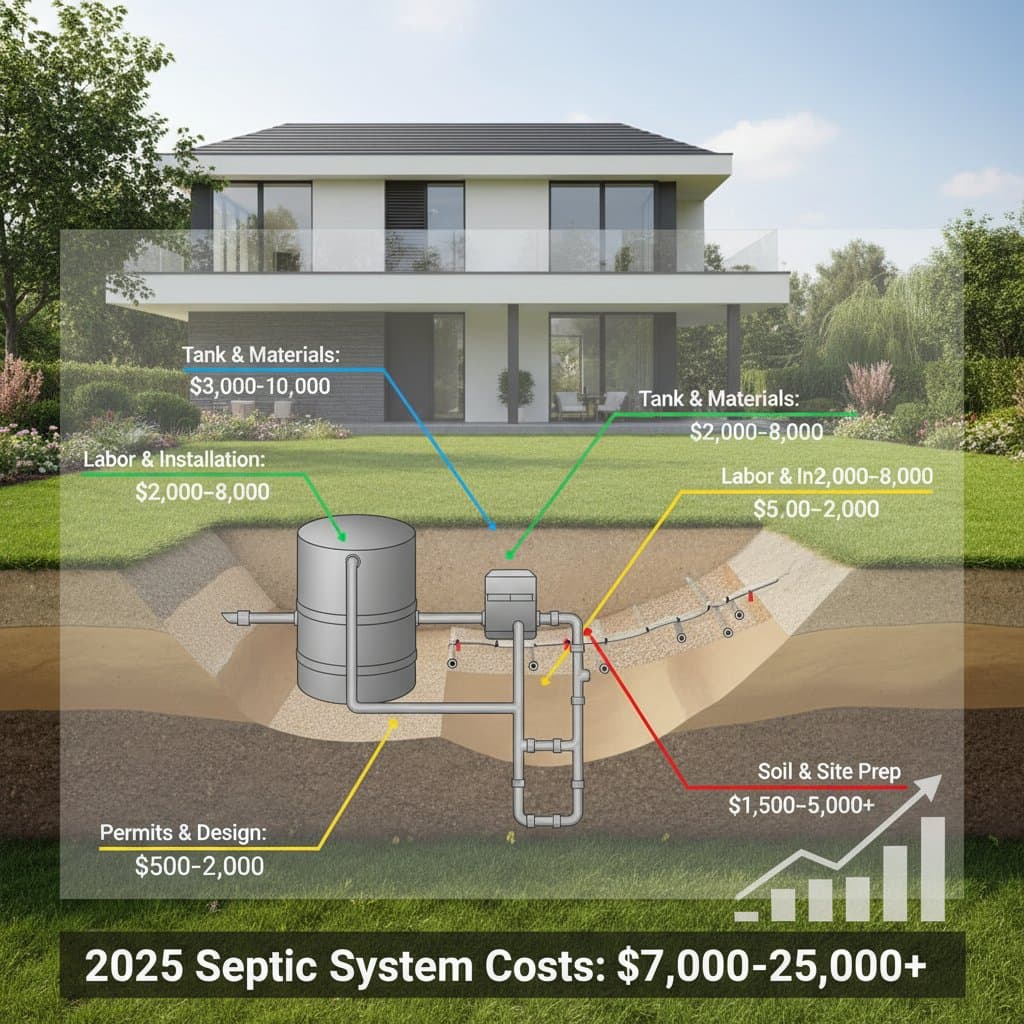
Homeowners facing septic system failure often encounter substantial expenses. Replacement projects in 2025 generally range from $7,000 to $25,000. These figures account for excavation, tank installation, drain field setup, permits, and labor charges.
Properties in rural areas with straightforward access for machinery tend to stay at the lower end of this spectrum. In contrast, urban sites with limited space or challenging soil conditions push costs higher. Factors like system complexity and local regulations play key roles in determining the final price.
Drain Field and Leach Field Replacement Expenses
The drain field represents a major investment in most replacements. This component distributes treated wastewater into the ground, requiring alignment with the site's percolation rate and terrain slope.
Standard replacements cost between $5,000 and $12,000. Prices vary based on the field's size, soil characteristics, and compliance with regional codes.
Primary Influences on Drain Field Costs
-
Soil Composition: Sandy soils facilitate quick drainage and lower expenses. Clay-heavy or compacted soils necessitate advanced solutions, such as pump-assisted or elevated mound systems.
-
Site Topography: Uneven slopes or rocky areas require extra excavation, soil grading, and reinforcement measures.
-
Regulatory Constraints: Proximity to water bodies like lakes or rivers may mandate specialized treatment technologies, which elevate overall expenses.
Labor and Excavation Expenses
Skilled labor forms a significant share of the budget. Tasks including excavation, old tank removal, and site restoration typically amount to $3,000 through $6,000. Costs depend on soil density, equipment access, and the extent of trenching required.
Restricted access preventing large machinery use leads to manual digging or specialized tools, which extend project timelines and raise fees. Regional labor rates and contractor expertise further influence pricing.
During quote evaluations, confirm inclusions for landscape restoration, gravel replenishment, and debris disposal. Certain providers exclude these, potentially leading to additional out-of-pocket costs for property owners.
Expenses by System Type and Site Conditions
Site-specific needs dictate the appropriate system design. The following outlines estimated costs according to system variety and installation demands.
| System Type | Ideal Conditions | Cost Range |
|---|---|---|
| Gravity-fed | Well-draining soil, level ground | $7,000–$12,000 |
| Pressure distribution | Moderate slopes, variable drainage | $10,000–$15,000 |
| Aerobic treatment | Compact lots, poor soil quality | $12,000–$20,000 |
| Mound system | Elevated water tables, clay soils | $15,000–$25,000 |
| Sand filter | Shallow bedrock, water proximity | $10,000–$17,000 |
Challenging landscapes, thick vegetation, or access limitations can increase totals by at least 20 percent. Schedule a professional site assessment prior to committing to any estimate.
Financing Options and Tax Implications
Septic replacements qualify as major undertakings, prompting many to seek funding solutions. Community credit unions frequently provide home improvement loans with adaptable repayment schedules. Select counties offer subsidized loans targeted at environmental enhancements for wastewater infrastructure.
Such upgrades may enhance property assessments as capital improvements. Property owners should seek guidance from a tax advisor to verify potential deductions or benefits.
Strategies to Avoid Premature System Issues
Consistent upkeep prolongs system longevity and safeguards financial commitments. Essential practices involve the following steps:
-
Arrange tank pumping every three to five years, adjusted for family size and water consumption patterns.
-
Refrain from disposing of grease, disposable wipes, or harsh chemicals, which harm essential microbial processes.
-
Redirect downspouts and sump pump outflows from the drain field to avoid excess moisture buildup.
-
Track household water use and incorporate low-flow appliances to ease system workload.
-
Perform annual visual checks for indicators of leaks or blockages.
Adding risers and inspection ports facilitates routine servicing, reducing long-term expenditures.
Indicators Requiring Professional Intervention
Engage a certified septic specialist upon observing symptoms like drain gurgling, lingering smells, or wet patches around the system. Experts utilize dye tests or endoscopic cameras to identify precise problem areas.
Suspected contamination of groundwater warrants immediate notification to the local health authority. Prompt response mitigates penalties and safeguards adjacent water supplies.
Sellers preparing to transfer ownership benefit from current inspection documentation, as purchasers and financial institutions often demand proof of operational integrity.
Sustaining Long-Term System Effectiveness
Well-engineered and diligently maintained septic systems endure 30 to 40 years. Thoughtful operation combined with scheduled maintenance preserves asset value and promotes ecological health.