
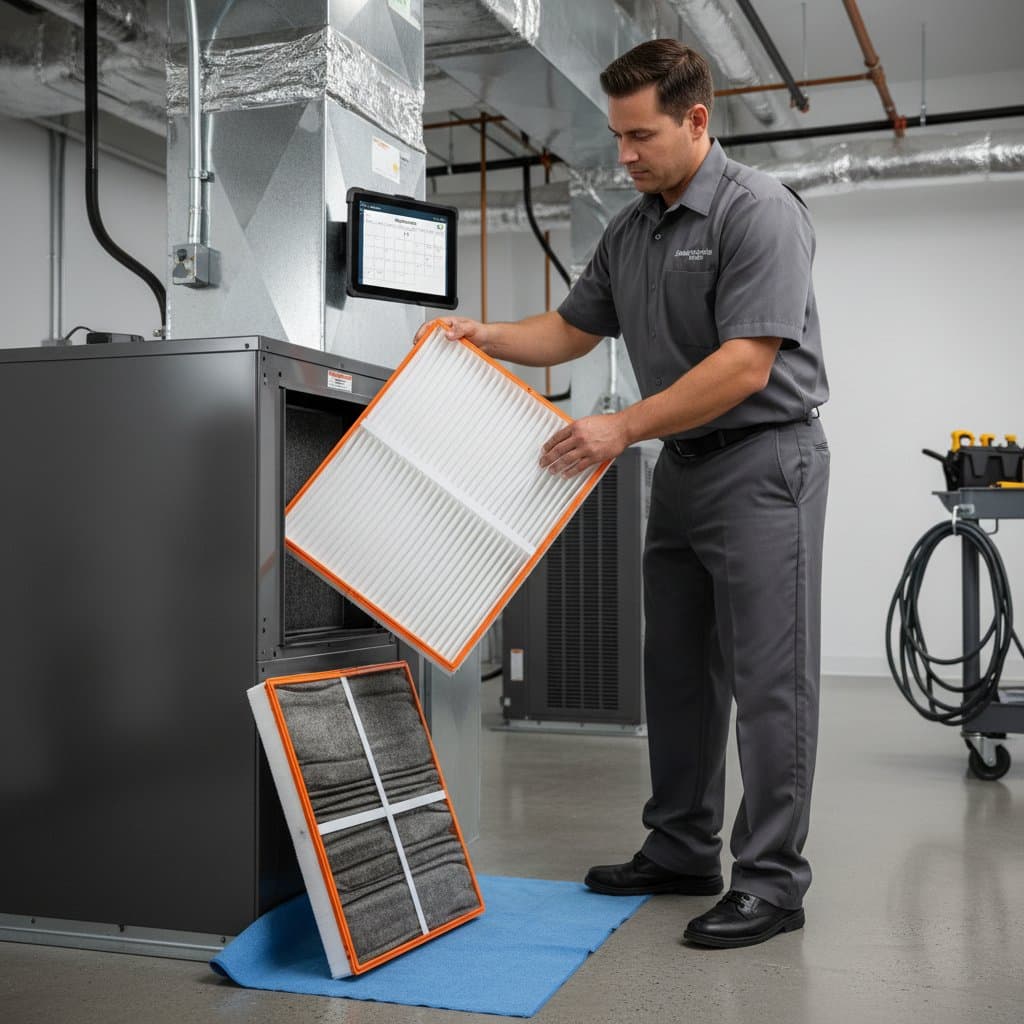
Timing Your Fall HVAC Filter Replacements
As temperatures drop and households shift from cooling to heating modes, a vital maintenance action often escapes attention: HVAC air filter replacement. Proper timing for this procedure directly impacts indoor air purity, equipment efficiency, and energy expenditures. A well-timed fall filter change supports seamless operation during winter and minimizes equipment strain.
This resource outlines scheduling strategies for fall HVAC filter replacements, anticipated expenses, and choices between self-service and expert intervention. Mastery of these elements enables sustained air cleanliness, enhanced comfort, and reduced utility payments across the heating period.
Understanding HVAC Filter Replacement Costs
HVAC filter replacement, though seemingly routine, influences system functionality and cumulative financial outlays. Expenses vary based on filter variety, unit dimensions, and service method.
DIY Filter Replacement Costs
For numerous residents, filter substitution represents an uncomplicated procedure demanding few implements and limited duration. Key expense elements encompass:
- Basic fiberglass filters: Typically the most economical choice, these deliver temporary particle capture appropriate for minimal-dust settings.
- Pleated filters: These offer superior trapping of minute contaminants such as pollen and animal allergens.
- High-efficiency filters (HEPA equivalents): Pricier yet optimal for residences with allergy concerns.
DIY expenditures generally span from minimal amounts for standard options to elevated figures for advanced variants. Filters endure one to three months on average, influenced by operation intensity and surroundings; initiating replacement in early fall secures consistent airflow amid rising heating requirements.
Professional Service Costs
Engaging a specialist incorporates labor fees alongside evaluative and upkeep advantages. Specialists perform:
- Airflow and conduit evaluations
- Blower motor and coil examinations
- Filter type and dimension suggestions
- Detection of preliminary deterioration or breaches
Such engagements frequently integrate comprehensive system adjustments, enhancing performance and averting failures. While surpassing DIY pricing, professional involvement yields benefits via specialized oversight and proactive issue resolution.
Factors That Affect Pricing
Multiple variables determine filter replacement outlays:
- Filter dimensions and caliber: Oversized or advanced-efficiency models incur greater costs yet provide extended service.
- Residence conditions: Environments with animals, tobacco use, or abundant particulates necessitate accelerated substitutions.
- Unit operation: Continuous daily function, particularly in severe weather zones, demands regular upkeep.
- Maintenance cadence: Integrating filter changes with periodic HVAC servicing lowers aggregate expenses.
Early fall timing optimizes these considerations, preparing systems prior to intensive heating demands.
DIY vs Professional: Making the Right Choice
Self-directed and specialist filter substitutions each present merits. Selection hinges on personal proficiency, equipment availability, and schedule constraints.
The DIY Advantage
Filter exchange qualifies as one of residential upkeep's least demanding endeavors. Opting for self-service economizes on fees and builds system acquaintance. Execute correctly by:
- Deactivating the HVAC unit.
- Identifying the filter housing, often adjacent to return ducts or the furnace.
- Extracting the existing filter and recording its measurements.
- Positioning the replacement with airflow indicators directed toward the fan assembly.
DIY benefits:
- Reduced financial burden
- Direct influence over execution timing
- Swift and straightforward process
DIY limitations:
- Absence of expert evaluation
- Possibility of mismatched filter specifications
- Overlooked underlying system concerns
The Professional Advantage
Specialist engagement guarantees precise handling and holistic system assessment. Experts discern airflow impediments, conduit imperfections, and concealed faults imperceptible to novices.
Professional benefits:
- Informed guidance on filter choices
- Thorough operational review
- Assurance of system optimization
Professional limitations:
- Elevated initial expenditure
- Necessity of appointment coordination
For aging, newly fitted, or underperforming systems, fall professional assistance proves judicious.
Skill Level and Safety
Self-directed filter swaps pose minimal hazards for typical residents. Nonetheless, if access involves intricate handlers or proximate wiring, expert aid enhances security. Consistently isolate power prior to accessing enclosures or filters.
Time Commitment Comparison
Self-service typically concludes in under 15 minutes, whereas specialist sessions may extend one to two hours with supplementary adjustments. Equilibrium between duration and completeness guides fall planning.
Your HVAC Filter Replacement Questions, Answered
Expert responses to prevalent inquiries.
How often should HVAC filters be replaced?
Standard intervals span one to three months, modulated by particulate levels, utilization, and model. In fall, execute prior to cooling-to-heating transition.
What happens if I forget to replace the filter?
Obstructed filters impede circulation, compelling harder operation. Consequences include escalated energy charges and component harm.
Can I clean and reuse my HVAC filter?
Washing applies solely to washable designs. Non-reusable types require full discard and renewal.
How do I choose the right filter?
Verify frame-inscribed dimensions and select MERV values aligned with purification objectives. Elevated MERV captures subtler elements but may constrain flow in legacy setups.
Is a high-efficiency filter worth the cost?
Affirmative for allergy or pet-owning homes, as these sequester additional impurities for refined air. Mid-tier pleated options suffice for routine applications, harmonizing expense and efficacy.
What are signs that my filter needs early replacement?
Observe particulate accumulation near outlets, diminished circulation, or odors. These signal saturation.
Do filter replacements affect energy efficiency?
Indeed. Unimpeded filters facilitate fluid passage, easing fan demands and curbing consumption.
Can extreme weather affect filter performance?
Climatic shifts elevate particulates and allergens, notably in autumnal phases. Preemptive swaps sustain air integrity.
Should renters replace filters or rely on landlords?
Consult tenancy terms. Frequently, occupants manage substitutions, though certain proprietors incorporate into servicing.
Do I need a professional tune-up at the same time?
Pairing with inspection unveils nascent problems and readies units for heating peaks.
What are red flags when hiring an HVAC technician?
Steer clear of entities omitting documented quotes, hastening tasks, or advocating unneeded enhancements. Credible professionals articulate observations transparently.
How do I prepare for a technician’s visit?
Evacuate unit vicinities, document anomalies, and procure desired filters if intending self-supply.
How to Decide: Your Step-by-Step Guide
Structured methodology simplifies filter replacement determinations.
Step 1: Assess Your Situation
Examine residence dynamics. Presence of animals, sensitivities, or visitors accelerates contaminant accumulation, warranting denser schedules.
Step 2: Evaluate Your Skills and Resources
If adept in elementary repairs, self-service fits. Lacking confidence, arrange expert seasonal care.
Step 3: Calculate True Costs
Factor filter pricing, effort allocation, and avoidance of neglect-induced repairs. Specialist reviews forestall costlier future interventions.
Step 4: Assess Risks
Weigh self-service error potentials against professional thoroughness. For intricate setups, expertise mitigates hazards.
Step 5: Make Your Choice
Select based on prior evaluations, prioritizing long-term system health and efficiency.
Preparing for Your HVAC Filter Replacement
- Investigate filter categories to align with unit specifications and purification goals.
- Acquire multiple units preemptively for adherence to timelines.
- Schedule reminders on accessible planners.
- Dust surrounding outlets and entries to curb accumulation.
- Time actions ahead of maximal heating periods for assured ease.
Sustaining System Efficiency Year-Round
Regular filter vigilance extends beyond fall, fostering enduring performance and cost savings. Integrate quarterly checks with seasonal overhauls to preempt issues and optimize operation. This proactive stance ensures consistent comfort and reliability, transforming routine maintenance into substantial household benefits.




