
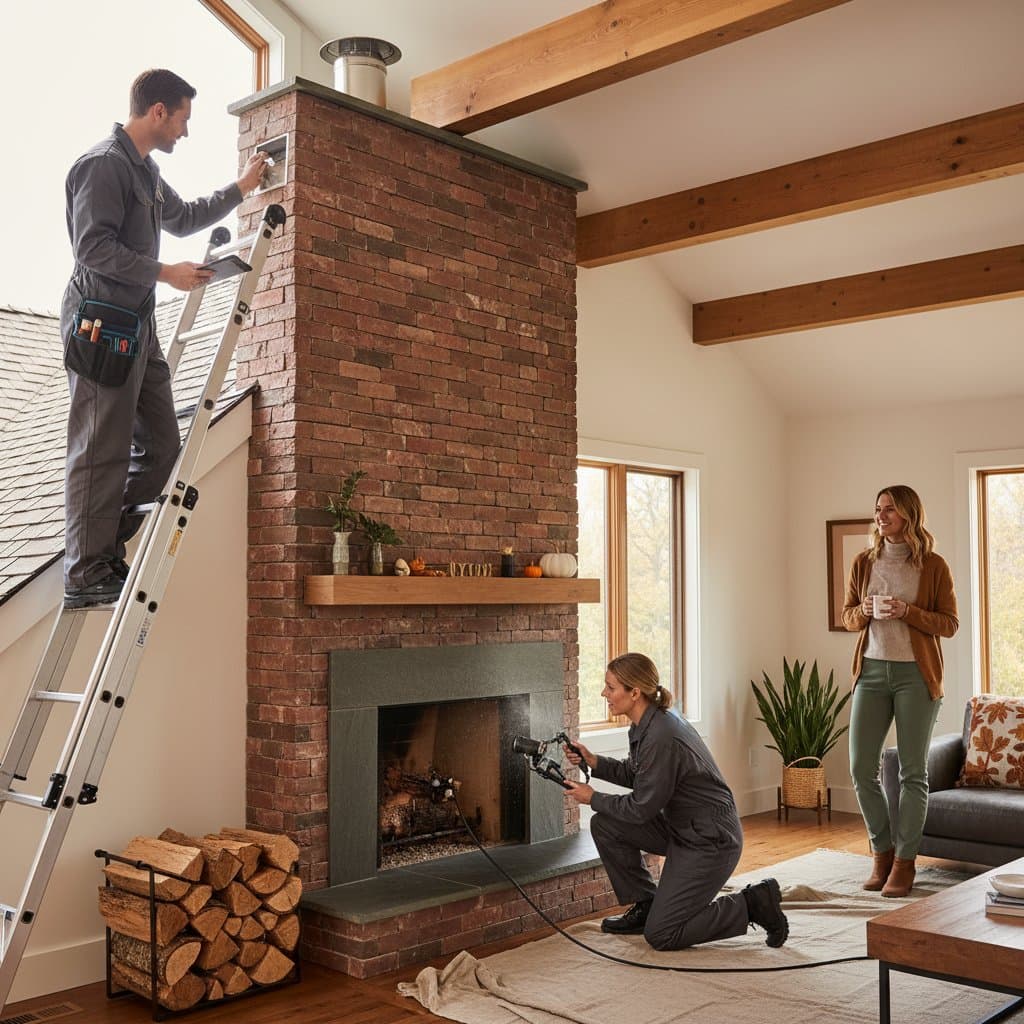
Fall Checklist to Safeguard Your Chimney and Hearth
As temperatures drop and fireplaces come back to life, your chimney becomes one of the most important systems in your home. A well-maintained chimney keeps your household safe, prevents smoke buildup, and ensures your fireplace burns efficiently. Neglect, on the other hand, can lead to costly repairs or even dangerous conditions. Preparing your chimney and hearth before the first fire of the season is one of the smartest steps homeowners can take.
Why Fall Maintenance Matters
During the warmer months, most chimneys sit unused. Birds may nest inside, debris can collect, or moisture can cause hidden damage. When you light that first fire without inspection, you risk igniting creosote buildup or sending smoke back into your living space. Thousands of home fires begin in chimneys each year, often due to preventable issues like blockages or neglected maintenance. A fall inspection and cleaning routine can eliminate these risks before winter sets in.
Start with a Complete Visual Inspection
Begin your checklist with an exterior and interior inspection. From the outside, look for missing mortar, cracked bricks, or signs of water damage. Check the flashing where the chimney meets the roof, as loose or deteriorated flashing can allow leaks that damage both your roof and chimney structure. Inside, use a flashlight to check for soot buildup or loose flue tiles.
If you notice any visible cracks, rust-colored stains, or signs of moisture, call a certified chimney professional. A trained eye can identify early-stage deterioration that homeowners often miss. Many homeowners discover expensive structural problems only after years of ignoring minor signs. Addressing small problems early keeps repair costs manageable.
Schedule a Professional Sweep
Even if your chimney looks clean, soot and creosote can build up on interior walls. Creosote is a sticky, flammable residue that forms when wood smoke cools. Once it hardens, it can ignite under high heat. A professional chimney sweep uses specialized brushes and vacuums to remove these deposits thoroughly.
Hiring a certified sweep ensures that your chimney meets safety standards. Professionals also inspect the flue liner, damper, and smoke chamber for damage or blockages. A single appointment can prevent chimney fires and improve heating efficiency. A clean chimney is not just about safety; it is about performance. A clear flue means faster draft and cleaner burns.
Check the Chimney Cap and Crown
The chimney cap is your first line of defense against moisture, animals, and debris. If the cap is damaged or missing, rain and snow can seep into the flue, causing rust or freeze-thaw damage. Inspect the cap for signs of corrosion or loose mesh. Replace it if it is bent, broken, or missing entirely.
The crown, which seals the top of the chimney, should also be free of cracks or gaps. Small cracks can expand in cold weather, allowing water to penetrate. Apply a waterproof sealant designed for masonry to extend the life of the crown and prevent leaks. Many homeowners underestimate how much damage water causes to chimneys over time. A small investment in waterproofing can prevent major repairs later.
Inspect and Test the Damper
The damper controls airflow between the fireplace and chimney. It should open and close smoothly and create a tight seal when shut. If it sticks or feels loose, soot and moisture may have caused corrosion. A faulty damper wastes energy and allows cold drafts into your home.
Test the damper by lighting a small piece of newspaper and holding it near the flue opening. Smoke should rise steadily upward when the damper is open. If it lingers or flows sideways, there may be a blockage or draft problem that needs professional attention.
Clean and Prepare the Hearth
Your hearth area also deserves attention. Sweep out ashes and debris from previous fires. Inspect the firebox for cracked firebricks or deteriorating mortar joints. These surfaces withstand extreme heat and should remain solid. Replace any damaged bricks before lighting new fires.
Consider giving your fireplace a deep clean. Use a vacuum with a HEPA filter to remove fine ash particles, then wipe down surfaces with a mild vinegar solution. Avoid harsh chemicals that could release fumes when heated. If your fireplace has glass doors, clean them with a non-abrasive cleaner to remove soot and restore clarity.
Verify Smoke and Carbon Monoxide Detectors
Even a well-maintained chimney can develop issues mid-season. Smoke and carbon monoxide detectors are your final safety net. Test each unit near your fireplace and sleeping areas. Replace batteries and check expiration dates on detector units. Safety experts recommend replacing detectors entirely every few years to maintain reliability.
Review Firewood Storage and Burning Practices
The type of wood you burn affects both safety and efficiency. Use only seasoned hardwoods such as oak, maple, or ash. Freshly cut wood contains high moisture levels that produce excess smoke and creosote. Stack firewood off the ground and cover the top to protect it from rain while allowing air to circulate around the sides.
Avoid burning treated lumber, colored paper, or painted wood, which can release toxic fumes. If you use fire starters, choose natural options rather than accelerants, which can damage the fireplace lining.
Schedule Mid-Season Checks
If you use your fireplace regularly, plan a mid-season inspection. Even after a fall cleaning, creosote can accumulate quickly during heavy use. A quick check halfway through the heating season helps maintain performance and safety. Many chimney service companies offer discounted mid-season visits, making it an affordable addition to your maintenance plan.
Track Maintenance for Long-Term Protection
A reliable chimney and hearth system adds comfort, efficiency, and charm to your home. Keeping it in top condition protects your investment and ensures safe operation all season long. With a structured fall checklist, you can identify problems early, schedule professional services before demand peaks, and enjoy peace of mind when the first fire crackles.
Set reminders each fall to perform these checks before the cold sets in. Keep a record of inspections and cleanings so you can track any changes year to year. A consistent approach saves money, extends the life of your chimney, and keeps your home warm and secure when you need it most.




