Unlock Cleaner Air: HVAC Filter Change Calendar
Indoor air in a home seldom feels truly fresh when the HVAC filter requires replacement. Dust accumulates, airflow diminishes, and allergy symptoms intensify. Establishing a consistent HVAC filter change calendar represents one of the most straightforward methods to preserve clean indoor air and ensure smooth system operation. Such a schedule prevents expensive repairs, minimizes energy consumption, and enhances year-round comfort.
Why Filter Changes Matter
An HVAC filter performs more than dust capture. It safeguards the entire heating and cooling system. A clogged filter forces the blower motor to labor excessively, allows debris to accumulate in ducts, and reduces energy efficiency. Research indicates that regular filter replacements can decrease energy use by as much as 15 percent. Even more significantly, this practice sustains indoor air quality, which influences respiratory health and overall comfort.
Each home presents unique conditions. Households with pets, allergies, or high dust levels often require more frequent replacements than average. A dedicated calendar promotes adherence regardless of specific circumstances.
The Quick Answer
For typical homes, replace the HVAC filter every 60 to 90 days. Residences with pets or individuals prone to allergies should reduce this interval to every 30 to 45 days. Vacation properties or seasonally occupied spaces can extend replacements to 120 days, given the reduced system runtime.
Do not depend solely on the calendar, however. Inspect the filter each month. If it appears gray or laden with dust, install a new one immediately, irrespective of the scheduled date.
Choosing the Right Filter
Filters vary in performance. The selected type influences the volume of dust and debris captured as well as the airflow efficiency through the system.
| Filter Type | MERV Rating | Lifespan | Best For |
|---|---|---|---|
| Fiberglass Panel | 1 to 4 | 30 days | Basic dust protection |
| Pleated | 5 to 8 | 60 to 90 days | Standard households |
| Electrostatic | 8 to 10 | 90 days | Homes with pets or allergies |
| High Efficiency (HEPA-style) | 11 to 13 | 90 to 120 days | Allergy-sensitive environments |
MERV denotes Minimum Efficiency Reporting Value. Elevated ratings indicate superior filtration of fine particles, yet they impose greater airflow resistance. Consult the system manual to determine the maximum MERV rating compatible with the blower without undue strain. For instance, older systems may tolerate only up to MERV 8 to avoid reduced performance.
How to Build Your Filter Change Calendar
An effective HVAC filter change calendar aligns with your home's usage patterns and daily routines. Begin by documenting the system's dimensions and filter placement. Standard air returns typically accommodate filters measuring 16 by 20 inches to 20 by 25 inches, with depths ranging from 1 to 4 inches.
Step 1: Assess Your Air Quality Needs
Evaluate household factors to customize intervals:
- One pet: Replace every 45 to 60 days.
- Two or more pets: Replace every 30 to 45 days.
- Presence of smokers or allergy sufferers: Replace every 30 days.
- Absence of pets or allergies: Replace every 60 to 90 days.
Consider environmental influences, such as proximity to construction sites or high pollen seasons, which may necessitate shorter cycles.
Step 2: Create a Reminder System
Employ a wall calendar, smartphone alerts, or dedicated home automation application. Clearly mark each replacement date. Certain smart thermostats provide automatic notifications based on estimated filter lifespan and system runtime data.
Step 3: Keep Spare Filters on Hand
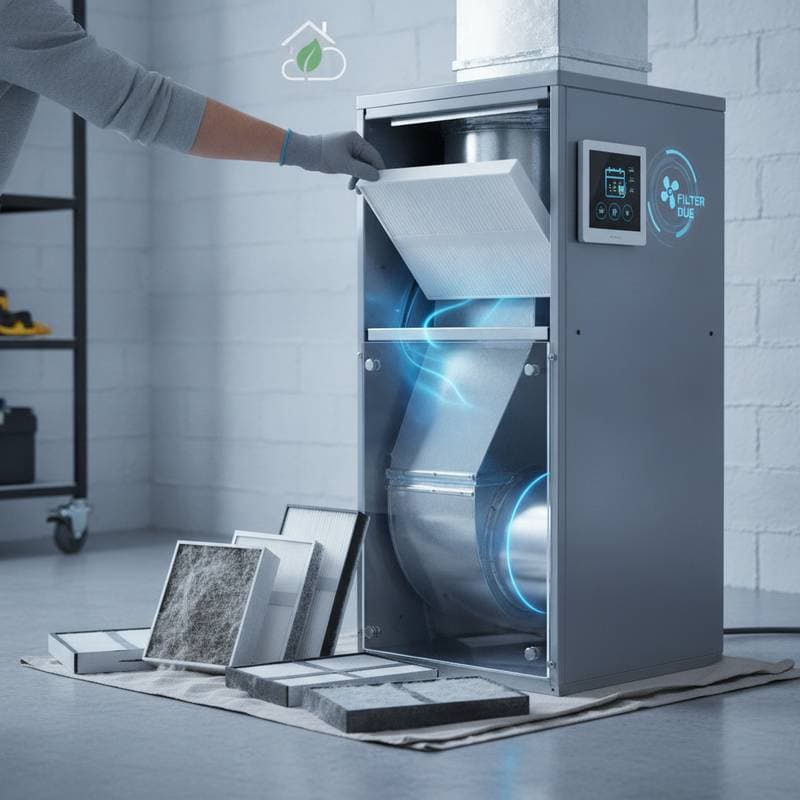
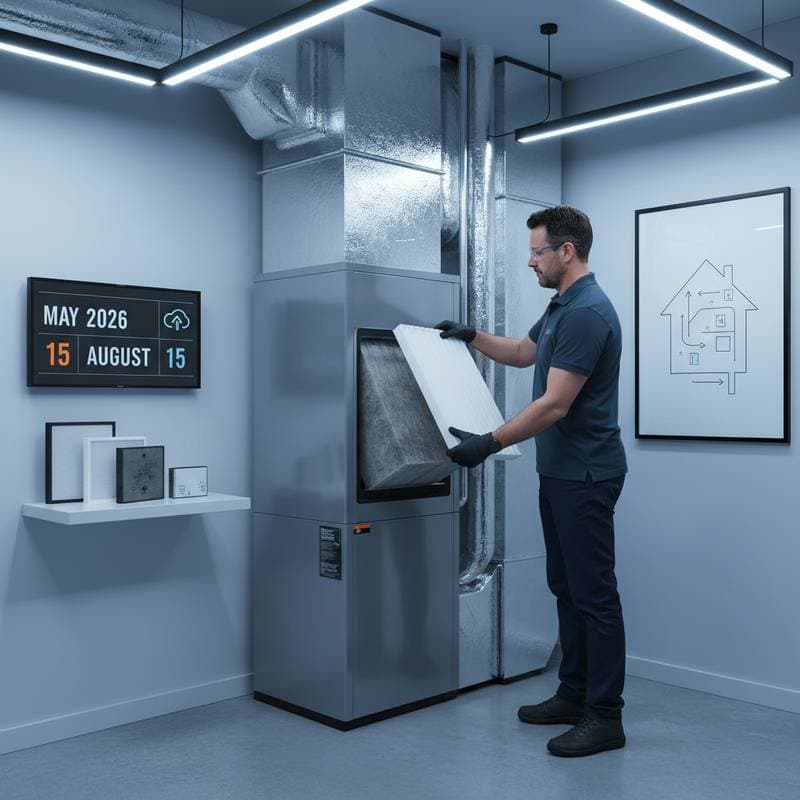
Purchase filters in bulk and store them adjacent to the HVAC unit. This arrangement facilitates prompt swaps. Verify the directional arrow on the filter frame aligns with airflow to ensure proper installation.
Step 4: Record Each Change
Inscribe the installation date directly on the new filter. This practice tracks actual usage duration and informs potential schedule refinements. Review patterns over several cycles to optimize intervals.
Common Mistakes to Avoid
Minor errors can compromise system efficiency. Steer clear of these prevalent issues:
- Selecting an incorrect filter size. Measure precisely prior to purchase; the filter must seal tightly without gaps.
- Neglecting interim inspections. Elevated dust from home renovations or arid climates accelerates clogging.
- Opting for the highest MERV rating without verifying system compatibility. Excessively restrictive filters overburden the blower motor, leading to premature wear.
- Overlooking secondary filters. Certain systems feature both return air and furnace filters; address each according to specifications.
If uncertainty arises, engage a certified HVAC technician to recommend appropriate filters and timelines.
Accessibility and Health Considerations
For households with asthma or severe allergies, select pleated or electrostatic filters boasting a MERV rating of 10 or above. These options effectively trap minuscule particles, including pollen and pet dander. Individuals with limited mobility, such as seniors, may benefit from reusable washable filters, which require monthly rinsing rather than full replacement. Ensure thorough drying before reinsertion to prevent mold growth.
DIY or Hire a Pro?
Filter replacement qualifies as a basic do-it-yourself task in most cases. Gather these essentials:
- A screwdriver for grille panels fastened with screws.
- A flashlight to confirm airflow orientation.
- A vacuum cleaner to remove accumulated dust from the filter compartment.
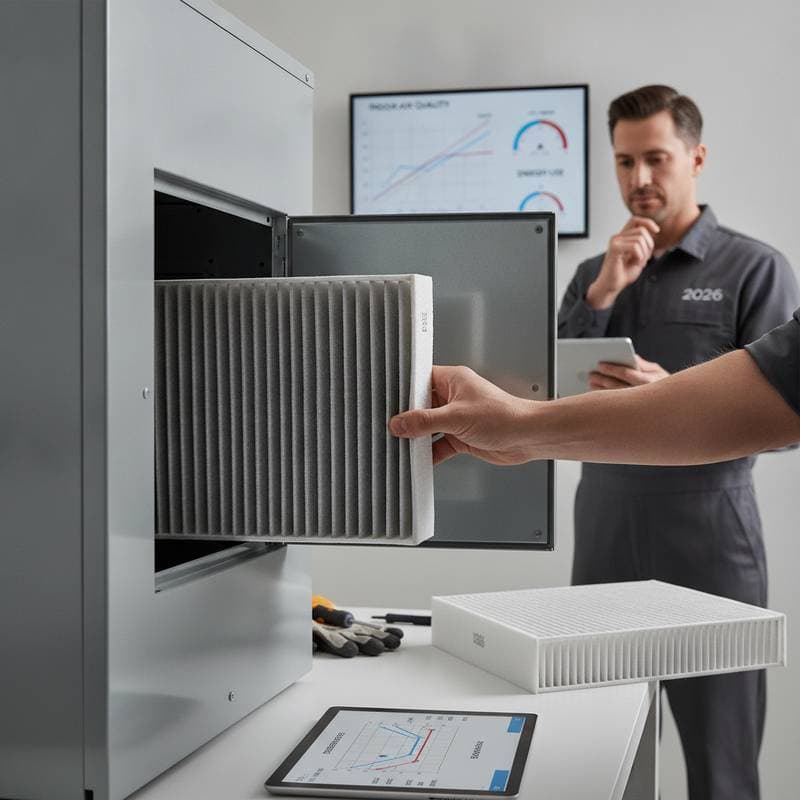
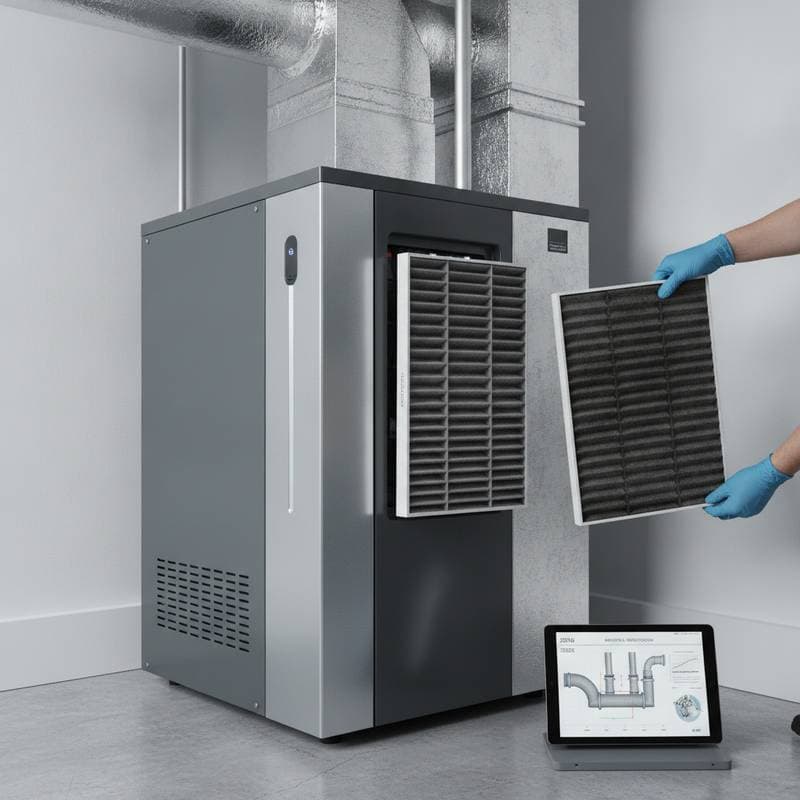
Locate the filter slot, typically behind a return vent, slide out the old unit, and insert the new one. If the system involves complex access or electrical components, consult a professional to avoid risks.
Implement Your Schedule for Lasting Benefits
Consistency forms the foundation of superior indoor air. With your HVAC filter change calendar established, adhere diligently to the plan. Document every replacement, maintain a stock of spares, and examine discarded filters for insights into air quality trends. Rapid saturation signals the need for more frequent changes or enhanced filtration. Over time, this routine not only elevates health and efficiency but also extends the lifespan of your HVAC equipment.