Why Fall Serves as the Ideal Time for HVAC Filter Replacement
Homes transform with the arrival of crisp air and the reactivation of furnaces. The initial chill prompts homeowners to address a fundamental maintenance duty: replacing the HVAC filter. Although this appears as a minor task, performing the replacement during fall significantly influences air quality, comfort levels, and overall system reliability.
Homeowners often question the rationale behind selecting this season for filter replacement in furnaces or air handlers. The following details explain the benefits.
The Importance of Filter Replacement During Fall
As temperatures decline, HVAC systems transition from cooling to heating operations. This change alters air circulation through ducts and increases the presence of indoor dust and debris. Throughout summer, filters accumulate pollen, pet dander, and fine particles, rendering them less effective by autumn.
A dirty filter impedes airflow, compelling the furnace fan to operate longer and consume additional energy. Such restrictions lead to uneven heating, diminished air pressure, or potential system failures. Fall acts as a strategic interval for renewal prior to the intensive heating period.
Key benefit: Replacing the filter before sustained heating commences guarantees efficient operation and maintains clean indoor air during colder weather.
Recommended Frequency for HVAC Filter Replacement
Experts advise replacement every 60 to 90 days as a baseline, though environmental factors necessitate adjustments. View this guideline as a flexible benchmark rather than a rigid calendar.
| Home Type or Condition | Recommended Replacement Frequency |
|---|---|
| Single occupant, no pets | Every 90 days |
| Family home with pets | Every 60 days |
| Allergy-sensitive household | Every 30 to 45 days |
| Homes near construction or dusty areas | Every 30 days |
| Vacation or part-time residences | Every 120 days |
For systems operating daily across seasons, schedule primary replacement in fall and a follow-up during mid-winter. This approach sustains consistent airflow during peak furnace demands.
Understanding Airflow and Efficiency Dynamics
HVAC systems rely on equilibrium in air circulation. A clean filter supports optimal airflow, quantified in cubic feet per minute (CFM). A reduction exceeding 20 percent in airflow can decrease efficiency by as much as 15 percent, requiring the furnace to utilize more fuel or the heat pump to extend runtime for equivalent warmth.
Consider that a standard furnace filter unfolds to 3 to 5 square feet of surface area. Accumulation of dust on just 25 percent of this area diminishes air velocity sufficiently to strain the heat exchanger or overheat the blower motor.
Filter replacement reinstates proper airflow, averts premature wear, and shields vital parts such as the evaporator coil and blower wheel.
Selecting the Appropriate Filter for Fall Use
Filters receive MERV ratings, denoting Minimum Efficiency Reporting Value, ranging from 1 to 16, where elevated numbers trap finer particles.
| MERV Rating | Particle Size Captured | Best For | Airflow Resistance |
|---|---|---|---|
| 1 to 4 | Large dust, lint, fibers | Older systems or basic needs | Low |
| 5 to 8 | Household dust, pollen, mold | Standard homes | Moderate |
| 9 to 12 | Fine dust, pet dander, smoke | Allergy-prone environments | Medium |
| 13 to 16 | Bacteria, smoke, micro-allergens | Advanced or medical settings | High |
A MERV 8 to 12 filter delivers optimal performance and airflow balance for typical residences. For furnaces exceeding ten years in age, evaluate blower capacity prior to selecting higher MERV options, as excessive resistance may provoke airflow shortages and short cycling.
Expert recommendation: Record the dimensions indicated on the filter frame. Common sizes include 16x25x1, 20x25x1, or 20x30x1 inches. Verify width, height, and thickness for a secure installation.
Guide to Replacing Your Fall Filter
- Power down the HVAC system. Adjust the thermostat to halt air circulation during the procedure.
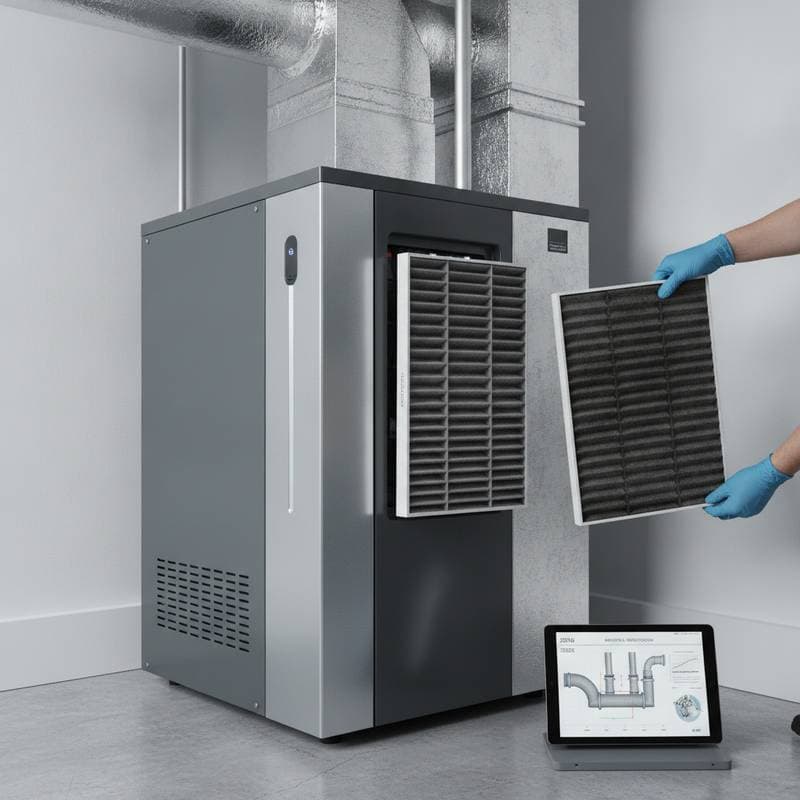
- Identify the access panel. Filters typically reside behind a panel adjacent to the return duct or within the blower section.
- Remove the existing filter. Observe the airflow direction arrow on the frame.
- Clean the housing area. Use a vacuum to eliminate surrounding dust and prevent contamination of the new filter.
- Install the replacement filter. Align the airflow arrow toward the furnace or air handler.
- Reactivate the system. Monitor for steady airflow and inspect the panel for vibrations or leaks.
This procedure requires under ten minutes and basic tools like a flashlight.
Pitfalls to Avoid in Filter Replacement
Simple maintenance can falter without care. Steer clear of these common oversights:
- Selecting an incorrect filter size, which permits unfiltered air passage.
- Opting for filters with excessive restriction, particularly in aging systems, leading to airflow deficits.
- Delaying until signs of dust odor or reduced flow appear, indicating overload.
- Reversing filter orientation, which hampers efficacy and may produce noise.
- Neglecting periodic inspections, even post-fall replacement, for signs of soiling.
Scenarios Requiring Professional Assistance
Filter replacement suits most homeowners, yet certain cases demand technician intervention. Systems with whole-house media filters or electronic cleaners benefit from servicing during annual fall tune-ups. Professionals assess duct integrity, coil cleanliness, and static pressure to verify unrestricted airflow.
Persistent issues like irregular heating, frequent cycling, or escalating bills post-replacement warrant a service visit. Conditions such as clogged coils or motor faults imitate filter concerns but necessitate specialized diagnostics.
Expenses and Potential Savings
Pleated filters range from 10 to 30 dollars based on dimensions and MERV level. Advanced electrostatic variants cost 40 to 60 dollars yet endure longer and capture subtler particles.
Contrast this with furnace repairs, averaging hundreds of dollars for blower motor fixes. Consistent replacements yield returns through elevated efficiency and minimized component degradation.
Homeowners adhering to schedules frequently achieve 5 to 10 percent reductions in heating expenses, yielding tangible monthly benefits during continuous operation.
Factors for Accessibility and Health
Superior indoor air quality proves essential for individuals with allergies, asthma, or breathing sensitivities. Fresh filters intercept irritants prior to distribution. In homes with elderly residents or infants, advance to MERV 11 or 12 filters in fall.
For challenges in accessing the furnace, consider a chest-level return grille filter slot. This adaptation facilitates reach without strain. Technicians can implement such upgrades during routine visits.
Comprehensive Preparation for Heating
Filter replacement forms one element of fall HVAC readiness. Complement it with these actions:
- Examine thermostat batteries and configurations.
- Vacuum registers and return vents.
- Verify functionality of smoke and carbon monoxide alarms.
- Arrange a professional furnace evaluation before extended use.
- Remove obstructions from outdoor units.
Realizing Lasting System Benefits
Timely filter management extends beyond immediate tasks to foster enduring efficiency and health. Homeowners who integrate these practices experience fewer disruptions, lower costs, and enhanced well-being. Commit to this routine for a seamless transition into winter comfort.