Why Fall Filter Swaps Cut Your Heating Bills Fast
The shift from summer heat to cooler fall air signals the need to prepare your HVAC system for increased demand. Changing the air filter at this juncture stands out as a straightforward yet impactful action. This practice maintains cleaner indoor air, minimizes dust accumulation, and enhances system efficiency as temperatures decline. Many homeowners neglect this task, yet proper timing delivers noticeable improvements in comfort and energy conservation.
Why Fall Filter Changes Matter
Seasonal variations influence indoor air quality distinctly. Summer filters capture pollen, dust, pet dander, and other particles entering through open windows and air conditioning units. By fall, these filters typically reach capacity. Leaving them in place restricts airflow, forcing the system to labor more intensely and resulting in elevated utility bills, inconsistent heating, and accelerated component degradation.
Swapping the filter in fall readies the furnace for reliable operation. Clean filters promote optimal airflow, ensuring even distribution of warm air throughout the home. They also avert the burning of trapped debris during initial furnace startups, which might otherwise produce odors or light smoke.
Signs Your Filter Needs Replacement
Adhering to a schedule proves beneficial, but recognizing indicators of a clogged filter adds assurance. Key signs include:
- Accelerated dust accumulation on furniture or vents
- Reduced airflow from registers
- Heightened sneezing or coughing within the home
- Frequent cycling of the furnace
- Apparent dirt on the filter surface
Address any of these promptly, especially before sustained cooler weather demands consistent system use.
Choosing the Right Filter Type
Filters vary in performance based on home requirements, system specifications, and air quality priorities. Consider these primary options:
-
Fiberglass filters
These provide an affordable, accessible choice for basic protection against larger debris. They suit households that replace filters often and face minimal allergy issues, though they overlook finer particles. -
Pleated filters
Constructed from folded polyester or cotton, these capture smaller contaminants like pollen and pet dander. They endure longer than fiberglass varieties and elevate air quality at a reasonable additional expense. -
Electrostatic filters
These employ static charge to draw in dust and allergens. Washable and reusable models offer long-term savings, making them suitable for pet-owning homes or those with sensitive occupants. -
High-efficiency filters
Designed to seize ultrafine particles, these excel in environments demanding superior air purity. However, they may impede airflow in incompatible systems, so consult manufacturer guidelines prior to installation.
Evaluate filters by their MERV rating, or Minimum Efficiency Reporting Value. Higher ratings indicate greater particle capture. A range of 8 to 12 strikes an effective balance for typical homes, supporting filtration without compromising airflow.
The Best Time for a Fall Filter Swap
Optimal timing balances preparation against unnecessary exposure. Changing too soon invites summer residue accumulation before heating begins. Delaying too long risks operating the furnace under restricted conditions. Aim for the period when outdoor temperatures consistently cool and the transition from cooling to heating occurs.
For systems with intensive summer air conditioning use, perform the change immediately before activating the furnace. This setup guarantees unobstructed airflow through pristine material, free from summer's accumulated dust and pollen.
Households with pets, smokers, or allergy sufferers benefit from more frequent checks. During transitional months, examine filters monthly and replace them upon noticing discoloration or restriction.
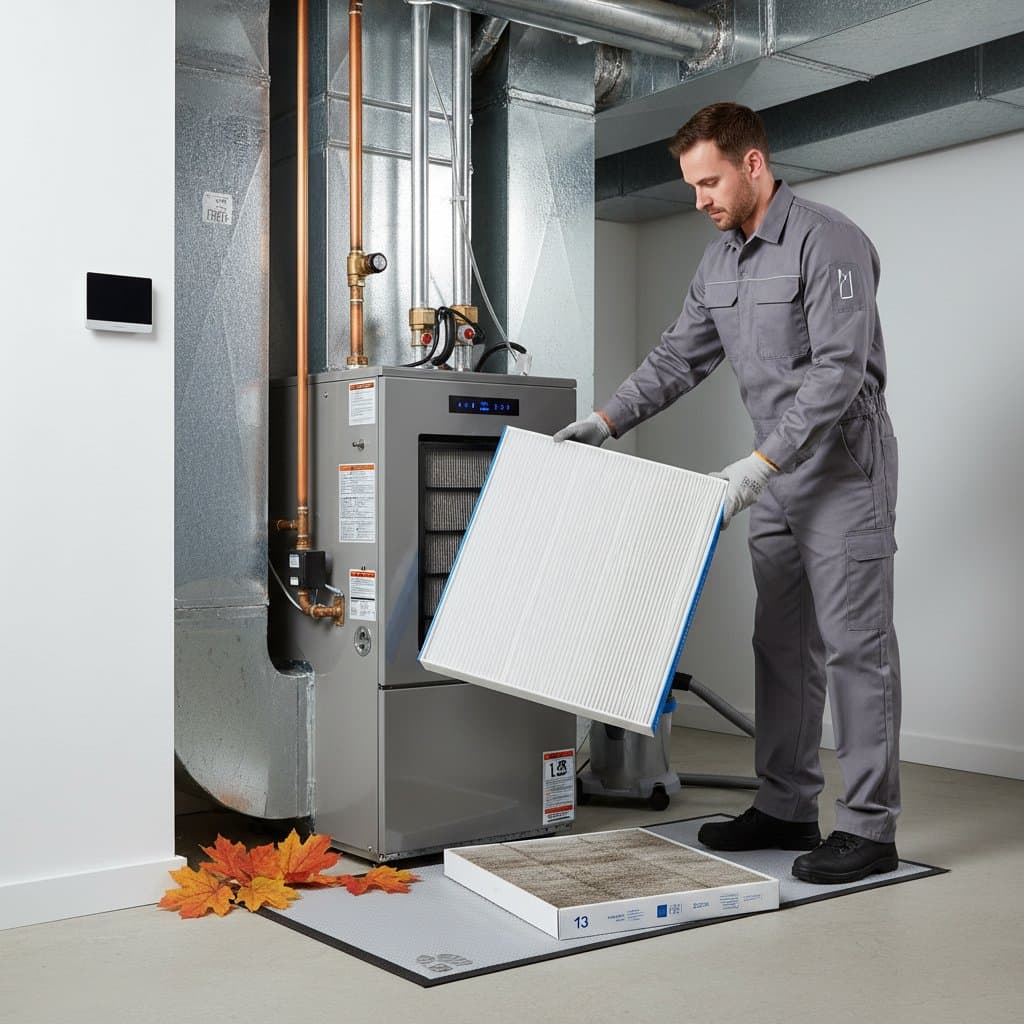
Suggested image: A homeowner installing a pleated HVAC filter, captioned “Fall filter change keeps your system running efficiently.”
How to Replace a Filter Safely
Filter replacement involves basic steps that safeguard the system and ensure user safety. Proceed as follows:
- Turn off the system. Power down the furnace or air handler to halt airflow and prevent debris intake during the process.
- Locate the filter slot. Identify it behind a vent grille, within the furnace cabinet, or adjacent to the return air duct.
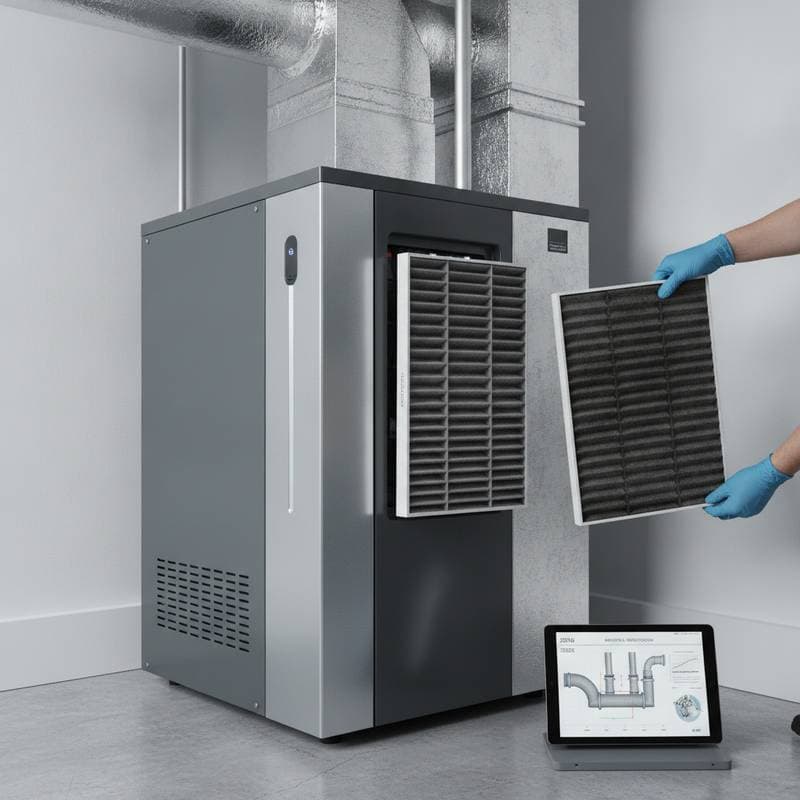
- Remove the old filter. Extract it gently to contain dust. Observe the directional airflow arrows on its frame.
- Check size and direction. Verify the new filter matches dimensions exactly and orient arrows toward the blower motor.
- Secure the slot. Fasten the cover or grille firmly to eliminate potential air leaks.
- Restart the system. Restore power and verify smooth airflow operation.
Safety tip: Avoid ill-fitting filters, as gaps permit unfiltered air to enter ducts directly, distributing contaminants.
Benefits of Timely Replacement
Beyond air purification, seasonal filter changes enhance overall home performance. These advantages span efficiency, health, and durability.
- Improved energy efficiency. Unobstructed filters ease blower motor workload, reducing overall power consumption.
- Better air quality. Fresh filters intercept allergens and irritants that trigger respiratory issues or discomfort.
- Longer HVAC life. Less operational strain translates to fewer failures and extended component longevity.
- Lower maintenance costs. Consistent upkeep diminishes requirements for extensive duct cleanings or repairs.
Forum users report substantial savings; one noted a 25 percent reduction in heating expenses after adopting seasonal reminders. Others experienced diminished allergy flare-ups following pre-winter replacements.
Cost Comparison Chart
| Filter Type | Average Lifespan | Cost Range | Maintenance Level |
|---|---|---|---|
| Fiberglass | 1 month | Low | High replacement frequency |
| Pleated | 2-3 months | Moderate | Moderate upkeep |
| Electrostatic | Reusable | Higher initial, lower long-term | Wash regularly |
| High-efficiency | 3-6 months | Higher | Check airflow compatibility |
Suggested chart: Bar graph comparing cost against lifespan for each type, with precise labels.
How Seasonal Factors Affect Filters
Autumn introduces specific filter stressors, such as leaf debris, outdoor dust, and initial furnace activity. Proximity to trees or fields heightens particle influx via vents. While air purifiers and window seals assist, a fresh HVAC filter forms the primary barrier.
Shifting humidity patterns compound challenges. Lower moisture fosters static that binds dust more readily. Synthetic-material filters resist this better than paper alternatives. Pair filter maintenance with humidity monitoring and humidifier use to sustain balanced indoor conditions.
Creating a Simple Filter Replacement Schedule
Establishing a routine prevents oversights in maintenance. Implement this approach:
- Set recurring checks via calendar or app notifications.
- Examine filters each month, replacing any showing graying or dust buildup.
- Log installation dates on the furnace panel or filter edge.
- Stock spare filters to enable immediate action.
Such practices guarantee furnace operation without clogs and reveal personalized replacement intervals based on home specifics.
Common Mistakes to Avoid
- Ignoring filter orientation. Reversed installation hampers airflow significantly.
- Selecting incorrect sizes. Loose fits bypass filtration entirely.
- Overlooking post-project needs. Renovations or cleanings generate dust that saturates filters rapidly.
- Over-relying on reusables. Washable filters degrade eventually and require periodic full replacement.
Sustaining Comfort Through Seasonal Care
Fall filter replacement transcends basic maintenance; it fortifies air purity, preserves equipment integrity, and curbs expenses during heating months. With unrestricted airflow, warmth permeates rooms swiftly, bills remain manageable, and system reliability endures.
Incorporate this task into autumn preparations. Dedicate moments to inspection and renewal, documenting each instance. The modest investment yields enduring warmth and tranquility amid winter's chill.