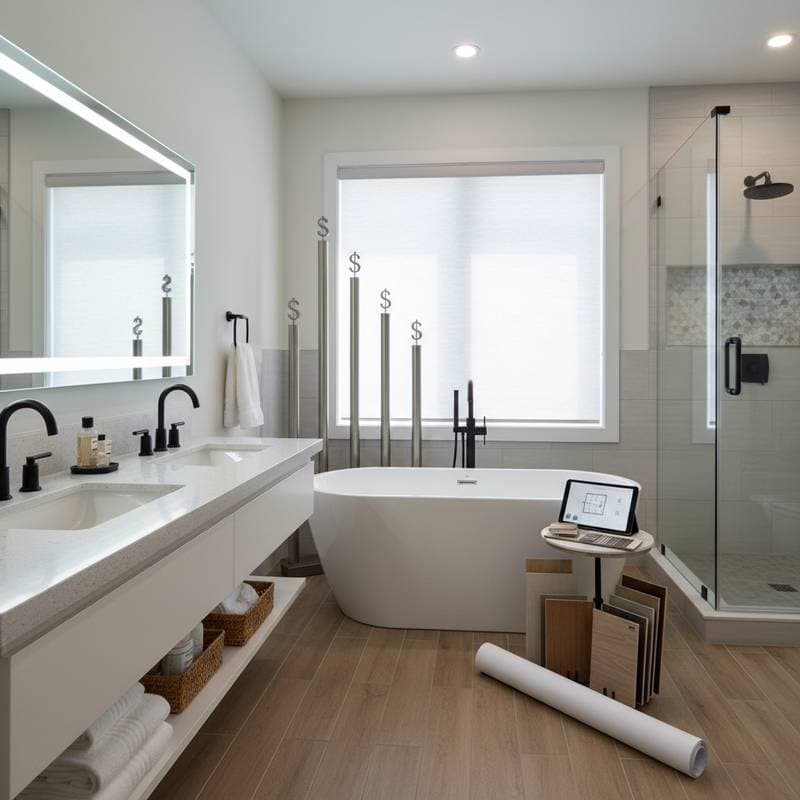
Bathroom Remodel 2025: What Homeowners Truly Spend
A bathroom remodel transforms daily routines, enhances home comfort, and increases property value. Many homeowners launch these projects without grasping the full financial picture, leading to unexpected expenses and delays. This guide draws on recent industry data, contractor experiences, and homeowner reports to reveal actual spending patterns for 2025, equipping you with precise budgeting tools and strategies for a seamless upgrade.
Key Factors That Shape Costs
Bathroom remodel expenses vary widely based on project specifics. Understanding these elements allows for informed decisions that align with your vision and finances.
1. Size and Scope
Small powder rooms under 50 square feet typically range from $5,000 to $10,000 for basic updates, while full master bathrooms exceeding 100 square feet can exceed $25,000. Larger spaces demand more tiles, fixtures, and structural adjustments, which escalate material and labor demands proportionally.
2. Plumbing and Electrical Work
Relocating a shower or sink involves cutting into walls and floors, often adding $2,000 to $5,000 in specialized labor. Projects that retain existing plumbing lines and outlets save up to 30 percent on these technical costs, preserving the original footprint for efficiency.
3. Material Choices
Budget-friendly options like porcelain tiles cost $3 to $8 per square foot installed, compared to $15 to $30 for marble or quartz. Opting for stock vanities at $300 to $800 per unit versus custom builds at $2,000 or more enables a sophisticated look without premium pricing.
4. Fixture Upgrades
Standard toilets and sinks run $200 to $500 each, but high-end rain showerheads or soaking tubs push totals to $1,000 to $3,000 including installation. These selections not only elevate aesthetics but also influence water efficiency and long-term maintenance.
5. Local Labor Rates
Contractors in metropolitan areas charge $75 to $150 per hour, driving a standard remodel to $15,000 to $30,000, whereas rural rates of $50 to $100 per hour keep similar projects at $10,000 to $20,000. Factor in permit fees, which average $500 to $1,500 depending on local regulations.
Strategies for Cost Efficiency
Effective budgeting focuses on high-impact investments rather than across-the-board reductions. These approaches maintain quality while optimizing expenses.
Proven Savings Tactics:
- Develop a Detailed Plan. Outline every element, from grout colors to lighting placements, and secure fixed-price estimates upfront. Mid-project alterations can inflate costs by 20 percent or more.
- Preserve the Existing Layout. Avoid shifting load-bearing walls or utility lines to eliminate engineering fees and reduce demolition time.
- Refurbish Functional Items. Resurface a durable bathtub for $500 to $1,000 instead of replacement, extending its life without compromising hygiene.
- Time Purchases for Discounts. Target end-of-season clearances in January or July, where fixtures and tiles often drop 20 to 40 percent in price.
- Solicit Competitive Bids. Obtain quotes from at least three vetted professionals to benchmark rates and negotiate better terms.
Prioritize compliance with building codes for all modifications. Engage certified experts for plumbing and electrical tasks to prevent safety hazards and ensure warranty validity.
Insights from Actual Projects
Homeowner discussions on renovation platforms highlight a preference for balanced remodels averaging $12,000 to $18,000. For instance, one family updated a 60-square-foot guest bath with new vinyl flooring, a modern pedestal sink, and LED lighting for $8,500 by handling paint and accessories themselves. Professionals note that 70 percent of clients prioritize durability over extravagance, focusing on moisture-resistant materials to avoid future repairs.
Industry analysts emphasize strategic allocations: dedicate 40 percent of the budget to labor, 30 percent to materials, and the rest to fixtures and contingencies. Shortcuts in ventilation or sealing often lead to mold issues, incurring $2,000 to $5,000 in corrections within years.
“A well-planned bathroom remodel extends beyond surface changes; it secures enduring comfort and functionality.” – Remodeling Expert
Steps to Execute Your Remodel Effectively
Begin by assessing your space and defining priorities, such as accessibility features or storage solutions. Assemble a timeline that coordinates material deliveries with contractor availability to minimize disruptions.
Secure financing options like home equity lines if needed, and track expenses with simple spreadsheets. Homeowners who research thoroughly and communicate clearly with teams complete upgrades on schedule, realizing enhanced usability and resale appeal without financial strain.