Navigating Solar Panel Maintenance in 2025: DIY or Professional?
Homeowners with solar installations increasingly face the choice between self-managed upkeep and engaging certified experts. Factors such as installation scale, panel placement, and personal expertise guide this decision. Solar panels endure harsh weather, yet routine care sustains their output at peak levels, typically 15 to 25 years or more.
This overview details effective maintenance practices, contrasts financial implications of DIY versus professional options, and identifies scenarios where specialist intervention proves essential. By understanding these elements, owners can protect their investment while minimizing operational costs.
Implementing DIY Solar Panel Cleaning
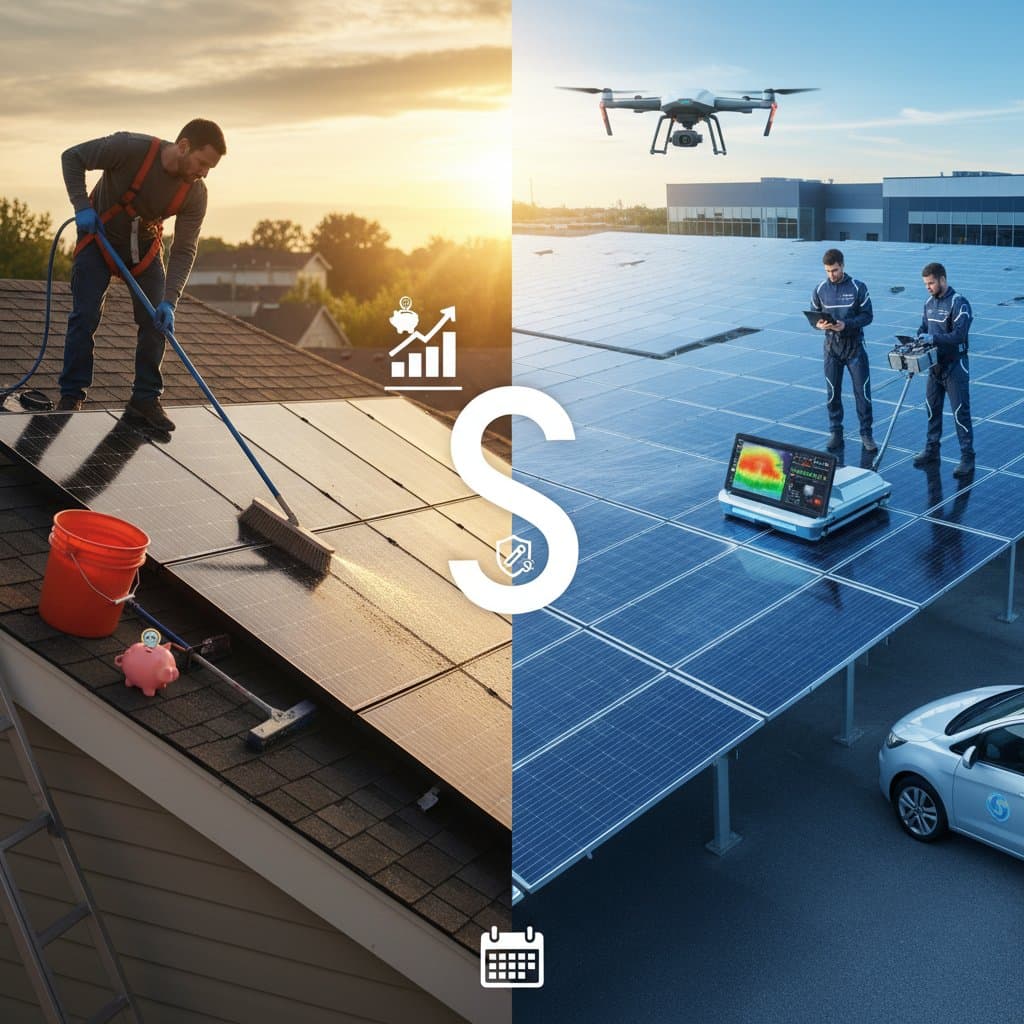
For accessible installations, many owners opt for hands-on cleaning to maintain panel surfaces free of dust, pollen, and bird droppings, which can reduce efficiency by up to 20 percent if left unchecked. Essential tools include a soft-bristle brush, squeegee, five-gallon bucket, and a solution of water mixed with a pH-neutral dish soap at a ratio of one teaspoon per gallon. Deionized water, available at auto supply stores, minimizes spotting from hard water minerals.
Perform cleaning every three to six months, depending on local environmental conditions like heavy rainfall or urban pollution. In arid regions, quarterly sessions prevent buildup that hampers sunlight absorption.
Step-by-Step Guide to Safe DIY Cleaning
-
Shut down the system. Deactivate the inverter via its control panel and isolate panels using the DC disconnect switch to eliminate electrical hazards.
-
Initial rinse. Direct a garden hose at low pressure, starting from the top and working downward, to dislodge surface debris without scratching the glass.
-
Apply cleaning solution. Dip the brush in the soapy mixture and work in circular motions across the panel, avoiding abrasive pressure that might etch the anti-reflective coating.
-
Rinse and dry. Flush with clean water from top to bottom, then employ the squeegee to eliminate streaks. Allow natural air drying in shaded conditions to prevent thermal stress.
-
Visual assessment. Examine frames, seals, and connections for wear, documenting any issues with photographs for potential warranty claims.
This method typically costs under 50 dollars in supplies and recoups value through preserved energy production, potentially adding 5 to 10 percent to annual output for a standard residential array.
Essential Safety Protocols for DIY Efforts
Rooftop work introduces fall risks, responsible for thousands of injuries annually. Select a fiberglass extension ladder rated for 300 pounds, positioned at a four-to-one angle against the roof edge, and secure it with ties or standoff stabilizers. Wear non-slip shoes and a harness tethered to a fixed anchor point if heights exceed 10 feet.
Schedule tasks for early morning or late afternoon to evade intense heat; water on hot panels can cause rapid contraction and micro-fractures. In windy conditions or on slick surfaces post-rain, postpone the job. For installations over two stories or on pitched roofs steeper than 30 degrees, professional assistance mitigates liability and ensures compliance with local building codes.
Evaluating Costs and Outcomes: DIY Versus Professional
Self-directed cleaning delivers immediate budget relief, yet professional evaluations uncover issues like micro-inverter faults or shading obstructions that elude casual observation. Annual professional service might recover its cost through detected inefficiencies, boosting system yield by 10 to 15 percent in underperforming setups.
Consider regional variations: in coastal areas prone to salt corrosion, pros deploy specialized equipment for thorough decontamination. For urban dwellers with limited tools, the time investment in DIY often exceeds the savings.
| Factor | DIY Cleaning | Professional Maintenance |
|---|---|---|
| Cost per session | 20 to 50 dollars in materials | 150 to 400 dollars, varying by system size |
| Safety risk | Elevated, especially on elevated roofs | Minimal, with insured technicians |
| Inspection depth | Surface-level visual review | Comprehensive thermal imaging and electrical diagnostics |
| Duration | 1 to 3 hours per homeowner | 1 to 2 hours, coordinated by specialists |
| Warranty implications | Risk of invalidation from improper handling | Reinforces coverage through certified procedures |
Homeowners adept at home repairs benefit from biannual DIY routines, supplemented by pro audits. Larger commercial arrays or those in remote locations favor full-service contracts for consistent monitoring via apps that track performance metrics.
Indicators for Professional Intervention
Engage a NABCEP-certified technician promptly upon observing performance anomalies. A 10 percent or greater dip in monthly kWh generation, unexplained by seasonal shifts, signals potential panel degradation or inverter issues.
Inspect for physical indicators: hairline fractures from hail, yellowing frames from UV exposure, or frayed cables indicating rodent activity. Mounting hardware showing rust or loosening poses structural threats, particularly in high-wind zones.
Inverter alerts, such as ground fault codes or overvoltage warnings, require immediate expert diagnosis to prevent system shutdowns. Annual professional tune-ups, costing 200 to 300 dollars, often include firmware updates and vegetation management around ground mounts to sustain unobstructed sunlight exposure.
Optimizing Long-Term Solar Performance
Well-maintained solar arrays yield consistent returns, offsetting initial costs within five to seven years through reduced utility bills. Integrating DIY cleaning for routine surface care with yearly expert overhauls balances affordability and reliability.
Track system data via monitoring software to benchmark efficiency post-maintenance, adjusting frequency based on output trends. This proactive strategy extends panel lifespan, enhances resale value for properties, and contributes to environmental goals by maximizing clean energy production.