
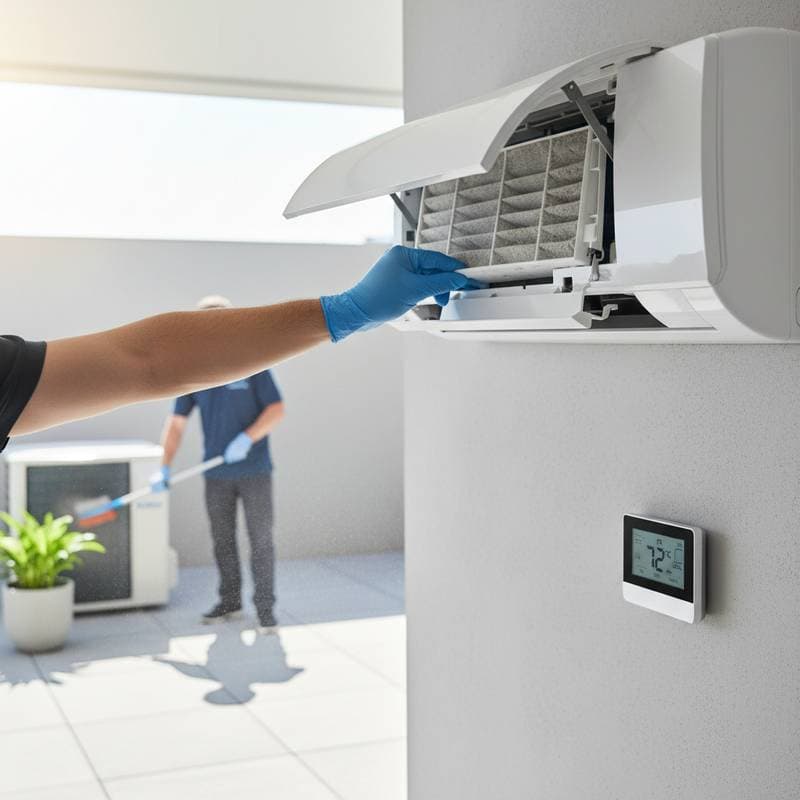
Essential AC Maintenance Tips to Avoid Costly Summer Breakdowns
Summer heat can turn uncomfortable quickly if your air conditioner fails. Many such failures stem from overlooked maintenance before peak usage. Implementing a structured plan now ensures reliable performance, lower energy expenses, and extended equipment life.
Importance of Regular AC Maintenance
Air conditioners rely on precise components to maintain indoor comfort. Dirt accumulation or wear on coils, fans, or filters increases operational strain. This results in elevated utility bills, diminished cooling capacity, and premature system failure.
Proper upkeep extends unit longevity to 15-20 years, compared to 7-10 years for neglected systems. Early detection of issues through routine checks prevents minor problems from escalating into expensive repairs, often saving several hundred dollars.
Essential Pre-Summer Maintenance Checklist
Address these tasks before temperatures rise:
- Replace air filters every 30-90 days based on household activity levels.
- Clear debris from the outdoor condenser unit.
- Examine refrigerant lines for signs of wear or leakage.
- Verify thermostat precision for accurate temperature regulation.
- Arrange a professional inspection for comprehensive evaluation.
The U.S. Department of Energy reports that these measures can boost efficiency by up to 15 percent.
Step 1: Maintain Air Filters Effectively
Dirty filters obstruct airflow, compelling the system to overwork and risk breakdown. Inspect filters monthly during cooling months to sustain optimal performance.
- Fiberglass filters require monthly replacement.
- Pleated varieties endure up to 90 days.
- High-efficiency options for allergen reduction last up to six months with regular checks.
Common sizes for central systems include 16x20 inches or 20x25 inches; confirm dimensions on the existing frame. Households with pets or high dust levels benefit from more frequent changes to preserve unrestricted air circulation.
Step 2: Service the Outdoor Condenser Unit
The exterior condenser gathers leaves, dirt, and pollen, impeding heat dissipation from the coils. Restricted coils force prolonged operation, reducing efficiency and straining the compressor.
Detailed Cleaning Process
- Disconnect power via the breaker or unit switch.
- Clear visible debris using a soft brush or by hand.
- Hose down coils gently from inside outward to dislodge particles without damaging fins.
- Use a fin comb to realign any bent sections.
- Maintain a two-foot clearance around the unit for unobstructed airflow.
HVAC professionals advise annual cleaning, or biannual in pollen-heavy or vegetated areas, to safeguard system health.
Step 3: Care for the Indoor Evaporator Coil
The indoor coil extracts heat from room air but accumulates dust over time, particularly with inconsistent filtering. A soiled coil impairs heat absorption, causing inadequate cooling and potential freezing.
Access the coil by detaching the indoor unit's front cover. Apply a soft brush or specialized aluminum-safe cleaner. Avoid corrosive substances like bleach that damage the material.
Thick buildup or ice formation indicates underlying issues such as low refrigerant; engage a technician promptly for diagnosis using appropriate equipment.
Step 4: Calibrate Thermostat Functionality
The thermostat controls system cycles; inaccuracies lead to excessive runtime and higher costs. Position a calibrated thermometer adjacent to it and note any discrepancies exceeding two degrees.
Recalibrate if needed or opt for replacement. Programmable smart models optimize based on occupancy, potentially cutting energy use by 10 percent yearly. Confirm compatibility and proper installation with your existing setup.
Step 5: Ensure Condensate Drain Line Patency
AC operation dehumidifies air, producing condensate that exits via a narrow PVC line. Clogs from algae or debris cause backups, risking leaks and system shutdowns.
Mitigate risks by introducing one cup of white vinegar monthly into the line. Inspect the drain pan for accumulation and employ a wet-dry vacuum to extract obstructions from the exterior outlet.
This practice averts interior water damage and maintains balanced indoor humidity levels.
Step 6: Engage Professional Tune-Up Services
Homeowner efforts complement but do not substitute expert analysis. Technicians assess electrical integrity, refrigerant charge, and overall airflow with precision instruments.
Tune-ups range from $80 to $150, varying by location and unit scale. Services include refrigerant level verification, connection tightening, motor lubrication, capacitor testing, and temperature drop measurements across vents.
Biannual visits—one pre-cooling and one pre-heating—promote year-round reliability and peak efficiency.
Pitfalls to Avoid in AC Upkeep
Well-intentioned maintenance can falter without caution. Power off equipment before any cleaning to eliminate shock hazards. Steer clear of high-pressure sprays that deform coil fins and hinder airflow.
Overlook ductwork at your peril, as dust-laden ducts erode performance. Position furniture away from vents to prevent uneven cooling. Forgoing yearly professional reviews allows leaks to worsen undetected.
Safety and Accessibility Adjustments
For households with limited mobility, adjust filter and thermostat placements to 42 inches from the floor instead of the standard 48 inches. This facilitates independent maintenance.
Around outdoor units, secure pathways free of hazards like loose hoses. Don eye protection during coil cleaning or chemical applications to guard against irritation.
Indicators Requiring Expert Intervention
Some concerns demand professional resolution. Seek assistance for vents emitting warm air post-filter change, unusual sounds such as hissing or rattling, frost on lines, water near the handler, or repeated breaker activations.
These signal complex electrical or refrigerant faults needing certified tools and expertise. Unauthorized tampering risks warranty invalidation and additional harm.
Financial and Performance Advantages
Routine care optimizes energy consumption, distributes cooling uniformly, and prolongs durability. The National Renewable Energy Laboratory estimates 5-15 percent savings on cooling expenses.
On a $200 monthly summer bill, this translates to $10-30 in monthly reductions, accumulating substantially over time. Compliance with manufacturer service protocols upholds warranty coverage for critical components like compressors.
Strategies for Long-Term Reliability
Document all maintenance activities in a dedicated log for tracking patterns and scheduling. Insulate refrigerant lines with foam sleeves to minimize heat gain.
Keep 24 inches of space around the condenser by pruning nearby foliage. Run a full system test in early spring to identify issues before demand peaks.
These practices position your AC for consistent, trouble-free operation through the hottest months.




