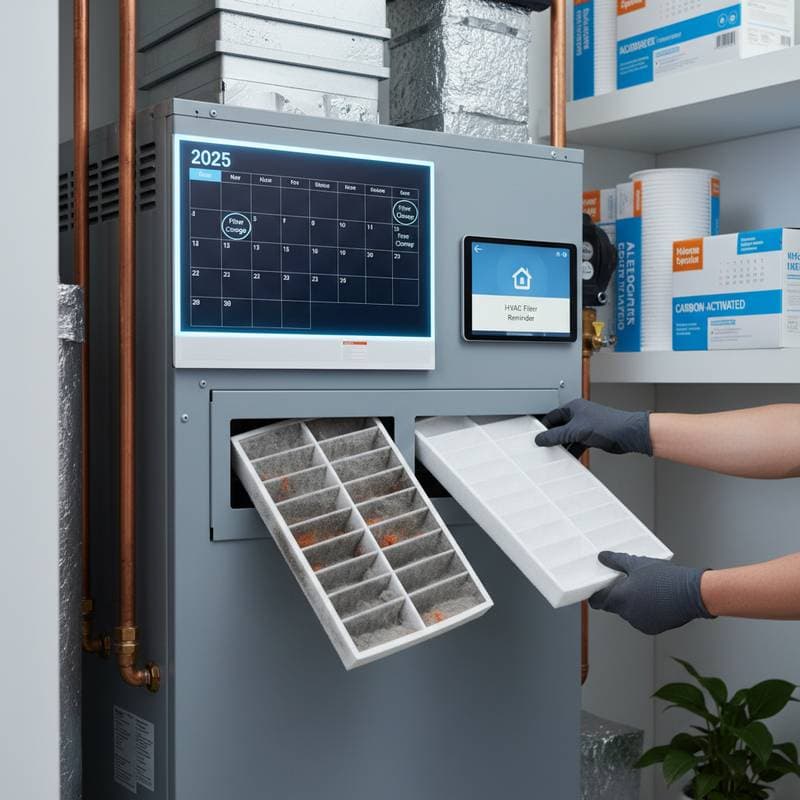
2025 HVAC Filter Calendar: Boost Efficiency and Save Costs
Homeowners frequently neglect a basic maintenance practice that safeguards their heating and cooling systems. Regular filter replacements maintain clean air, decrease energy consumption, and prolong equipment durability. However, individuals often delay this task until reduced airflow or operational noises signal a problem. An HVAC filter calendar establishes a reliable schedule to simplify this process year-round. Adopting such a plan reduces utility expenses, prevents avoidable repairs, and fosters a healthier living space.
Why a Filter Schedule Matters
HVAC systems rely on unobstructed airflow for optimal performance. Clogged filters, laden with dust, pollen, or pet dander, compel the blower motor to exert additional effort to circulate air through ducts. This increased workload elevates energy demands and accelerates component wear. Data from the Department of Energy indicates that installing a clean filter in place of a soiled one can lower energy usage by as much as 15 percent. Over extended periods of operation, these savings accumulate substantially.
A dedicated filter calendar counters oversight. Rather than reacting to performance declines, homeowners adhere to a timeline aligned with their residence's unique environment. This proactive method sustains superior air quality and shields mechanical elements from accumulations that invite failure.
Factors That Influence Filter Changes
Replacement frequency varies by household. Multiple elements determine the ideal interval.
-
Type of Filter
Standard fiberglass models capture coarse debris yet demand frequent swaps. Pleated variants secure finer particles and endure longer durations, whereas high-efficiency options necessitate less frequent attention but require vigilant airflow oversight. -
Household Size and Activity
Residences with numerous residents, children, or animals generate elevated levels of suspended matter. Each person sheds skin cells, hair, and introduces dust that the system processes. Greater occupancy or movement accelerates filter saturation. -
Allergies and Health Concerns
Households addressing respiratory sensitivities select advanced filters to intercept pollen, mold, and mites. These selections maintain efficacy only through routine monitoring and replacement. -
Local Air Quality
City environments expose systems to exhaust and particulates, while countryside settings contend with pollen surges or agricultural dust. Elevated external contaminants hasten indoor filter loading. -
HVAC Usage Patterns
Units operating continuously in climates with harsh weather endure heavier demands than those activated sporadically.
Building a Seasonal HVAC Filter Calendar
Assembling a filter calendar requires minimal effort. Establish seasonal alerts using a wall-mounted planner or smartphone application. Consistency forms the foundation. This outline suits typical homes, with adjustments for specific conditions.
Winter
Heating dominates in cooler periods, with windows sealed and runtime extended. Efficient airflow proves essential to sustain warmth without excess strain. Inspect filters monthly; replace every one to two months upon detecting soil. Fresh filters facilitate even heat distribution and avert furnace strain.
Spring
Rising warmth introduces pollen and outdoor residues. Align filter renewal with seasonal transitions from heating to cooling. This preparation equips the system for intensive summer operation and minimizes allergen intrusion. Complement changes by dusting vents and clearing return registers.
Summer
Cooling demands persist, with prolonged cycles gathering dust and humidity. Neglect risks mold proliferation. Monthly evaluations guide timely replacements. In moist locales, opt for antimicrobial-treated filters to curb microbial development and odors.
Fall
Temperature shifts precede renewed heating. Examine and refresh filters prior to activation, targeting any evident discoloration. Unimpeded flow eases blower demands during initial chills. Pair this with a technician visit to confirm pre-winter readiness.
Choosing the Right Filter for Your System
Filter selection hinges on equipment compatibility, family requirements, and financial considerations.
-
Fiberglass Filters
Budget-friendly and basic, these safeguard internals over enhancing purity. Monthly exchanges optimize protection. -
Pleated Filters
Folded fabrics ensnare finer contaminants, extending usability to three months. They balance expense and effectiveness. -
Electrostatic Filters
Permanent designs leverage charge to attract particles. Periodic rinsing sustains longevity, spanning years. -
HEPA Filters
Superior capture of ultrafine elements suits allergy-prone settings. System modifications may accommodate their resistance.
Evaluate via MERV ratings for capture capability. Ratings from 8 to 13 suit most homes without impeding flow.
Cost Savings from Consistent Maintenance
Routine filter care yields tangible financial returns. Restricted flow from debris extends cycle times, inflating power draw. Industry insights reveal that adherence averts up to 30 percent of routine malfunctions prompting technician visits.
Preserved filters shield vital parts like motors and coils from overload. Debris-induced failures incur steep repair fees, often exceeding $500. Monthly filter investments, typically under $20, pale in comparison.
Digital Tools and Smart Reminders
Modern aids streamline upkeep. Intelligent thermostats monitor runtime and notify for changes. Applications compute intervals from usage data, while subscription services dispatch replacements predictably.
These resources benefit occupied schedules or multi-property oversight. Automation upholds performance standards and air standards universally.
Professional Support and Inspection
Supplement personal efforts with yearly expert evaluations. Technicians detect concerns beyond filters, including leaks or blockages. They affirm filter suitability for airflow dynamics.
Maintenance contracts bundle checks and swaps at reduced rates versus crisis interventions. Explore packages to weigh against efficiency gains and durability extensions.
Environmental Benefits of Regular Filter Changes
Efficiency gains extend to ecological impacts. Reduced runtime curtails fuel or electricity needs, diminishing emissions. Incremental efficiencies support greener living.
Reusable options minimize landfill contributions. Adhere to cleaning protocols—rinse thoroughly and air-dry—to preserve function and hygiene.
Troubleshooting Common Issues
Persistent airflow deficits post-replacement suggest deeper concerns. Duct clogs or vent covers mimic filter woes. Verify unobstructed returns and reposition obstructing items.
Misaligned installation hampers results. Orient per directional arrows on the frame to direct flow correctly.
Sustaining System Performance Year-Round
A filter calendar demands modest input for significant outcomes. It optimizes operations, fortifies longevity, and ensures pure air. Integrate tracking with expert oversight and alerts for effortless care.
Prioritize this routine alongside filter stocking. The practice delivers reduced costs, enhanced purity, and reliable comfort.