Slash Stormwater Costs with Permeable Driveways
Managing stormwater runoff represents one of the largest concealed expenses in contemporary homeownership. Rainwater that fails to infiltrate the ground accumulates pollutants and overwhelms driveways, lawns, and municipal drainage systems. Local governments impose stormwater fees proportional to impervious surfaces, and conventional concrete or asphalt driveways substantially increase these charges. Permeable driveways provide an effective solution to diminish these expenses while enhancing property drainage and aesthetic appeal.
What Makes a Driveway Permeable
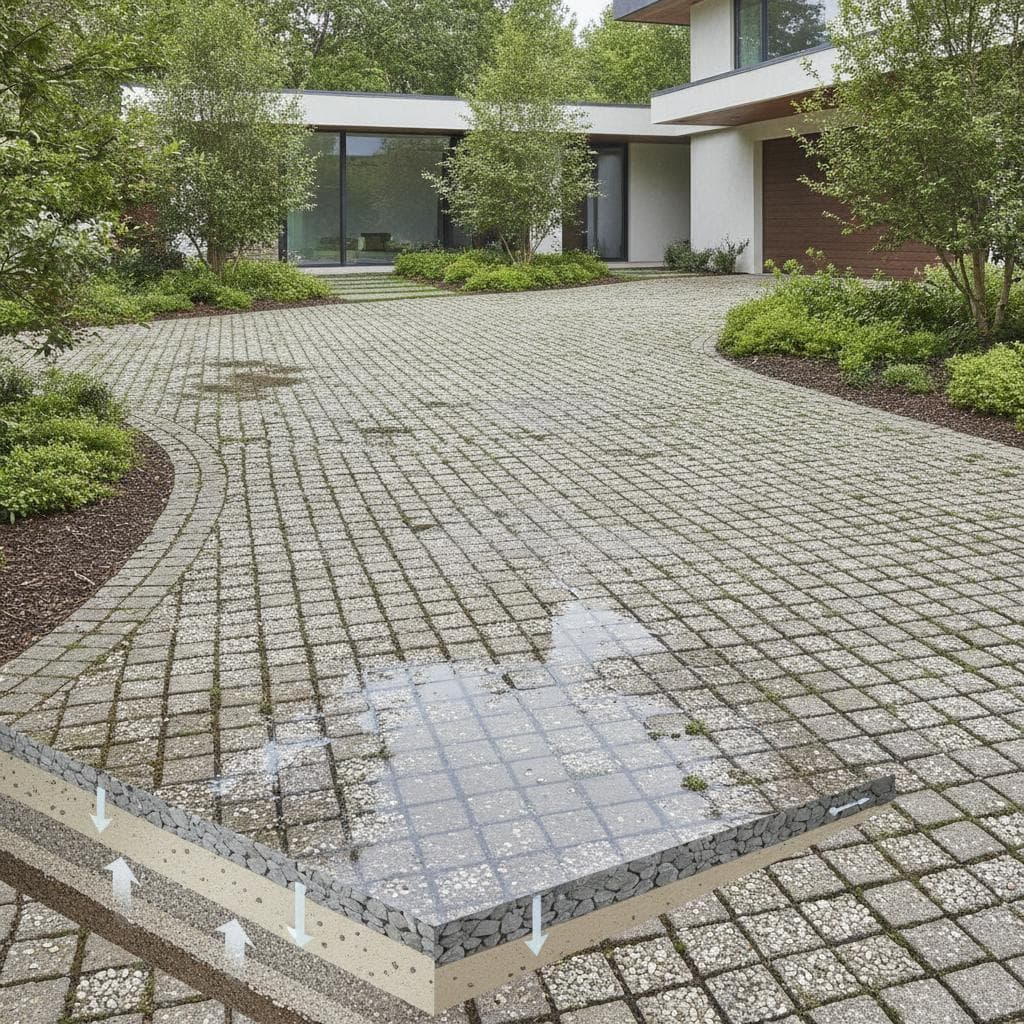
A permeable driveway incorporates materials designed to permit water passage through the surface into underlying soil. Rather than directing rainwater to storm drains, these systems filter it via a foundational layer of gravel or crushed stone. This mechanism replenishes groundwater and minimizes sewer contributions from runoff.
Common varieties of permeable driveways encompass:
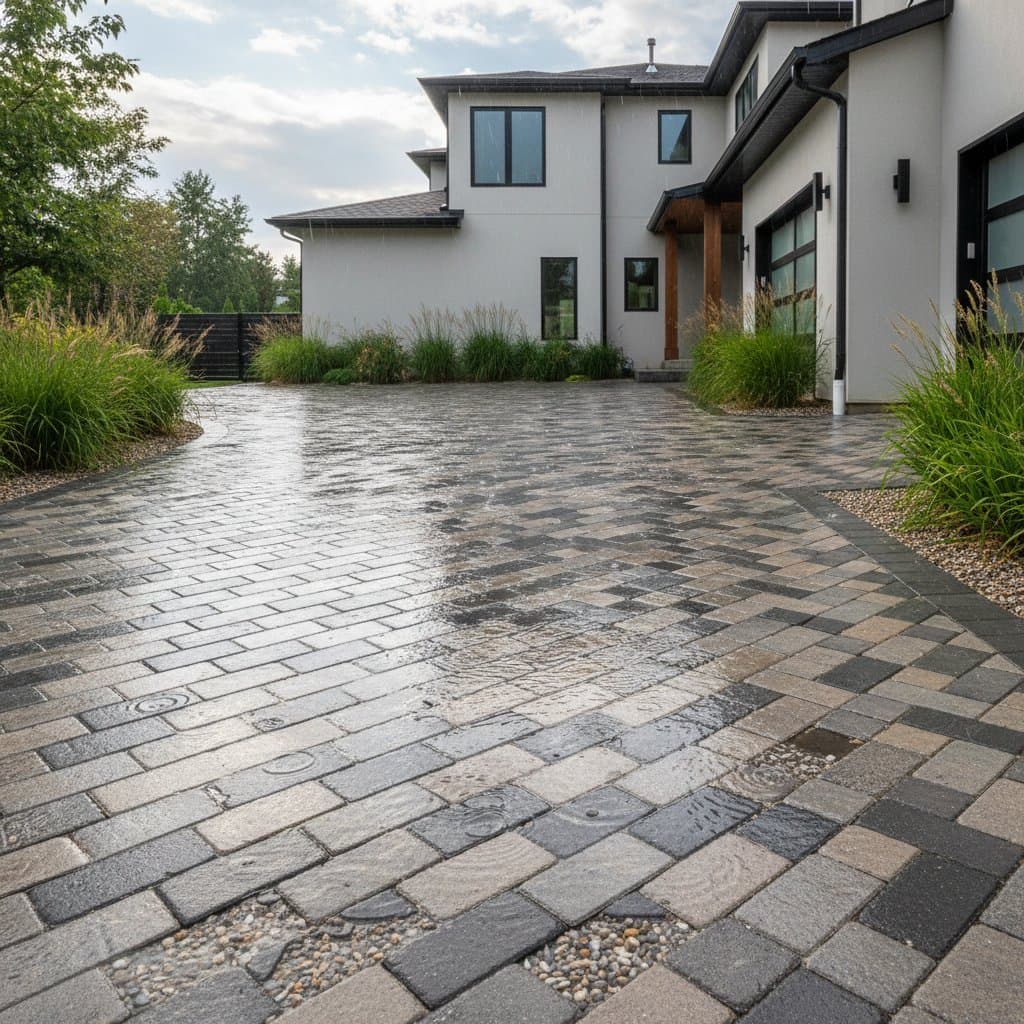
- Permeable pavers: Interlocking units of concrete or clay featuring narrow gaps packed with gravel or sand.
- Porous asphalt: A composition resembling standard asphalt yet incorporating minute voids to facilitate drainage.
- Pervious concrete: A formulation akin to ordinary concrete but lacking fine aggregates, thereby generating voids for water percolation.
- Gravel systems with stabilizing grids: Loose aggregates secured within a honeycomb framework to avert rutting and displacement.
These alternatives differ in visual characteristics, durability, and required upkeep, yet all pursue the objective of natural runoff mitigation.
The Rising Cost of Stormwater Management
Property owners bear the expense of stormwater control through utility assessments tied to impervious area extents. A typical concrete driveway introduces several hundred square feet of non-porous coverage, elevating periodic bills. As urban areas broaden stormwater initiatives, these tariffs escalate accordingly.
Research from the Environmental Protection Agency indicates that permeable pavements decrease runoff volumes by as much as 90 percent in moderate precipitation events. Certain municipalities grant fee discounts or incentives for adopting such surfaces. For instance, a homeowner documented a 40 percent reduction in stormwater charges following the replacement of a concrete driveway with interlocking pavers.
Cost Comparison: Permeable vs. Traditional
Initial material expenses for permeable driveways typically exceed those of standard asphalt, though cumulative savings prove substantial over time.
Approximate costs per square foot:
- Gravel with grid stabilization: $4 to $7
- Porous asphalt: $8 to $12
- Pervious concrete: $10 to $14
- Permeable pavers: $12 to $20
In contrast, traditional concrete driveways range from $6 to $10 per square foot. This disparity narrows rapidly upon accounting for diminished stormwater levies, reduced needs for drainage remediation, and extended service life. Numerous paver installations endure 25 years or longer under routine maintenance.
Permeable selections further obviate costly additions such as trench drains or retention ponds. Professionals from established paving firms report that clients often recover premium installation costs within five to seven years via lowered utilities and averted maintenance.
DIY or Hire a Professional
Certain permeable driveway configurations suit adept do-it-yourself enthusiasts, whereas others demand advanced machinery and familiarity with site-specific geology.
Options suitable for DIY:
- Gravel installations incorporating plastic grids
- Basic permeable paver arrangements using sand joints
Installations necessitating professionals:
- Pervious concrete applications
- Porous asphalt placements
Project success hinges on meticulous excavation and stratification. The subbase requires sufficient depth to detain water briefly without inundation, typically involving the removal of 10 to 12 inches of existing soil and substitution with progressively sized aggregates. Engaging a contractor guarantees optimal gradients, compaction levels, and perimeter restraints, thereby forestalling subsidence and water accumulation over time.
Maintenance and Longevity
Permeable driveways demand periodic attention to preserve efficacy. Accumulated leaves, soil, and detritus may obstruct voids or joints, impeding water entry. Routine sweeping or vacuuming sustains functionality, while judicious application of a pressure washer addresses blockages without disturbing joint fillers.
In regions with winter conditions, these surfaces exhibit superior resistance to ice formation, as drainage prevents surface pooling and freezing. De-icing agents remain applicable in limited quantities, and many owners require less overall due to accelerated drying post-thaw.
With diligent upkeep, permeable pavers match the durability of standard pavements. Damaged components can undergo spot replacement without comprehensive reconstruction, rendering repairs efficient and economical.
Environmental and Aesthetic Benefits
Cost reductions aside, permeable surfaces yield profound ecological advantages. They sequester contaminants, augment aquifer levels, and alleviate urban heat islands from extensive paving. Additionally, these systems curb localized inundation, safeguarding vegetation and adjacent water bodies.
Homeowners frequently select permeable materials for their decorative versatility. Diverse patterns, hues, and finishes accommodate varied architectural motifs. Contrasting paver shades can delineate parking areas or pedestrian routes, while gravel setups impart a timeless, organic charm suited to countryside or sustainable residences.
Landscape specialists illustrate how integrating permeable pavers with adjacent rain gardens forms integrated hydrology solutions. The driveway manages primary infiltration, with gardens intercepting surplus, thereby elevating utilitarian drainage to an ornamental element.
Planning and Permitting
Commence by consulting the municipal building authority. Numerous jurisdictions promote permeable installations through stormwater credits or streamlined approvals. Soil percolation assessments may prove mandatory in locales with dense clays or elevated water tables.
During design, evaluate vehicular patterns. High-traffic or load-bearing driveways necessitate reinforced subbases. Collaborate with installers to align specifications with anticipated usage. On sloped terrains, incorporate subtle swales or barriers to distribute flow evenly across permeable areas, avoiding concentrated overload.
Implementing Your Permeable Driveway Upgrade
Homeowners seeking fiscal relief and ecological stewardship will find permeable driveways among the most judicious enhancements. These systems regulate discharge, trim utility outlays, and foster resilient landscapes. Although upfront investments appear elevated, enduring economies in stormwater handling and preservation typically surpass the premium.
Assess your existing driveway and drainage patterns initially. Persistent pooling, soil erosion, or flows toward structures signal ideal candidacy for permeable retrofits, addressing several issues concurrently. Solicit quotations from regional specialists and inquire regarding available rebates or sustainable development grants.
Post-installation, prioritize debris clearance, post-storm evaluations, and periodic joint replenishment. Through consistent vigilance, a permeable driveway endures as a robust, visually pleasing feature for generations, converting precipitation into a beneficial resource rather than an expenditure.