Fall Filter Replacement: Timing Strategies for Optimal HVAC Performance
A crisp fall morning invigorates the senses until the indoor air feels stuffy or laden with dust. This sensation frequently signals that the HVAC filter requires replacement. Filters perform a vital function by purifying the air residents breathe and shielding the furnace or air conditioner from excessive dust accumulation. Proper seasonal timing for filter swaps significantly enhances air quality and overall system efficiency.
This guide details the optimal timing and methods for fall filter replacement, selection criteria for appropriate filter types, and common pitfalls to circumvent. Readers gain practical knowledge to maintain home comfort while ensuring the HVAC system operates at peak performance.
Filter Ratings Explained
HVAC filters vary in effectiveness, rated by the Minimum Efficiency Reporting Value, or MERV. This standardized scale indicates the smallest particle sizes a filter can capture, with higher numbers denoting superior filtration.
The following table outlines key MERV ratings, captured particles, suitable applications, and recommended replacement frequencies:
| MERV Rating | Particle Size Captured | Best For | Typical Replacement Interval |
|---|---|---|---|
| 1 to 4 | Large dust, lint, fibers | Older systems, basic needs | Every 60 days |
| 5 to 8 | Dust, mold spores, pet dander | Standard homes | Every 60 to 90 days |
| 9 to 12 | Fine dust, pollen, smoke | Allergy-prone or pet-owning homes | Every 45 to 60 days |
| 13 to 16 | Bacteria, smoke, fine particles | High-efficiency or medical setups | Every 30 to 45 days |
Most households benefit from MERV 8 to 11 filters, which balance particle capture with adequate airflow. Filters with higher ratings may impede airflow in systems not engineered for them, potentially straining the blower motor. Consult the furnace manual prior to selecting an upgraded filter to verify compatibility.
Step-by-Step Guide to Filter Replacement
Replacing an HVAC filter ranks among the easiest maintenance procedures, yet precision in execution promotes optimal system function.
Required Tools
Prepare the following items:
- A replacement filter matching the exact size and MERV rating
- A flashlight for visibility
- A vacuum cleaner equipped with a brush attachment
- A marker to record the installation date
Step 1: Power Down the System
Deactivate the furnace or air conditioner via the thermostat. This precaution prevents loose debris from entering the ductwork during the process.
Step 2: Identify the Filter Location
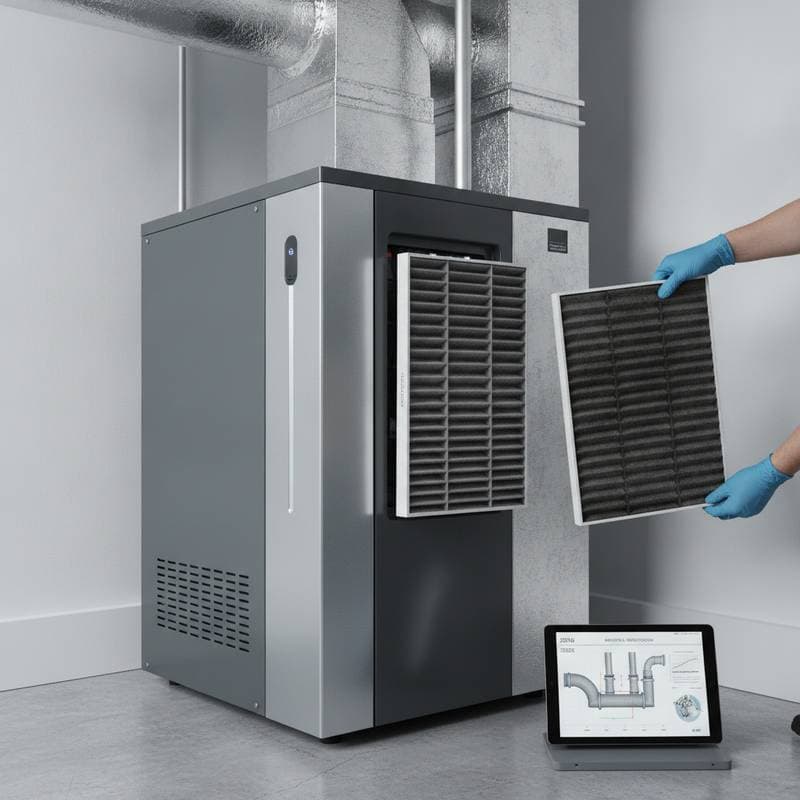
The filter typically resides in a slot behind an access panel near the blower or within the return air duct. Before removal, measure the existing filter to confirm dimensions. Standard sizes include 16 x 20 inches, 20 x 25 inches, and 16 x 25 inches, with thicknesses from 1 to 4 inches.
Step 3: Extract and Examine the Old Filter
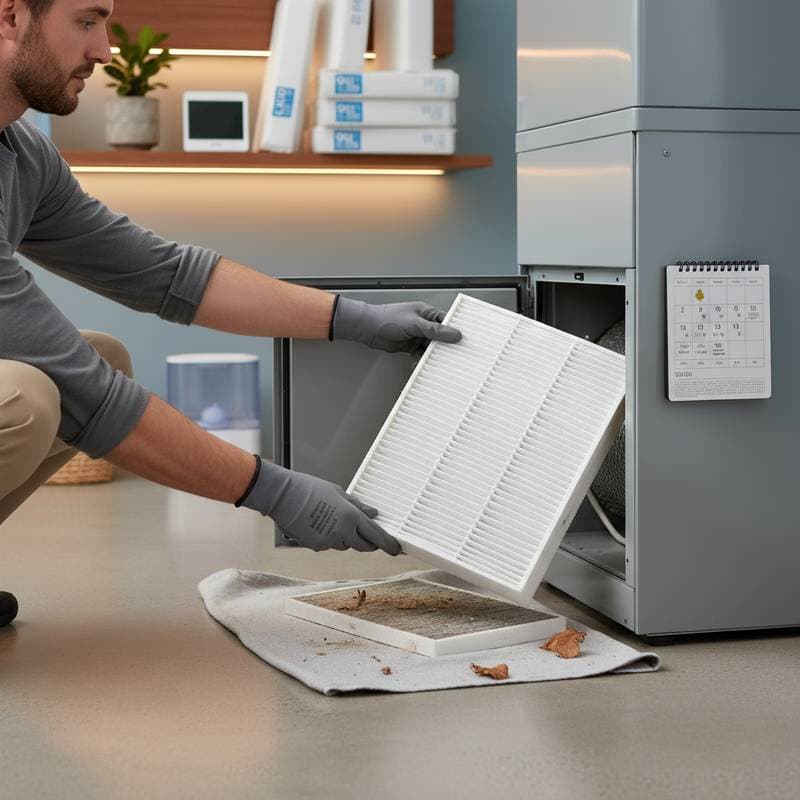
Gently pull out the filter and observe the directional airflow arrows on its frame. Inspect for excessive dust buildup or dampness, which may point to underlying problems such as duct leaks or humidity imbalances requiring professional attention.
Step 4: Clean the Enclosure
Employ the vacuum's brush attachment to dislodge dust from the filter slot and adjacent blower components. A dust-free area ensures the new filter forms a tight seal, maximizing efficiency.
Step 5: Insert the New Filter
Position the replacement filter so the airflow arrows face toward the blower motor. Mark the installation date on the filter frame with the marker. This notation facilitates adherence to replacement schedules.
Financial and Maintenance Insights
A well-maintained filter elevates air purity and yields cost savings. The U.S. Department of Energy reports that a clogged filter increases energy use by 5 to 15 percent, as the blower labors against restricted airflow.
Filter Pricing Overview
Consider these average costs per unit:
- Standard fiberglass: $2 to $5
- Pleated filters: $10 to $20
- High-efficiency (MERV 13+): $25 to $60
- Reusable electrostatic: $40 to $80
For a standard home employing mid-range pleated filters changed bimonthly, yearly expenses total approximately $60 to $120. This investment proves economical compared to repair fees from airflow obstruction, which often exceed $100 per visit.
Tailored Advice for Health and Accessibility
Indoor air quality holds particular importance for individuals with health vulnerabilities or physical limitations.
Recommendations for Allergy and Asthma Management
Opt for MERV 11 to 13 filters to trap pollen, dust mites, and pet dander effectively. In peak pollen periods, replace these filters every 30 to 45 days to sustain low allergen levels.
Guidance for Elderly Household Members
Select durable pleated filters rated for 60 to 90 days of service, but perform monthly visual checks. Reliable filtration supports consistent humidity control, benefiting respiratory health in older adults.
Solutions for Mobility Challenges
When filters locate in elevated positions, install a filter access door extender. This device enables safe replacement from floor level, reducing fall risks for wheelchair users or those with limited reach.
Establishing an Effective Replacement Routine
Regularity forms the foundation of successful filter maintenance. Integrate checks, replacements, and seasonal adjustments into daily habits.
Implementing the 30-60-90 Guideline
Adopt this tiered approach:
- Every 30 days: Inspect filter status, particularly in pet-heavy or allergy-sensitive environments
- Every 60 days: Perform full replacement for pleated filters under normal conditions
- Every 90 days: Schedule changes for lightly used residences or seasonal homes
Year-Round Seasonal Protocol
- Fall: Install a fresh filter ahead of heating demands
- Winter: Conduct monthly inspections during high-usage periods
- Spring: Renew the filter before activating air conditioning
- Summer: Monitor for accumulated pollen and outdoor dust
Advanced Strategies for Long-Term Efficiency
- Purchase filters in bulk quantities to lower per-unit costs and maintain stock readiness
- Vacuum return air vents on a monthly basis to minimize ambient dust entry
- Log each filter change in a dedicated notebook or digital application to identify usage patterns
- Align filter maintenance with complementary tasks, such as smoke detector testing or ceiling fan direction adjustments
- Consider installing a smart thermostat that monitors system runtime and issues timely filter replacement notifications
Sustaining System Longevity Through Proactive Care
Diligent filter management extends HVAC lifespan and enhances daily living conditions. By adhering to these practices, homeowners prevent costly breakdowns and enjoy fresher, more efficient indoor environments year-round.