Prepare Your AC for Summer: Reduce Repairs and Save Costs
Maintaining your air conditioner before intense heat arrives preserves finances, averts malfunctions, and ensures home comfort. Numerous homeowners delay system checks until the initial heat wave, discovering then that the unit emits warm air or produces unusual sounds. Early preparation provides reassurance and minimizes the need for expensive urgent fixes.
The Importance of Proactive AC Maintenance
Air conditioners endure significant strain during extended hot weather. Dust, debris, and gradual mechanical wear accumulate unnoticed. Without intervention, these factors strain the system, increase energy consumption, and diminish its operational life. Regular maintenance routines can decrease repair expenses by approximately one third while delivering cooler, cleaner indoor air.
A properly maintained unit requires less power to achieve the same cooling effect. It also regulates humidity levels effectively, lowering the chances of mold and mildew growth. Preparation extends beyond comfort to promote safety, as issues like faulty wiring or obstructed filters may lead to overheating.
Indicators That Your AC Requires Service
Prior to reviewing maintenance procedures, recognize key warning signals. These cues suggest the system faces challenges.
- Air output feels warm despite the thermostat setting for cooling
- Inconsistent temperatures in different rooms
- Unusual rattling or buzzing sounds
- Elevated energy bills without increased usage
- Accumulation of water near the indoor unit
Identifying these signs promptly prevents extensive damage. A minor adjustment or component replacement often averts severe mechanical issues.
Comprehensive AC Maintenance Guide
A structured approach ensures optimal system performance. Adhere to this detailed checklist to ready your AC for summer demands.
1. Disconnect Power Sources First
Prioritize safety. Deactivate electricity at the circuit breaker and the outdoor unit's disconnect switch before inspecting or cleaning any parts. Servicing an energized system poses serious hazards.
2. Clean or Replace Air Filters
Clogged filters impede airflow and force the system to labor excessively. Swap out disposable filters or wash reusable ones every few months. In environments with high dust, pets, or allergens, inspect them more frequently. Clean filters enhance cooling performance and indoor air quality.
3. Examine the Outdoor Condenser Unit
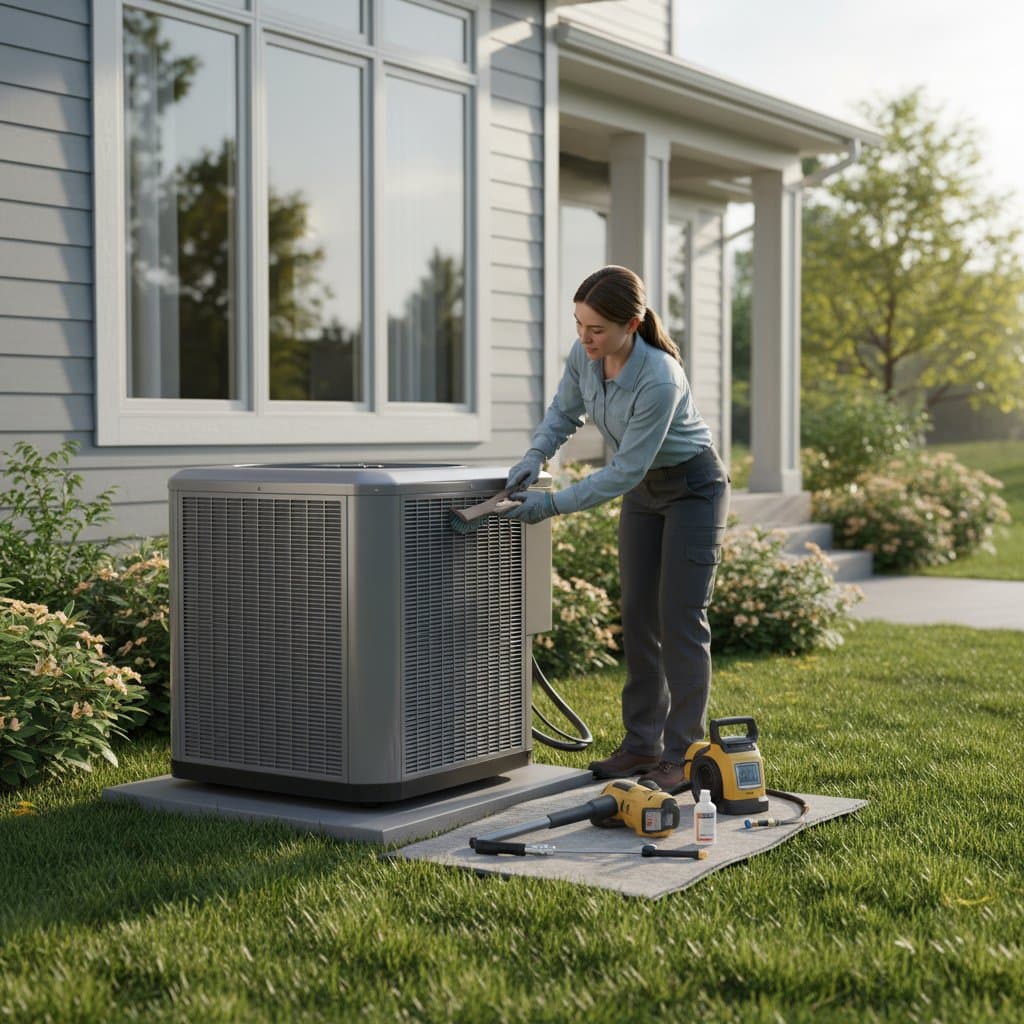
Remove leaves, grass, and soil from the unit's vicinity. Maintain a minimum two-foot clearance on all sides for adequate ventilation. Employ a soft brush or vacuum to dislodge debris from the fins. Prevent bending the fins, since impaired airflow hampers cooling capacity.
4. Assess Coil Cleanliness
Evaporator and condenser coils gather dust progressively. When encrusted, they obstruct heat transfer. Apply a specialized coil cleaner or a mild detergent solution with water for gentle washing. Rinse thoroughly afterward. Pristine coils can boost efficiency by 20 percent or greater.
5. Repair Bent Fins
Damaged fins restrict airflow. Utilize a fin comb or a flat, blunt tool to realign them delicately. This adjustment sustains uniform operation.
6. Evaluate Refrigerant Lines and Insulation
Insulation on refrigerant lines prevents energy dissipation. Renew any torn or absent coverings. Search for leaks or oily residues, which signal potential refrigerant shortages; professionals must address these.
7. Clear the Condensate Drain Line
Blockages in the drain line lead to leaks and structural harm. Attach a wet-dry vacuum to the exterior drain port to extract obstructions. Introduce a cup of vinegar into the drain pan, followed by water, to inhibit algae formation.
8. Secure Electrical Connections
Loose wiring diminishes efficiency and heightens fire dangers. Inspect connections and terminals for rust. Summon a qualified technician if scorch marks or deteriorated wires appear, rather than attempting repairs personally.
9. Verify Thermostat Functionality
Activate cooling mode and lower the setting several degrees below ambient temperature. The unit should engage without delay and deliver chilled air shortly. Frequent cycling or startup failures indicate the need for calibration or substitution.
10. Arrange Professional Inspection
Despite thorough homeowner efforts, annual expert servicing maintains peak performance. Specialists measure refrigerant levels, sanitize internal components, and identify concealed faults before they escalate into major expenditures.
Financial Advantages and Enduring Gains
Proactive care expenses pale in comparison to crisis interventions. A blocked filter or soiled coil might precipitate compressor breakdown, among the priciest components to repair. Optimized filters and systems can trim energy costs by as much as 15 percent, accumulating savings over prolonged summer periods.
Consistent comfort represents another key gain. A serviced AC delivers steady temperatures without excessive strain. This practice lessens component wear, prolongs durability, and eliminates unexpected failures during peak heat.
Property owners and managers benefit similarly, as regular inspections curb resident issues and elevate asset worth. Dependable climate control ranks highly among essential amenities in hot climates.
Supporting Visuals and Maintenance Records
Recommended Image:
A photograph depicting a homeowner gently brushing an outdoor AC condenser, captioned Cleaning condenser fins enhances airflow and cooling performance.
Recommended Chart:
A bar graph illustrating energy expenses before and after maintenance, titled Effects of Regular AC Upkeep on Monthly Energy Consumption. Such visuals demonstrate tangible outcomes effectively.
Maintain a maintenance journal to monitor tasks. Log filter replacements, coil washes, and service appointments. This documentation aids in anticipating part needs and substantiates diligent care during property transactions.
Frequently Asked Questions
How frequently should filters receive replacement?
Every one to three months, adjusted for dust, pets, and allergy considerations.
Implement Your Maintenance Plan
Begin with power disconnection and filter checks to build momentum. Progress through the checklist systematically, noting any concerns for professional follow-up. Consistent application yields immediate efficiency gains and safeguards against summer disruptions.
Incorporate seasonal reminders into your calendar for sustained results. Homeowners who follow these steps report fewer service calls and noticeable bill reductions. Proactive habits transform AC management from a chore into a strategic investment in comfort and economy.