DIY Versus Professional: 2025 Attic Insulation Cost Analysis
Upgrading attic insulation ranks among the most impactful steps for enhancing home comfort and energy efficiency. Homeowners must decide between managing the project personally or engaging certified experts. This choice involves distinct cost implications, levels of technical demand, and effects on future performance. A clear grasp of these elements enables better budgeting and prevents errors that compromise insulation effectiveness.
This resource outlines essential cost components, pricing frameworks, service options, and primary influences on expenses for both DIY and professional attic insulation efforts. It addresses supplementary costs, geographic pricing differences, and the advantages of expert installation over self-directed methods.
Pricing Frameworks
Hourly Rates Compared to Flat Fees
Professional services frequently operate on hourly billing or fixed-price agreements. Hourly charges generally fall between $40 and $80 per hour, influenced by technician expertise and local market conditions. Established firms often favor flat rates calculated by attic square footage and insulation variety, offering homeowners reliable estimates.
DIY efforts eliminate labor fees, yet demand considerable personal time. Insulating a typical attic spans 8 to 20 hours for an individual, varying with prior experience and site accessibility.
Unit-Based or Full Project Pricing
Certain contractors assess fees per unit of insulation applied, whereas others provide comprehensive project quotes. For instance, fiberglass batt installation might incur $1.75 per square foot, and spray foam could reach $2.90 per square foot. Project pricing encompasses preparation, site cleanup, and debris removal, delivering added convenience for time-constrained owners.
Bundled Service Packages
Energy efficiency providers commonly combine attic insulation with services such as air sealing, duct maintenance, or radiant barriers. Such integrations reduce overall expenses by 10 to 20 percent relative to individual bookings. Bundles streamline logistics, as crews address multiple upgrades during a single visit.
Ongoing Maintenance Versus Single Projects
Insulation work seldom involves subscriptions, though select firms propose annual inspections featuring thermal imaging and efficiency assessments at $150 to $300 yearly. These options confirm sustained performance. Standard installations represent one-time investments with decades-long durability.
Factors Shaping Attic Insulation Costs
Multiple elements determine expenses for attic insulation, applicable to DIY and professional scenarios alike.
Project Scale
Attic dimensions dictate material quantities and labor duration. Experts may apply modest per-square-foot reductions for expansive areas, as initial setup distributes across greater coverage. Insulating 1,000 square feet typically totals $2,500, whereas 400 square feet approximates $1,200, reflecting unavoidable fixed costs.
Installation Challenges and Expertise Demands
Irregular structures, confined spaces, or barriers elevate difficulty. Novice DIY participants risk incomplete coverage or voids in such settings. Trained professionals employ advanced equipment and techniques to navigate obstacles, often adding 10 to 25 percent in fees for intricate jobs.
Duration of Work
Project timelines affect direct labor charges and indirect rental needs. Basic batt installations suit a homeowner's weekend schedule, but crews complete them in one day. Spray foam requires additional prep and drying periods, extending timelines and costs.
Required Materials and Tools
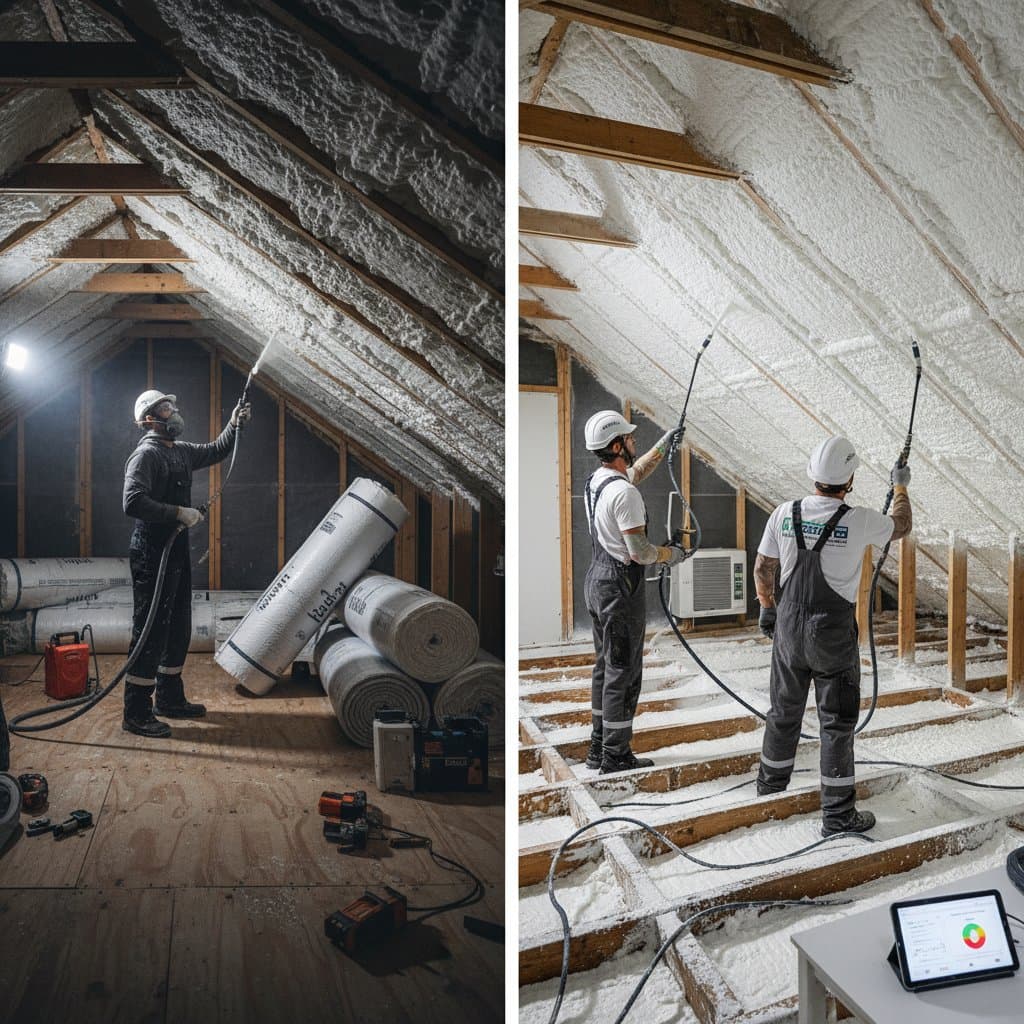
Self-installers procure or lease items like insulation blowers, respirators, and shears. Blown-in setups rent for $50 to $100 daily, and spray foam kits surpass $700. Contractors supply these essentials within their fees, balancing elevated labor with comprehensive support.
Evaluating DIY and Professional Options
Selecting between self-installation and expert services hinges on financial constraints, technical abilities, and performance expectations.
Benefits of DIY:
- Reduced initial outlay for supplies alone
- Schedule flexibility and gradual execution
- Direct oversight of all processes
Challenges of DIY:
- Risk of flaws leading to inconsistent insulation
- Restricted options for premium products like closed-cell foam
- Absence of guarantees or official validation
Benefits of Professional Installation:
- Precise application ensuring rated thermal resistance
- Coverage warranties for products and workmanship
- Swift execution including ventilation and sealing measures
Challenges of Professional Installation:
- Elevated expenses from included labor
- Availability constraints in peak periods
- Reduced choice in materials under standard contracts
Professionals charge 40 to 60 percent more than DIY equivalents, but their work frequently yields 15 to 25 percent yearly reductions in energy costs through superior sealing and uniformity.
Ensuring Quality, Safety, and Enduring Benefits
Effective insulation underpins reliable comfort and utility savings. Spray foam excels in airtightness yet demands precise handling to prevent condensation issues. Experts adhere to protocols for chemical safety and airflow management.
DIY enthusiasts must equip with masks, goggles, and suits, ensure ventilation, and adhere to product guidelines. Missteps invite diminished efficacy or hazards like mold growth.
Over time, professional results prove superior. Data from industry studies show 70 percent of expert jobs retain peak performance beyond ten years, compared to 55 percent for DIY due to compression, voids, or dampness. Many providers conduct follow-up audits to affirm compliance with design standards.
Steps to Upgrade Your Attic Insulation
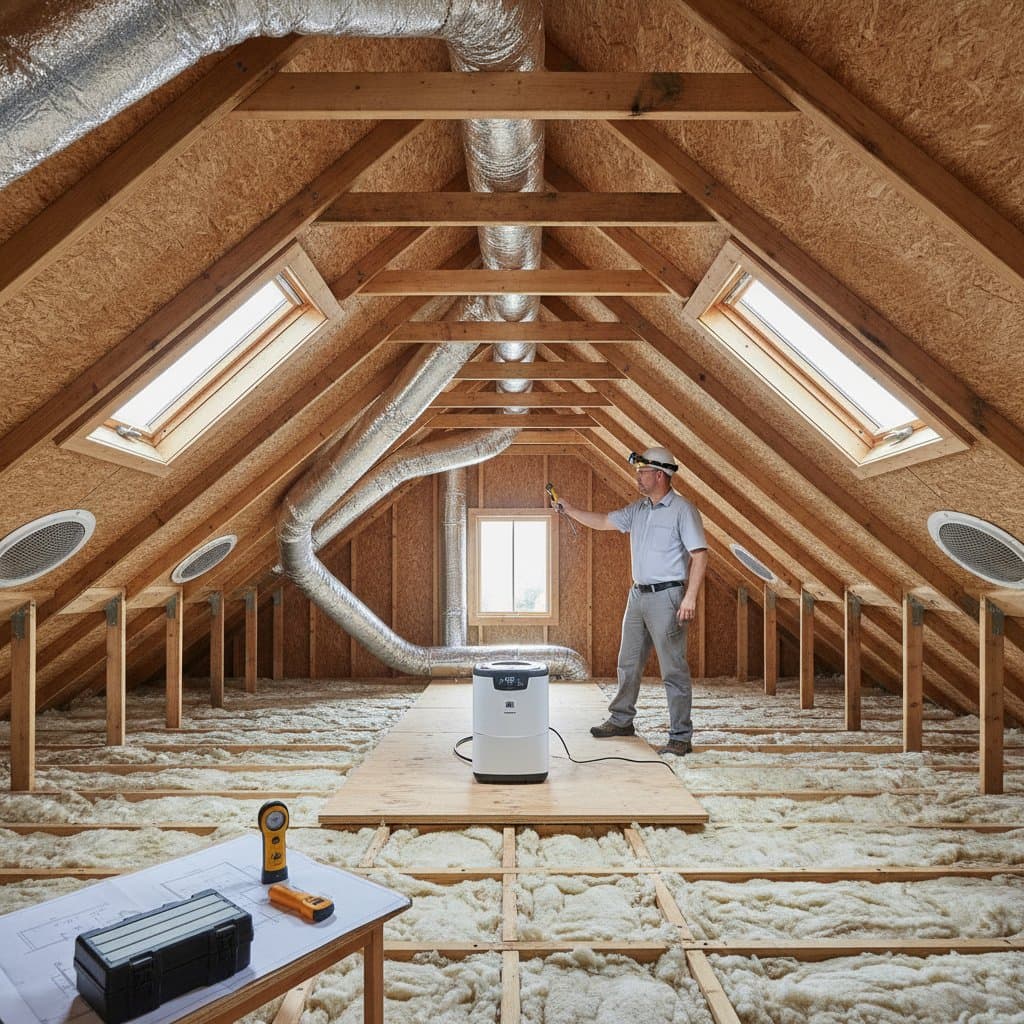
Attic insulation enhancements deliver substantial returns on investment through improved efficiency. Assess your space's current state with a simple R-value check using a probe thermometer. Select materials suited to your climate, such as fiberglass for moderate zones or foam for extreme temperatures.
For DIY, source supplies from reputable suppliers and review online tutorials for safe techniques. If opting for professionals, obtain three quotes specifying inclusions like sealing. Track rebates from utility programs, which can offset 20 to 30 percent of costs.
Regardless of approach, verify post-installation airflow to avoid overheating risks. These measures secure comfort, lower bills, and elevate property value for years ahead.