The DIY AC Tune-Up That Prevents Costly Summer Repairs
When temperatures rise, the air conditioner emerges as the essential system in any home. Homeowners often neglect maintenance until a breakdown occurs during the peak of heat. A straightforward DIY AC tune-up maintains smooth operation, averts expensive repairs, and prolongs the unit's life. With basic tools, modest time investment, and a structured checklist, preparation for the hottest months becomes achievable without professional intervention.
Why a DIY AC Tune-Up Matters
Consistent maintenance ensures the air conditioner operates efficiently and dependably. Accumulation of dust, debris, and wear on components forces the system to labor excessively, which elevates energy consumption and risks failure. A tune-up detects minor issues early, preventing escalation. For instance, thorough coil cleaning enhances airflow and eases compressor workload, whereas filter replacement avoids overheating and irregular cycling. Performing these actions prior to summer arrival provides reliable cooling and eliminates the need for urgent service.
Understanding AC Maintenance Costs
A DIY tune-up represents a budget-friendly method to sustain the home cooling system. Professional inspections range from $75 to $200, yet a self-managed process incurs costs below $30, primarily for supplies and filters.
Typical DIY Expenses
- Air filter: $10 to $30, based on dimensions and filtration level
- Coil cleaner: $8 to $15 per container
- Fin comb and soft brush: $10 to $20 combined
- Protective gloves and safety goggles: $5 to $15
Potential Professional Costs
Neglecting upkeep may lead to substantial repair bills if the AC requires attention.
- Refrigerant recharge: $150 to $400
- Capacitor replacement: $100 to $250
- Compressor replacement: $1,000 to $2,000
Preventive measures thus conserve hundreds of dollars and spare hours of sweltering discomfort amid intense summer conditions.
DIY vs Professional: Making the Right Choice
DIY efforts and expert services each serve distinct purposes. Discernment involves identifying homeowner-appropriate tasks from those demanding specialized expertise.
DIY-Friendly Tasks
Homeowners manage these safely:
- Air filter replacement
- Condenser coil cleaning
- Drain line inspection and clearing
- Fin and panel debris removal
- Accessible screw and panel tightening
Such actions promote airflow, eliminate obstructions, and optimize energy use.
Tasks Best Left to Professionals
Specialized equipment and training prove necessary for:
- Refrigerant level assessment or replenishment
- Electrical system diagnostics
- Motor lubrication or substitution
- Thermostat adjustment
Persistent inadequate cooling post-tune-up warrants a licensed HVAC specialist's evaluation. Unauthorized handling of sealed units or electrical elements poses safety risks and could invalidate warranties.
Your DIY AC Tune-Up Checklist
This sequential guide facilitates a secure and thorough tune-up.
1. Turn Off the Power
Prior to any procedure, deactivate electricity via the primary breaker or external disconnect. Prioritize safety throughout.
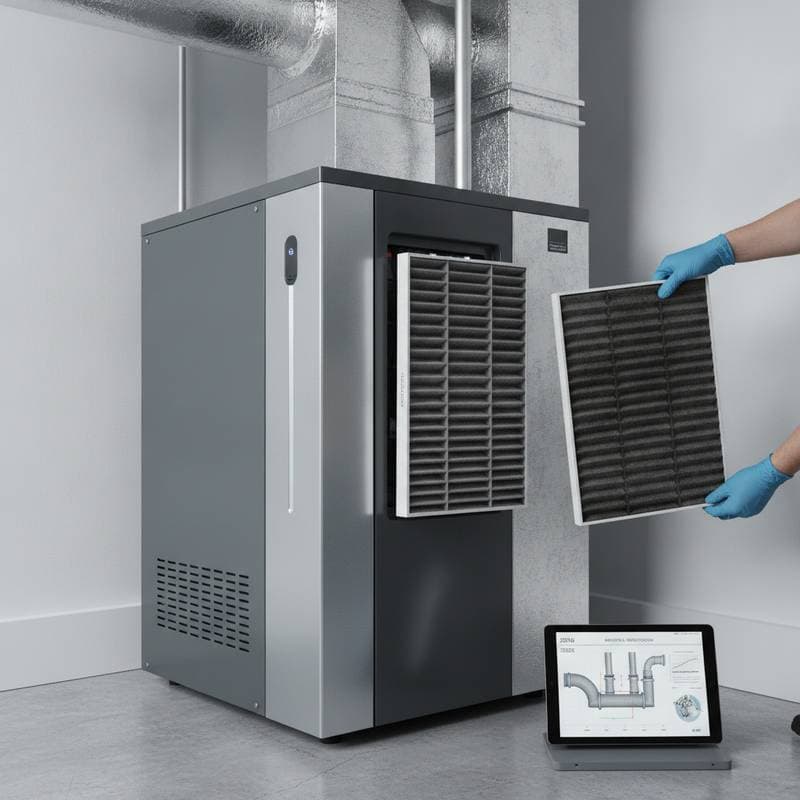
2. Replace or Clean the Air Filter
A soiled filter impedes airflow and strains the system. Exchange it every one to three months amid frequent operation. For reusable types, rinse thoroughly and allow complete drying prior to reinsertion.
3. Clean the Condenser Coils
Clear the outdoor unit of foliage, soil, and refuse. Employ a soft brush or vacuum attachment to dislodge fin accumulations, followed by application of no-rinse coil cleaner. Adhere to product dwell time, then apply a light garden hose rinse to remove residue without excessive force.
4. Straighten Bent Fins
Deformed fins obstruct circulation. Utilize a fin comb for precise realignment, exercising caution to preserve the fragile aluminum structure.
5. Clear the Condensate Drain Line
Blockages from algae or sediment provoke leaks and unpleasant smells. Introduce one cup of white vinegar, pursued by warm water, to dissolve deposits effectively.
6. Inspect Ducts and Vents
Examine vents for dust or impediments. Vacuum surfaces and confirm that furnishings or drapery do not hinder passage. Diminished flow from several outlets signals the need for expert duct evaluation.
7. Test the Thermostat
Adjust the thermostat several degrees under ambient room temperature to verify activation and cooling efficacy. Swap batteries as required and validate display precision.
8. Listen and Observe
Upon reactivation, monitor for aberrant sounds like rattling or grinding. Assess airflow consistency and cooling uniformity. Anomalous audio or subpar output suggests underlying concerns meriting professional review.
Your AC Maintenance Questions, Answered
How often should I tune up my AC?
Conduct a tune-up once before the cooling season commences, with an additional session post-intensive usage if feasible.
What is the most common cause of AC breakdowns?
Obstructed filters and soiled coils rank as primary culprits in system malfunctions.
Can I use any type of coil cleaner?
Select products explicitly designated safe for household air conditioners to preclude corrosive damage.
Does regular cleaning improve energy efficiency?
Affirmative. Pristine coils and filters alleviate compressor burden, thereby diminishing overall power draw.
Is it safe to spray water on the outdoor unit?
Yes, provided power remains disengaged. Maintain moderate pressure to safeguard fin integrity.
Should I cover my AC unit when not in use?
Apply a permeable cover against debris intrusion, yet refrain from airtight enclosure to inhibit condensation accumulation.
How do I know if my refrigerant is low?
Continuous operation without sufficient cooling necessitates professional refrigerant verification.
What temperature should my thermostat be set to for efficiency?
A setting near 78 degrees Fahrenheit during occupancy, elevated when absent, optimizes comfort alongside expenditure.
Steps to Sustain Peak Performance Year-Round
Incorporate seasonal checks into routines to maximize system longevity. Monitor monthly for filter condition and outdoor unit clearance. Document maintenance dates to track patterns and anticipate needs. These habits ensure enduring efficiency, reduced costs, and uninterrupted comfort through every season.