Basement Waterproofing: What $2K to $10K Actually Gets You
Water intrusion in basements poses a significant risk to home structures and health. In 2025, addressing this issue through waterproofing ranges from basic interior treatments to comprehensive exterior systems. Costs typically fall between $2,000 and $10,000, depending on the scope and home specifics. This guide breaks down what each investment level delivers, helping homeowners make informed decisions.
Common Signs of Basement Moisture Problems
Homeowners often overlook early indicators of water issues until damage escalates. Look for efflorescence, which appears as white, powdery deposits on walls from mineral leaching. Damp odors or mold growth signal persistent humidity. Cracks in foundation walls or floors allow water entry, while pooling water after rains indicates poor drainage. Addressing these promptly prevents structural weakening and costly repairs.
Interior Waterproofing Solutions
Interior methods focus on managing water that has already entered the basement. These approaches suit minor issues or budgets under $5,000. They provide quick relief without major excavation.
Sealants and Coatings
Applying hydraulic cement or epoxy sealants to cracks costs $2,000 to $4,000 for a standard 1,000-square-foot basement. Professionals clean and prepare surfaces before injection, ensuring a durable bond. This method seals small leaks effectively but does not address external water sources. Expect results to last 5 to 10 years with proper application.
Sump Pumps and Dehumidifiers
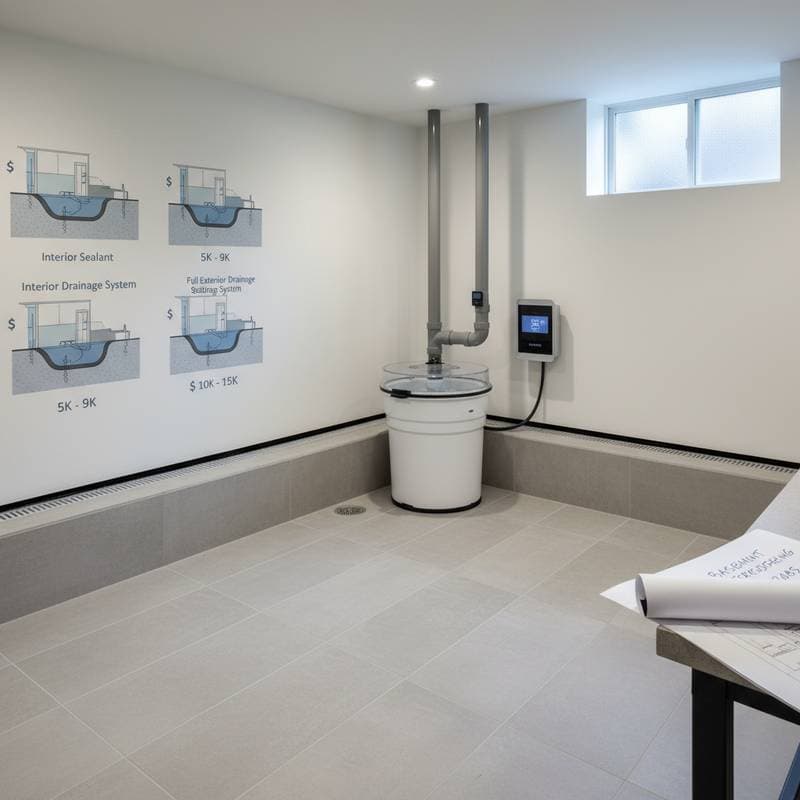
Installing a sump pump system, including the pit and pump, ranges from $1,500 to $3,000. Add $500 to $1,000 for a battery backup to handle power outages. These devices collect and eject water from the basement floor. Pairing with a dehumidifier, costing $200 to $800, maintains air quality by reducing moisture levels below 50 percent.
Interior Drainage Systems
For more severe seepage, interior French drains run along the perimeter at $3,000 to $6,000. Contractors cut a trench in the concrete floor, install perforated pipes, and cover with gravel before repouring the slab. Water channels to a sump pump for removal. This solution manages high water tables without exterior work.
Exterior Waterproofing Approaches
Exterior techniques prevent water from reaching the foundation, offering long-term protection. These projects require digging around the home, pushing costs to $5,000 to $10,000 or more. They suit homes with ongoing flooding or in wet climates.
Surface Grading and Gutter Extensions
Regrading the yard to slope away from the foundation costs $1,000 to $3,000. Professionals remove soil, create a 6-inch drop over 10 feet, and add topsoil for stability. Extending downspouts 5 to 10 feet from the house adds $200 to $500. These steps divert rainwater effectively, reducing hydrostatic pressure on walls.
Exterior Membrane and Drainage Boards
Applying waterproof membranes to foundation walls involves excavating 6 to 8 feet deep, at $4,000 to $8,000. Materials like bituminous coatings or rubberized sheets adhere directly to concrete. Drainage boards, dimpled plastic sheets, channel water away when backfilled. This combination protects against soil moisture and lasts 20 years or longer.
Full Perimeter Drainage Systems
Comprehensive exterior systems include French drains outside the footing, costing $6,000 to $10,000. Excavation exposes the foundation, where contractors install perforated pipes surrounded by gravel. A sump pump discharges water to a safe location. This method resolves issues from poor site drainage or high groundwater.
Cost Breakdown by Project Scale
Budget allocation varies with home size and problem severity. For a 1,000-square-foot basement with minor leaks, $2,000 covers sealants and a basic sump pump. Moderate issues, like wall cracks and humidity, require $4,000 to $6,000 for interior drainage and dehumidification. Severe flooding demands $8,000 to $10,000 for exterior membranes and full grading.
Labor accounts for 50 to 70 percent of total costs, with materials making up the rest. Regional factors, such as soil type or accessibility, can increase expenses by 20 percent. Obtain multiple quotes from licensed contractors to compare value.
Selecting the Appropriate Waterproofing Strategy
Evaluate your basement's condition through a professional inspection, costing $300 to $500. Identify the water source: surface runoff, groundwater, or plumbing leaks. Consider your home's age and foundation type; older poured concrete may need different treatments than block walls.
Match solutions to goals. Interior fixes provide immediate relief for rentals or short-term ownership. Exterior systems benefit long-term residents by preventing mold and foundation shifts. Factor in energy savings, as dry basements improve insulation efficiency.
- Assess moisture sources via visual checks and moisture meters.
- Review local building codes for permitted methods.
- Prioritize non-invasive options if excavation risks utilities.
- Plan for warranties, typically 5 to 10 years from reputable firms.
- Schedule work during dry seasons to minimize disruptions.
Ongoing Care for Lasting Results
Waterproofing demands maintenance to sustain effectiveness. Inspect sump pumps quarterly, cleaning pits and testing backups. Clear gutters twice yearly to prevent overflow. Monitor interior humidity with hygrometers, adjusting dehumidifiers as needed.
Reapply sealants every 5 years on high-exposure areas. Check exterior grading after heavy storms, repairing erosion promptly. These habits extend system life and avoid repeat investments.
Safeguarding Your Home's Foundation
Investing in basement waterproofing protects equity and livability. A dry space enhances usable square footage for storage or recreation. It mitigates health risks from mold allergens and preserves structural integrity against erosion.
Homeowners who act early report fewer insurance claims and higher property values. Consult experts to tailor a plan that aligns with your budget and delivers peace of mind for years ahead.