Backyard Cottages: Costs and Zoning Breakdown
Backyard cottages, also referred to as granny pods or accessory dwelling units (ADUs), reshape how homeowners utilize their property for added space and value. As housing expenses rise across numerous regions, these compact structures deliver versatility, revenue opportunities, and proximity for family members. However, navigating regulations, expenses, and construction processes often catches newcomers off guard. Grasping the impact of zoning laws, design selections, and building techniques on overall pricing empowers homeowners to strategize effectively and prevent setbacks.
Defining a Backyard Cottage
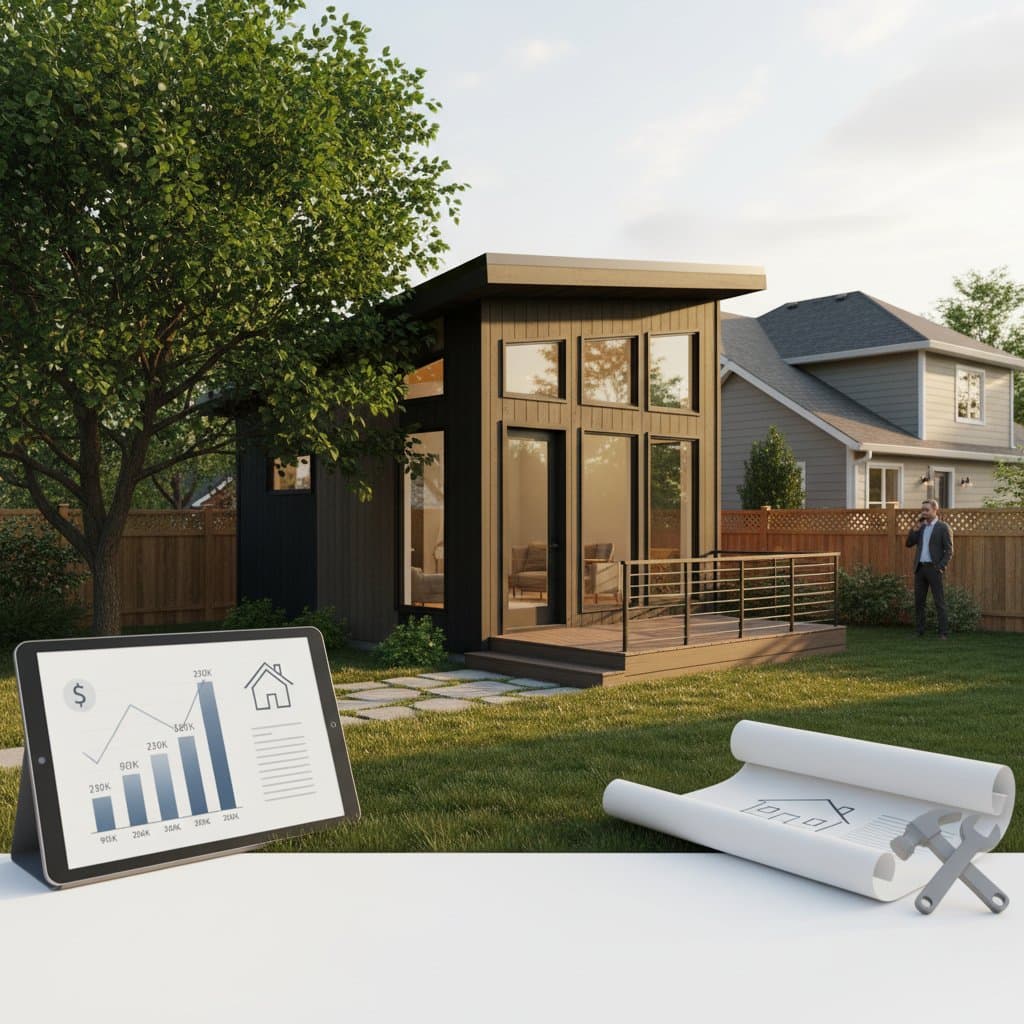
A backyard cottage constitutes a complete living space constructed on the same property as the main residence. It features a kitchen, bathroom, and bedroom, supporting extended habitation. Homeowners frequently designate these units for elderly relatives or lease them to generate supplementary income. Industry professionals and urban planners classify them as ADUs, encompassing standalone backyard builds, garage transformations, and apartments above garages.
Among these, the detached cottage provides superior seclusion and customization options. Construction methods vary: erect the structure on-site from scratch, transport a prefabricated model, or assemble components from a modular system. Each method incurs distinct expenses and must align with specific zoning stipulations.
Typical Cost Ranges
Erecting a backyard cottage entails multiple expense categories, spanning initial planning through utility integration. Homeowners generally allocate between $90,000 and $260,000, with variations tied to dimensions, materials, and regional mandates.
Key elements driving costs include:
- Dimensions and configuration. Compact 300-square-foot models start near $90,000, whereas expansive 800-square-foot versions surpass $200,000.
- Foundation style. Slab bases prove most economical, but crawl spaces or full basements elevate structural outlays.
- Utility integrations. Linking to sewer, water, and power systems contributes $10,000 to $40,000, contingent on site configuration.
- Design intricacy. Bespoke elements like premium finishes, high ceilings, or attached patios inflate material and labor demands.
- Approval and administrative charges. Municipalities impose fees from $5,000 to $25,000 covering permits, environmental assessments, and oversight.
Opting for prefabricated or modular backyard cottages trims total expenditures by 10 to 25 percent through off-site fabrication and streamlined on-site assembly. Such choices appeal to those prioritizing accelerated timelines.
Detailed Cost Allocation by Project Stage
Examining expenses across phases aids in precise budgeting:
- Site readiness: $5,000 to $15,000 covers soil grading, surface leveling, and utility trenching.
- Foundation and skeletal framework: $20,000 to $50,000, adjusted for ground stability and chosen materials.
- Plumbing and wiring installations: $10,000 to $25,000 for comprehensive connections.
- Internal detailing: $25,000 to $60,000 encompasses cabinetry, surfaces, and hardware.
- Roofing and outer shell: $15,000 to $30,000 for protective coverings and facades.
- Planning and regulatory approvals: $5,000 to $20,000 for blueprints and official endorsements.
Project Complexity and Timeline Projections
Undertaking a backyard cottage demands moderate to advanced oversight, particularly in regulatory adherence, foundational work, and standards compliance. Engage experts early to navigate these elements.
- Elements suitable for self-management: Exterior landscaping, surface coatings, or final interior touches.
- Tasks requiring licensed specialists: Load-bearing assembly, water systems, and circuit installations.
- Standard duration: Three to eight months, from conceptualization through concluding evaluation, influenced by municipal processing and workforce availability.
Zoning and Regulatory Frameworks
Zoning ordinances dictate eligibility and placement for backyard cottages, varying by jurisdiction. Prevalent stipulations encompass:
- Boundary offsets. Required clearances from lot edges, typically 5 to 15 feet.
- Vertical restrictions. Maximum elevations of 16 to 25 feet, based on roofing configuration.
- Site utilization limits. Overall structure footprint often confined to 40 to 50 percent of available land.
- Vehicle accommodation. Certain locales mandate extra parking for the unit, though exemptions apply in transit-accessible areas.
- Residency mandates. Select districts insist on primary occupant presence in either the principal dwelling or the addition.
Review municipal zoning diagrams and construction standards prior to contractor engagement to avert expensive modifications. Numerous planning offices furnish digital ADU resources detailing criteria and pricing.
Funding Strategies
Securing capital for a backyard cottage draws from diverse avenues. Common selections involve equity-based loans, refinance with cash extraction, or dedicated build financing. Select financial institutions provide tailored ADU loans encompassing design through completion.
Prospective leasing revenue bolsters repayment viability. In competitive markets, a 400-square-foot unit yields $1,200 to $2,000 monthly, facilitating offset of debts and eventual net gains post-construction.
Self-Build Versus Expert-Led Approaches
Selecting independent construction or professional oversight hinges on expertise, schedule, and caution levels.
Advantages of self-directed efforts:
- Reduces labor expenses by 15 to 30 percent.
- Facilitates bespoke adaptations and adaptable pacing.
Limitations of self-directed efforts:
- Demands thorough familiarity with regulatory standards.
- Extends timelines due to tool and personnel constraints.
- Amplifies potential for expensive errors in fluid or powered systems.
Benefits of professional involvement:
- Accelerates overall progress.
- Includes guarantees on components and execution.
- Simplifies endorsement processes via credentialed handling.
A combined strategy often optimizes results: delegate core infrastructure to qualified teams while managing aesthetic completions for equilibrium in expenditure and oversight.
Selecting an Optimal Design
Backyard cottages manifest in favored architectural forms:
- Contemporary simple: Sleek profiles, expansive glazing, and understated materials.
- Artisan traditional: Pitched roofs, timber exteriors, and classic accents.
- Factory-assembled compact: Space-efficient forms produced remotely, suited to constrained areas.
- Existing structure adaptations: Converted garages minimizing land use.
Evaluate terrain gradient, natural illumination, and seclusion when choosing. Strategic positioning ensures habitable conditions without encroaching on the primary residence's outdoor or lighting access.
Upkeep and Efficiency Measures
Post-construction, a backyard cottage necessitates ongoing care akin to any minor residence. Yearly preservation ranges from $500 to $2,000, scaled to construction and mechanics.
Essential routines involve:
- Annual roof evaluations to detect moisture ingress.
- Quarterly climate control filter updates.
- Periodic facade refreshes every few years for durability.
- Routine conduit and fixture inspections against obstructions.
Incorporating high-efficiency devices, low-energy illumination, and compact heating-cooling units cuts operational expenses by up to 30 percent relative to conventional setups. Adding photovoltaic arrays further mitigates energy demands, particularly with regional incentives.
Addressing Frequent Obstacles
Obstacle: Prolonged approval timelines.
Resolution: Retain a local regulation-savvy architect to file thorough submissions initially.
Obstacle: Elevated connection expenditures.
Resolution: Utilize shared mains infrastructure where permissible.
Obstacle: Restricted outdoor area.
Resolution: Select prefabricated or vertical configurations with minimal ground impact.
Obstacle: Adjacent resident concerns.
Resolution: Foster dialogue, distribute layouts, and adhere to spacing norms.
Safeguarding Against Ongoing Concerns
Backyard cottages elevate asset worth yet may increment taxation. Consult district appraisers for projected assessments pre-commencement. Consistent care and records sustain enduring appreciation.
Select established builders possessing confirmed coverage and regional proficiency to evade disputes and subpar outcomes. Digital directories such as Houzz and Angi feature authenticated ADU providers with feedback and portfolios.
Enduring Advantages
A thoughtfully constructed backyard cottage adapts across uses: accommodating relatives, yielding leases, or evolving into secluded workspaces. Market analyses indicate properties with compliant ADUs transact more swiftly and at premium rates.
For diligent planners, this addition yields adaptability and economic resilience. Regardless of nomenclature as granny pod, backyard cottage, or ADU, it furnishes sustained utility and worth over decades.