2026 All-Electric Home: True Conversion Costs Unveiled
Homeowners increasingly seek ways to lower utility expenses and minimize carbon footprints, making the all-electric home a compelling option. Transitioning from gas to electric power delivers cleaner energy and seamless compatibility with renewable sources, although the financial implications frequently catch individuals unprepared. Understanding these conversion costs facilitates a more informed and effective shift.
Defining an All-Electric Home
An all-electric home eliminates reliance on natural gas, propane, or oil by substituting electric systems throughout. This encompasses heating, water heating, cooking, and clothes drying. The change extends past individual appliance replacements to include service enhancements, rewiring, and potential adjustments to ventilation or insulation.
Full electrification ensures that all primary systems operate on electricity, frequently complemented by solar panels or battery storage to stabilize long-term expenses.
Essential Elements of a Complete Conversion
A thorough conversion addresses four primary upgrades:
- Heating and Cooling: Substitute a gas furnace with an electric heat pump or geothermal setup.
- Water Heating: Install a heat pump water heater or an efficient electric unit.
- Cooking: Adopt an electric or induction cooktop.
- Laundry and Drying: Transition from gas dryers to electric heat pump models.
Each upgrade carries distinct pricing, installation needs, and electrical demands.
Detailed Cost Analysis
Expenses fluctuate based on home dimensions, current setup, and local utility rates. However, a consistent expense profile emerges for most conversions.
1. Electrical Service Upgrade
Homes built before the 1980s often feature 100-amp panels inadequate for added high-demand devices. A shift to a 200-amp panel proves necessary in many cases. Such an upgrade ranges from $2,000 to $5,000, influenced by regional factors and panel access.
2. Heating and Cooling Transition
A comprehensive heat pump system for the entire home costs $10,000 to $20,000 upon installation. Ductless mini-splits offer a more affordable path for compact residences or phased approaches. Geothermal alternatives surpass $30,000, yet provide superior efficiency over decades.
3. Water Heating Installation
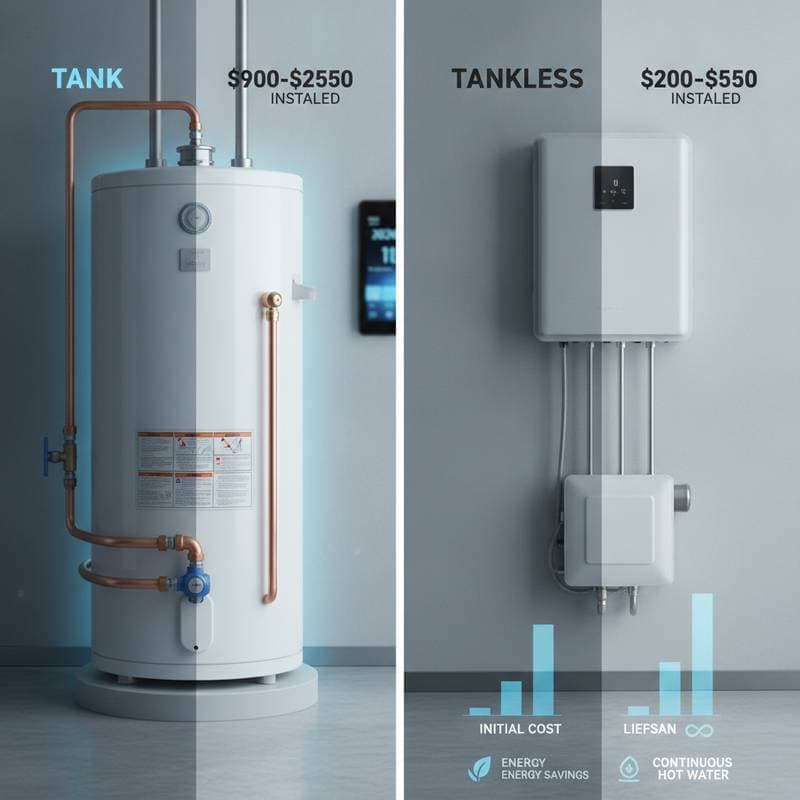
Expect $2,000 to $4,000 for a heat pump water heater, including setup. This model consumes approximately one-third the energy of conventional electric versions.
4. Cooking Appliance Swap
Induction ranges fall between $1,000 and $3,000. Additional wiring and outlet modifications for gas-to-electric adaptation add $500 to $1,500.
5. Laundry and Miscellaneous Appliances
Replacing with an electric dryer costs $800 to $1,500, plus $250 to $500 for a 240-volt outlet if absent.
6. Solar and Battery Additions
Although optional, solar panels help counterbalance rising electric bills, averaging $12,000 to $18,000. Battery storage supplements this with $8,000 to $12,000.
Aggregated, these elements yield a total conversion expense of $25,000 to $60,000, contingent on selections and solar inclusion.
Practical Case Study
Consider a 2,000-square-foot residence:
- $15,000 for a heat pump HVAC installation
- $3,000 for a heat pump water heater
- $2,000 for an induction cooktop plus wiring
- $1,200 for an electric dryer
- $4,000 for panel enhancement
- $15,000 for solar setup
The sum reaches approximately $40,000. Tax credits and rebates typically reduce net costs by 20 to 30 percent.
Available Incentives and Rebates
Federal, state, and utility programs substantially offset expenses. Rebates target heat pumps, electric water heaters, and panel upgrades. Certain utilities introduce time-of-use pricing to incentivize off-peak consumption.
Efficient thermostats, appliances, and energy audits qualify for additional support. Review applicable local and national offerings prior to project initiation to maximize savings.
Navigating Typical Obstacles
1. Electrical Panel Limitations
A saturated panel prevents new circuit additions for heat pumps or induction units without expansion. Engage a certified electrician to assess loads and propose suitable capacity.
2. Dated Wiring Concerns
Outmoded wiring demands updates to support contemporary loads securely, adding $3,000 to $8,000. These improvements enhance safety and operational dependability.
3. Ventilation and Insulation Needs
Optimal heat pump performance requires solid insulation. Address gaps in weatherproofing and attic barriers to boost overall efficiency.
4. Appliance Compatibility
Electric options, particularly induction cooktops, necessitate compatible cookware or adaptations. Verify specifications prior to acquisition.
5. Project Coordination
Synchronizing contractors requires foresight. Integrate upgrades during broader renovations or system failures to minimize redundant labor.
Calculating Return on Investment
Upfront investments appear formidable, but efficiency gains and reduced maintenance recoup them progressively. Electric configurations outperform gas in energy use and upkeep simplicity. Heat pumps, for example, generate three units of heat per single unit of electricity.
As grid electricity cleans up and costs decline relative to volatile gas prices, returns accelerate. Homeowners commonly achieve breakeven in 7 to 12 years, accelerated further by solar integration.
Broader Benefits for Environment and Comfort
Electrification elevates daily living standards. Heat pumps deliver steady warmth without indoor fuel combustion. Induction surfaces heat rapidly and preserve air quality by avoiding exhaust fumes.
The environmental impact proves profound, slashing direct emissions from household routines. Research from the American Council for an Energy-Efficient Economy indicates potential reductions of up to 60 percent in emissions, varying by local power sources.
Strategies for Effective Implementation
- Conduct an initial energy audit to pinpoint inefficiencies before system overhauls.
- Prioritize panel upgrades to shape the overall schedule.
- Consolidate efforts, such as HVAC and water heating, to cut labor and permitting fees.
- Investigate all rebate opportunities, blending federal and regional aid.
- Select contractors versed in electrification projects.
Optimizing Long-Term Performance
Post-conversion, routine care preserves system efficacy. Replace heat pump filters quarterly, drain water heaters yearly, and arrange expert inspections per manufacturer guidelines.
With declining renewable costs, all-electric homes yield enduring financial and ecological advantages. Thoughtful preparation, targeted enhancements, and incentive utilization streamline the path to an efficient, sustainable residence.