The Real Cost of Sustainable Bamboo Flooring in 2025
Sustainable bamboo flooring continues to gain popularity among homeowners seeking environmentally responsible options. As a rapidly renewable grass, bamboo offers a compelling alternative to traditional hardwoods, with its natural grain patterns and sturdy construction appealing to diverse design preferences. However, calculating the true cost requires examining not only material prices but also installation, finishing, and maintenance elements that influence the overall project budget.
Homeowners appreciate bamboo for its ability to enhance indoor spaces without compromising on ethics or longevity. In 2025, advancements in processing techniques have improved its resistance to wear, making it suitable for busy households. This section explores the key reasons behind its rise and the comprehensive expenses involved.
Reasons Homeowners Select Bamboo Flooring
Bamboo matures in just three to five years, far quicker than hardwoods that take decades to grow. This rapid renewal cycle positions it as a forest-friendly material, easing deforestation concerns. Homeowners often select bamboo for its versatile appearance, which ranges from light blond hues to darker caramel tones that emulate popular woods like hickory or cherry.
The material integrates seamlessly into various interiors, from sleek contemporary kitchens to cozy rustic living rooms. Responsibly sourced bamboo, certified by organizations such as the Forest Stewardship Council, ensures minimal environmental impact during harvesting. These qualities make it a practical choice for those prioritizing both aesthetics and planetary health.
Detailed Breakdown of Bamboo Flooring Costs
Several variables determine the expense of bamboo flooring, starting with the type of product and extending to labor and ancillary items. Understanding these components helps homeowners budget accurately for a 2025 installation.
1. Types of Bamboo Flooring Materials
-
Solid Bamboo: Constructed from solid strips of bamboo, this variety provides a authentic feel and can be sanded for refinishing. It suits dry environments but may warp in areas with high humidity, such as basements.
-
Engineered Bamboo: This option layers a thin bamboo top over a stable plywood core, offering better dimensional stability across climate fluctuations. It works well in most rooms, including those with moderate moisture.
-
**Strand Woven Bamboo:**bamboo fibers and compressing them under intense pressure, this densest form rivals the hardness of oak. Its enhanced durability justifies a higher price point, ideal for high-traffic zones like entryways.
2. Material Pricing Overview
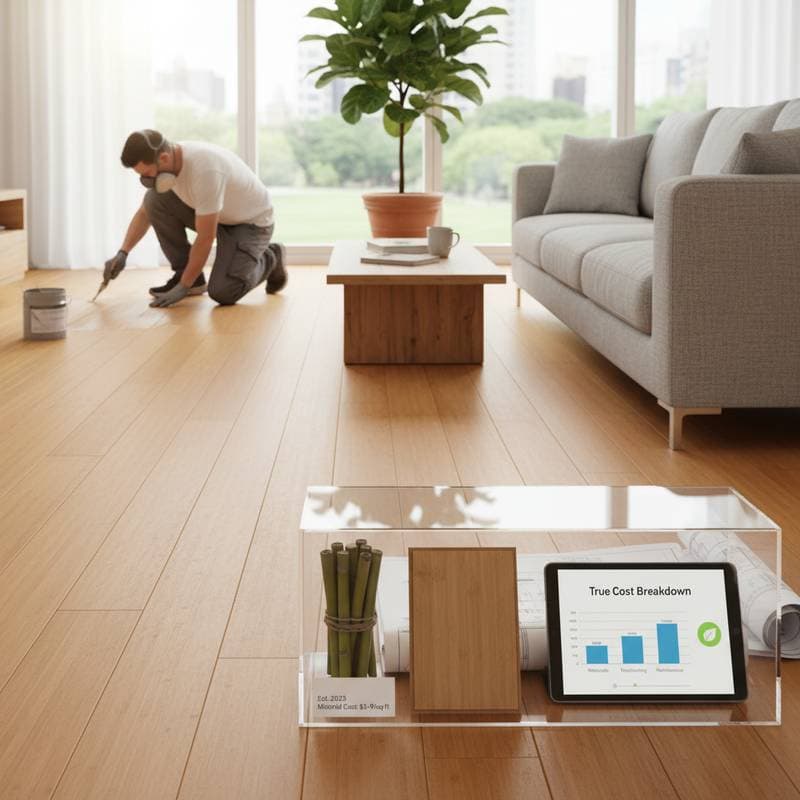
In 2025, bamboo flooring materials typically range from $3 to $10 per square foot, depending on quality and type. Entry-level solid bamboo starts at around $3 to $5 per square foot, providing an economical entry into sustainable options. Engineered versions fall in the $4 to $7 range, while premium strand woven can reach $8 to $10 per square foot due to its superior strength and extended lifespan of up to 25 years.
Factors like finish quality and brand reputation influence these figures. For a standard 200-square-foot room, material costs alone might total $600 to $2,000. Comparing this to oak, which often exceeds $8 per square foot, or laminate at $1 to $4, bamboo strikes a competitive balance for value-driven buyers.
3. Installation Expenses
Labor represents a significant portion of the total outlay, often equaling 50 to 100 percent of material costs. Professional installers charge $3 to $6 per square foot, varying by location, subfloor preparation needs, and method selected. For instance, floating installations, where planks click together over an underlayment, prove quickest and least expensive at the lower end of that spectrum.
Glue-down applications, suitable for concrete subfloors, demand more time and precision, pushing costs toward $5 to $6 per square foot. Nail-down methods work best on wooden subfloors in older homes, adding complexity if leveling or repairs are required. Always obtain multiple quotes to account for room shape, obstacles like cabinets, and waste factors, which can increase the effective price by 10 to 15 percent.
4. Finishing Touches and Additional Accessories
Beyond core materials and labor, items like underlayment for soundproofing and moisture protection add $0.50 to $1.50 per square foot. Baseboards, stair nosing, and threshold transitions, essential for a polished look, contribute another $200 to $500 for an average project. Low-VOC finishes, applied pre- or post-installation, enhance durability and air quality but may cost $1 to $2 per square foot extra.
Some contractors bundle these elements into a flat rate, while others itemize them. Review contracts meticulously to avoid unexpected charges, and consider DIY options for simple accessories if skilled in basic carpentry.
Achieving Long-Term Value Through Maintenance
Bamboo flooring delivers substantial savings over time, often lasting 15 to 25 years with proper care. Routine maintenance remains straightforward: sweep or vacuum daily to remove debris, and mop weekly with a solution of water and a pH-neutral cleaner diluted at a 1:10 ratio. Steer clear of excess water, as it can penetrate seams and cause swelling; use a microfiber mop instead of soaking methods.
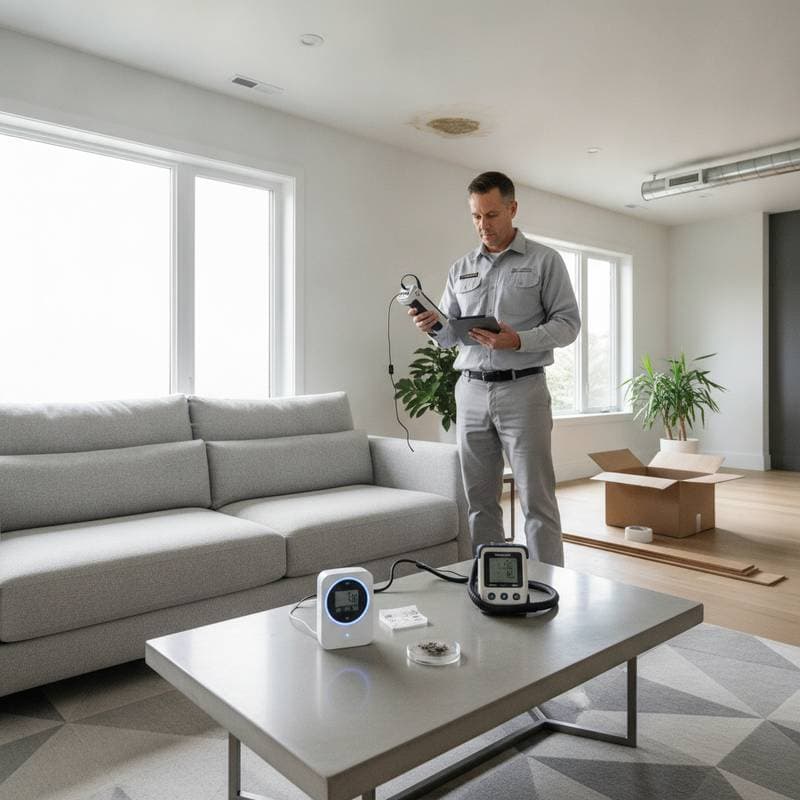
Thicker planks allow for one to two refinishing sessions, restoring appearance without full replacement. Control indoor humidity between 40 and 60 percent using a dehumidifier in damp areas or a humidifier in arid ones. Investing $20 to $50 in a digital hygrometer enables precise monitoring, preventing issues like cupping or shrinkage that lead to costly repairs.
Homeowners frequently report that these minimal efforts offset initial expenditures, with energy-efficient properties of bamboo contributing to lower utility bills through better insulation.
Environmental Advantages and Health Considerations
Bamboo sequesters carbon at rates up to four times higher than hardwood trees, supporting global efforts to combat climate change. Its cultivation requires little irrigation or chemical inputs, preserving soil health and biodiversity. In 2025, many manufacturers prioritize certifications like FloorScore for low-emission products, reducing volatile organic compounds that affect respiratory health.
This makes bamboo particularly beneficial for families with children, pets, or allergy sufferers, as its smooth surface repels allergens more effectively than carpet. The material's natural antimicrobial properties further enhance indoor hygiene, providing peace of mind alongside aesthetic and structural benefits.
Suggested Visuals
-
Image: Close-up photo of strand woven bamboo flooring with alt text “dense grain pattern of strand woven bamboo floor.”
-
Chart: Comparison chart showing cost ranges of bamboo versus oak and laminate flooring, labeled “Bamboo Flooring Cost Comparison Chart.”
Insights from Homeowners and Professionals
Feedback from online communities highlights bamboo's real-world performance. Many users note its scratch resistance in pet-friendly homes, though light scratches may appear on lower-grade options; strand woven types fare better against daily wear. Professionals recommend acclimating materials for 72 hours before installation to minimize expansion risks.
Case examples from recent renovations demonstrate success in varied settings: a family in a humid coastal area chose engineered bamboo with proper sealing, reporting no issues after two years. Experts advise against budget brands lacking certifications, as they may off-gas or degrade faster, underscoring the importance of quality selection.
Steps for Selecting and Installing Bamboo Flooring
Begin your bamboo flooring project by verifying supplier credentials, focusing on FSC-certified products to guarantee ethical sourcing. Order samples to assess color and texture under your home's lighting, and test durability by placing heavy items on them for a few days. Consult local installers early to gauge subfloor readiness and obtain detailed estimates.
Schedule installation during mild weather to control humidity, and follow up with a professional sealing if not factory-applied. These preparations minimize risks and maximize returns. Ultimately, bamboo flooring in 2025 represents a wise investment, blending upfront costs of $6 to $15 per square foot with enduring sustainability, style, and savings that elevate home value and comfort.