Establish an Effective HVAC Filter Replacement Schedule
Maintaining clean indoor air extends beyond mere comfort. It influences health, energy expenses, and the longevity of the HVAC system. Homeowners often neglect regular filter maintenance until reduced airflow or rising utility bills signal a problem. A clogged filter forces the system to labor excessively, accelerates wear, and invites expensive repairs. Implementing a structured replacement schedule averts these issues and ensures year-round efficiency.
Essential Reasons for Prioritizing Filter Maintenance
HVAC filters capture dust, pollen, pet dander, and other particles circulating through ductwork. Accumulation over time impedes airflow. The system then consumes more energy to circulate air through the obstruction. The Department of Energy indicates that a clean filter reduces HVAC energy consumption by as much as 15 percent, yielding substantial monthly savings.
Clogged filters compromise indoor air quality as well. Overloaded filters fail to trap fine particles, permitting allergens and pollutants to cycle repeatedly. Households with members suffering from asthma or allergies face heightened discomfort and health risks in such environments.
Factors Influencing Your Filter Replacement Frequency
Replacement intervals vary by home. Consider these elements to determine the optimal schedule:
- Filter Type
- Fiberglass filters, though budget-friendly, require monthly replacement due to their limited capacity.
- Pleated filters endure longer, typically three months under normal conditions.
- High-efficiency particulate air (HEPA) filters may last six months, but inspect them monthly for excessive accumulation.
-
Household Characteristics
Homes with pets or tobacco use demand accelerated replacements. Pet hair and smoke residue accelerate clogging. One pet might necessitate monthly changes; multiple animals or polluted outdoor air could shorten this to every three to four weeks. -
HVAC System Operation Patterns
Continuous daily operation fills filters more rapidly. Even seasonal reliance on heating or cooling warrants monthly inspections during peak usage periods. -
Resident Health Considerations
Allergies or sensitivities in the household justify more frequent changes to minimize irritants. Investing in high-efficiency filters proves beneficial in these scenarios.
Practical Strategies for Consistent Scheduling
Establish reminders to maintain adherence. Enter monthly check dates into a digital calendar and flag replacement deadlines. Advanced thermostats detect airflow reductions and issue notifications for impending clogs. Mobile device alerts serve as a reliable alternative for busy schedules. Regularity prevents gradual buildup that stresses system components.
Step-by-Step Guide to Filter Replacement
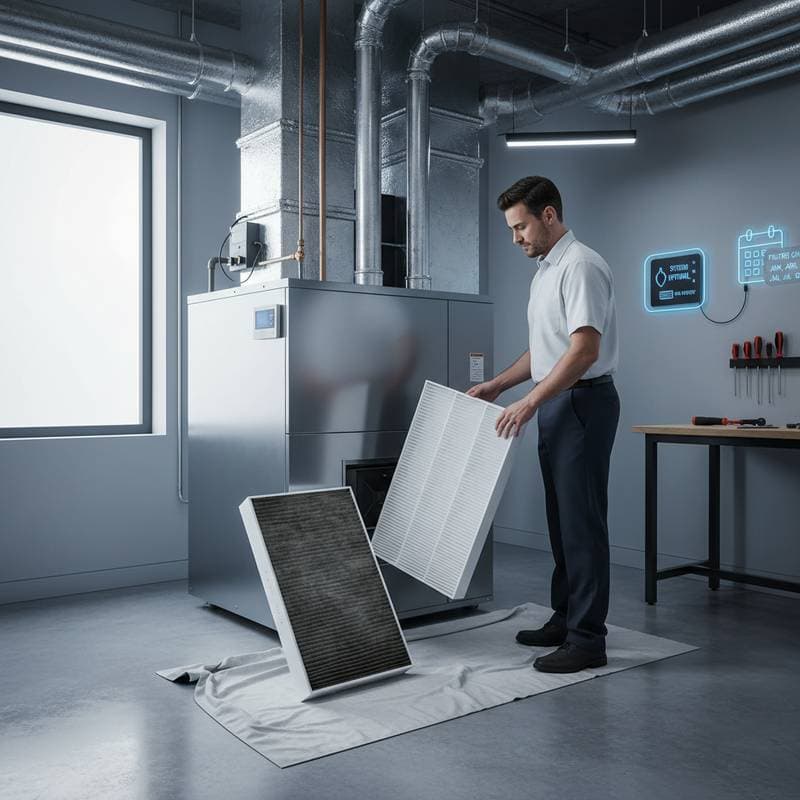
This routine task requires under ten minutes and basic tools.
- Power down the HVAC system to avoid drawing in loose particles.
- Identify the filter slot, usually adjacent to the return air grille or furnace unit.
- Extract the used filter gently to minimize dust dispersal.
- Note the directional arrows on the filter's edge, indicating airflow orientation. Position the new filter so arrows face the blower assembly.
- Secure the access panel, restore power, and verify improved vent output.
First-time users frequently miss the orientation step, which diminishes performance if reversed.
Evaluating Costs and Effort Involved
Filter changes represent an economical, straightforward maintenance activity. Standard fiberglass options cost around five dollars per unit. Pleated varieties fall between ten and thirty dollars, while premium high-efficiency types approach fifty dollars. These expenses pale against repair bills for airflow-related damage, which often surpass several hundred dollars.
Indicators for Professional HVAC Assistance
Persistent weak airflow, odd sounds, or visible dust near outlets despite routine filter swaps suggest underlying concerns. Engage a licensed technician to diagnose potential duct leaks, fan motor degradation, or blower malfunctions. Yearly professional tune-ups identify problems proactively and prolong equipment durability.
Proactive Measures to Safeguard System Performance
Pair filter discipline with broader upkeep for optimal results. Dust registers and vents biannually, and vacuum intake zones to curb debris entry. Inspect duct seals for breaches that allow unfiltered air infiltration. In humid climates, integrate a dehumidifier to combat moisture-induced filter mold growth.
Cultivate Habits for Sustained Home Efficiency
Adhering to a filter schedule safeguards air purity and equipment integrity. Diligent routines correlate with reduced failures and enhanced living conditions. Opt for calendar prompts or automated alerts to ensure compliance. Stock spare filters to eliminate postponements. This practice fosters a cost-effective, comfortable residence over the long term.