Sinking Slab? Essential 2025 Repair Costs and Strategies
A sinking concrete slab creates risks beyond an uneven surface. It often results in misaligned doors, developing cracks in walls, and areas where water collects. For patios, driveways, or foundations showing signs of settlement, knowing the repair options and associated costs enables informed decisions to halt further deterioration. Recent advancements in slab repair techniques have improved accuracy and reduced expenses, though rates fluctuate based on materials, soil characteristics, and site access.
This overview details contractor pricing approaches for slab repairs, explores available techniques, and outlines typical expenses for the year ahead.
Key Repair Techniques and Associated Expenses
The chosen repair method determines the overall price. Professionals evaluate soil composition, slab dimensions, and settlement extent to select the most suitable approach.
Mudjacking
Mudjacking stands as a time-tested technique. Workers drill modest holes into the slab and inject a mixture of soil, sand, water, and cement beneath it to elevate the surface to its original level.
- Typical expense: $5 to $8 per square foot
- Ideal applications: Garage floors, porches, and modest driveways
- Durability: Approximately 5 to 10 years, influenced by soil stability
This option proves economical for moderate subsidence, yet the added weight from the slurry may exacerbate settling in erosion-prone zones. Homeowners benefit from requesting soil tests beforehand to gauge long-term viability.
Polyurethane Foam Injection
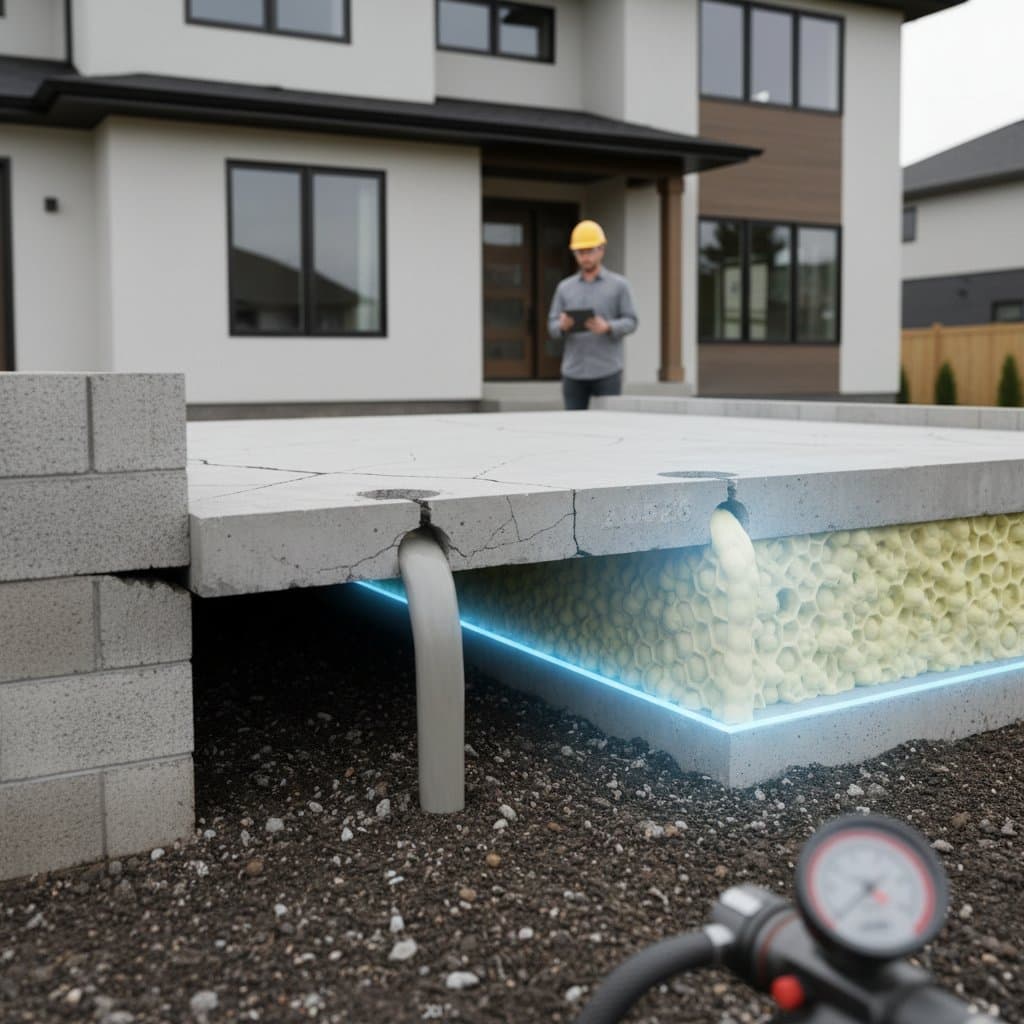
Referred to as polyjacking, this contemporary method employs expanding high-density foam to replace traditional slurry. The foam fills underlying voids and lifts the slab with exact control.
- Typical expense: $9 to $16 per square foot
- Ideal applications: Interior floors, pool decks, and delicate zones
- Durability: 10 to 15 years or more
Although the initial investment exceeds mudjacking, the foam sets in minutes without imposing extra load on the soil. Experts favor it in regions with persistent ground shifts or where rapid usability matters; inquire about foam density ratings for optimal performance.
Concrete Replacement
Severe cracking or fragmentation in the slab may necessitate full replacement. The process entails excavating the compromised section, reinforcing the base soil, and installing fresh concrete.
- Typical expense: $6 to $12 per square foot, covering demolition and reinstallation
- Ideal applications: Extensively damaged slabs or those with structural compromise
- Durability: Matches that of newly poured concrete
This comprehensive solution reinstates maximum integrity but demands extended labor and a curing period of several days. To minimize recurrence, verify that crews address compaction and implement enhanced drainage features during the project.
Factors Influencing Costs by Region
Geographic location affects repair pricing due to variations in labor charges and material sourcing. Coastal properties often incur higher fees from sandy substrates that demand greater foam quantities for stabilization. In contrast, clay-rich areas require deeper penetration to secure unstable strata.
Suburban and rural sites generally offer lower costs thanks to simpler equipment maneuvering and reduced labor rates. Seek contractors experienced with local geology; many tailor mixtures to handle specific challenges like high humidity or freeze-thaw cycles, which enhances outcome reliability. Always obtain at least three estimates to identify value-driven proposals.
Step-by-Step Overview of the Repair Procedure
Slab elevation projects rarely span more than a single day. The sequence generally follows these phases:
- Site assessment and evaluation: Technicians pinpoint depressions and subsurface gaps using levels and probes.
- Creating access points: Small-diameter holes, typically 1 to 2 inches wide, get drilled at strategic intervals.
- Material deployment: Lifting agents pump in until the slab achieves even alignment, monitored in real time.
- Finalization and restoration: Holes seal with matching concrete patches, followed by thorough site cleanup.
Polyurethane applications allow immediate light use, while mudjacking demands a wait of several hours for hardening. Professionals advise avoiding heavy loads on expansive areas until full curing occurs, often 24 to 48 hours.
Prioritize safety by restricting access to the site for children and animals. Contractors must coordinate with utility services to mark buried lines and pipes, preventing disruptions. Established firms routinely initiate this step to comply with regulations.
Strategies to Safeguard and Extend Slab Longevity
Addressing a settling slab preserves not just the concrete but the overlying home elements. Prompt action maintains door functionality, blocks moisture entry, and averts costly foundation complications down the line.
Monitor for subtle indicators like sticking windows or sloping floors, then consult licensed experts for inspections. Weigh mudjacking against foam injection by examining warranties, typically ranging from 5 to 20 years, and projected service disruptions. Selecting the right intervention now secures structural peace of mind for years.