Understanding Sewer Line Replacement Costs in 2025
Sewer line failures demand prompt attention to prevent widespread damage. In 2025, the average cost for a full sewer line replacement falls between $4,000 and $15,000. This range accounts for variables such as pipe length, location, and chosen repair approach.
Several elements drive these expenses. Labor typically constitutes 40 to 60 percent of the total, varying by region and project complexity. Materials selection and site-specific challenges further influence the final price tag.
Homeowners face higher stakes in urban areas where access proves difficult. Rural properties might incur lower costs due to easier excavation. Planning ahead allows individuals to compare quotes and select options that align with budgets.
Key Factors Influencing Pricing
Materials and Equipment Choices
The type of piping material significantly affects overall expenses. Polyvinyl chloride (PVC) pipes offer the most budget-friendly option, with costs around $2 to $5 per linear foot. These durable, corrosion-resistant lines suit most residential applications.
Cast iron provides superior longevity but increases prices to $10 to $20 per foot. Copper and steel alternatives, often used in high-end or commercial settings, push costs even higher due to their strength and installation demands. Selecting the right material balances upfront investment with long-term reliability.
Equipment rental for specialized tasks adds to the bill. For instance, heavy machinery for digging or pipe insertion can contribute $500 to $2,000. Contractors factor these into estimates to ensure comprehensive coverage.
Site Conditions and Access Challenges
Property features play a crucial role in determining costs. Tree roots invading lines require additional removal efforts, potentially adding $1,000 to $3,000. Rocky soil or deep pipe burial complicates excavation, extending labor time.
Previous repairs or outdated infrastructure heightens difficulty. Properties near utilities face restrictions that slow progress and raise fees. John White, a senior project manager at ClearFlow Plumbing in Chicago, noted, “Every yard presents its own puzzle. Two properties side by side can differ by thousands of dollars because of soil type or pipe depth.”
Assessing these conditions early through site visits helps predict expenses accurately. Homeowners should discuss potential obstacles with contractors to avoid surprises.
Add-on Services and Supplemental Charges
Sewer replacements often involve complementary services that enhance outcomes. These additions ensure thorough preparation and lasting results, though they increase the total investment.
Video Inspection Fees
A camera inspection before replacement identifies issues precisely. This service ranges from $250 to $500 and reveals blockages, fractures, or misalignments. Such diagnostics guide targeted repairs and prevent unnecessary work.
Professionals use high-resolution footage to document findings. Homeowners receive reports that support insurance claims if damage stems from external causes.
Hydro Jetting Costs
High-pressure water cleaning clears debris prior to installation. Prices for hydro jetting span $300 to $800, depending on line length and blockage severity. This step promotes seamless integration of the new pipe with existing systems.
The process removes buildup that could compromise the fresh line. It also extends the lifespan of connected plumbing components.
Permit and Inspection Prices
Local regulations require permits for most projects, costing $100 to $500 based on location. Inspections verify compliance and quality post-installation. These steps safeguard against legal issues and ensure structural integrity.
Jurisdictions with strict codes may demand multiple reviews. Budgeting for these upfront maintains project timelines.
Expedited or Priority Service Rates
Urgent situations, like backups or collapses, necessitate faster response. Emergency services command 20 to 40 percent premiums over standard rates. Availability of crews around the clock justifies the surcharge.
Planned projects allow for cost savings through scheduling flexibility. Homeowners weigh urgency against financial impact when deciding on service levels.
These services, while adding to expenses, deliver documentation and protections that preserve property worth and minimize recurring problems.
Comparing Trenchless and Traditional Methods
Homeowners must evaluate replacement techniques to optimize costs and convenience. Trenchless methods gain traction for their efficiency, while traditional approaches suit certain scenarios.
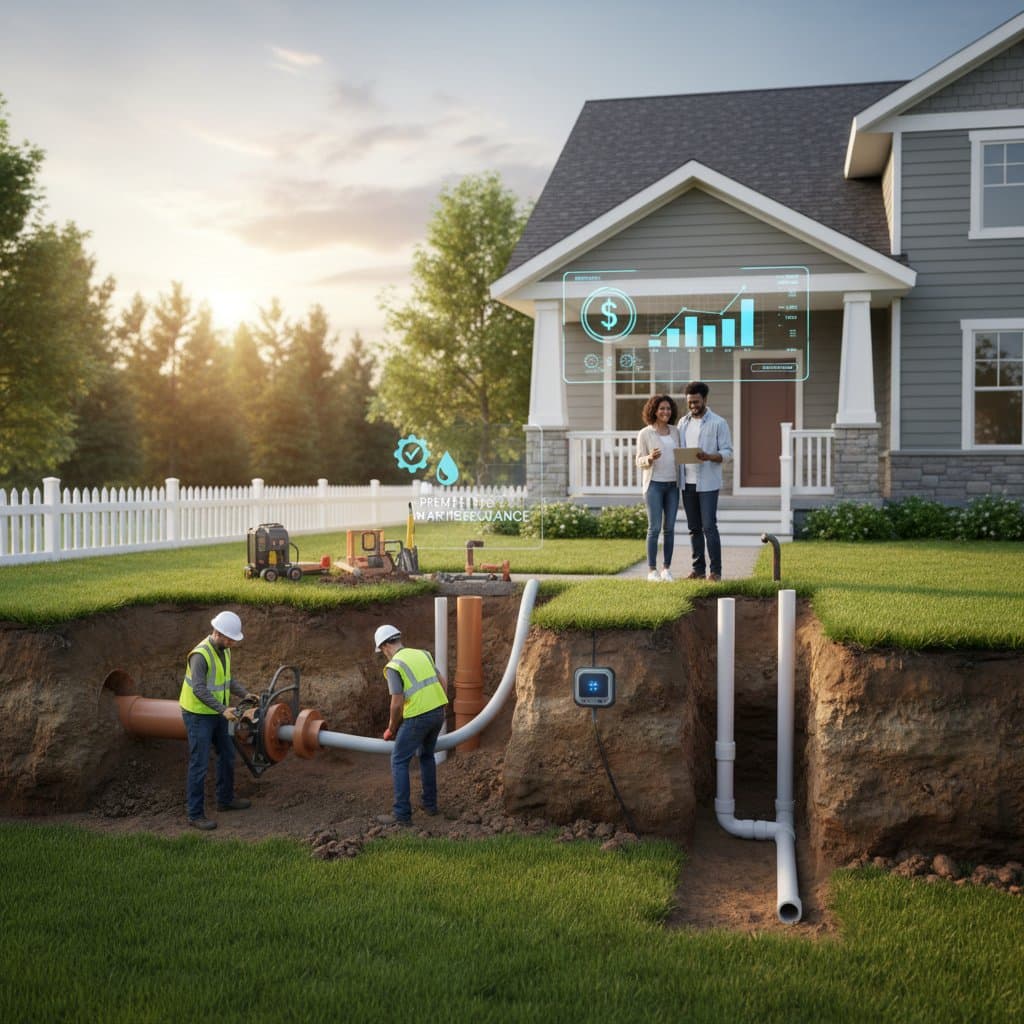
Trenchless options, including pipe bursting and cured-in-place pipe (CIPP) lining, avoid extensive digging. Costs range from $80 to $300 per linear foot, sometimes exceeding traditional methods slightly. Benefits include preserved landscapes and reduced restoration needs.
Pipe bursting fractures old lines while inserting new ones, ideal for straight runs. Lining involves inserting a resin-coated tube that hardens into a new pipe within the existing one. Both techniques complete in one to two days, minimizing disruption.
Traditional excavation digs trenches to access and replace pipes. Per-foot costs sit lower at $50 to $250, but ancillary expenses mount quickly. Restoring driveways, patios, or lawns can add $1,000 to $5,000.
Many trenchless providers extend warranties of 10 to 50 years on materials. A survey by the National Association of Plumbing Contractors indicates that 68 percent of homeowners prefer trenchless for lower property impact and quicker recovery.
Selecting between methods depends on pipe condition, soil type, and budget. Consultations with experts clarify the best fit for specific properties.
Prevention and Early Detection Strategies
Proactive measures slash the need for full replacements. Monitoring for warning signs enables timely intervention and cost control.
Slow drains, unusual noises, or basement flooding signal potential issues. These symptoms often indicate root intrusion, grease accumulation, or corrosion. Addressing them promptly averts escalation.
Annual video inspections, costing $200 to $400, detect problems invisibly. Backflow prevention devices, installed for $300 to $600, block sewage reversal during storms. Tree root barriers around lines further safeguard integrity.
Maintenance plans with quarterly cleanings run $150 to $300 per visit. The Consumer Plumbing Report reveals that nearly 40 percent of replacements prove preventable through routine checks. Investing in prevention yields substantial savings over time.
Educating household members on proper disposal habits reduces strain on systems. Flushing only waste and water, avoiding wipes or oils, supports longevity.
Choosing the Right Contractor
A reliable professional ensures quality and fairness. Thorough vetting protects against subpar work and hidden fees.
Verify state licensing and insurance coverage to mitigate liability risks. Demand detailed, written estimates outlining scope, materials, and timelines. Warranties on labor and parts, typically one to five years, demonstrate confidence in results.
Seek references from recent clients and review online feedback. Confirm the company handles work in-house rather than subcontracting. Request video evidence of issues and completions for transparency.
Discuss payment terms and contingency plans for unforeseen challenges. Established firms communicate clearly, fostering trust throughout the process.
Planning Your Sewer Line Upgrade
Approaching sewer replacement with knowledge empowers effective decisions. Familiarity with costs, options, and safeguards streamlines the experience.
Regional variations, from urban premiums to suburban efficiencies, shape estimates. Early action upon noticing issues curbs damage and expenses.
Homeowners emerge with a robust system that withstands daily demands. This preparation restores reliability and security to essential home functions.