
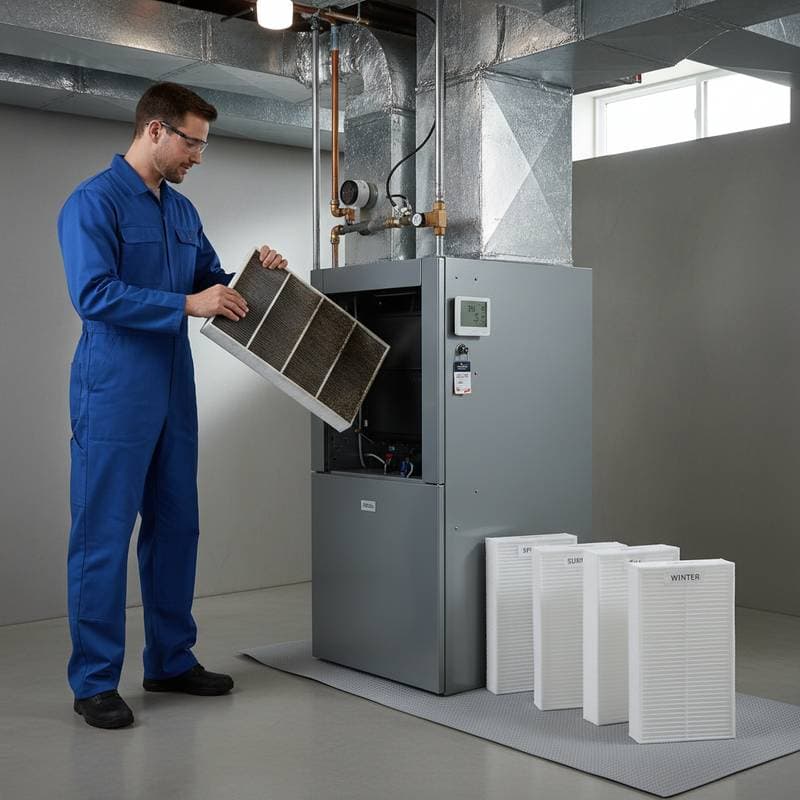
Quarterly HVAC Filter Changes: Achieve Cleaner Air Year-Round
Maintaining clean indoor air begins with a straightforward practice that numerous homeowners neglect: replacing the HVAC filter every three months. Quarterly filter changes preserve fresh air, decrease energy consumption, and prolong the operational life of heating and cooling systems. This routine represents one of the simplest methods to enhance home comfort and safeguard family health.
The Mechanism Behind Quarterly HVAC Filter Changes
Every HVAC system draws air through a filter designed to capture dust, pollen, and minute particles. As these contaminants accumulate, they obstruct the filter, compelling the system to operate with greater effort. Insufficient airflow results in stuffy rooms and elevated energy bills when filters remain unchanged.
A quarterly replacement aligns well with typical household needs, corresponding to seasonal variations. Each season introduces unique air challenges, such as spring pollen, summer humidity, fall leaf debris, and winter indoor dust from sealed windows. Fresh filters enable the system to adjust to these conditions and sustain consistent performance.
Expert insight: A clean filter enhances airflow by up to 30 percent relative to a clogged counterpart. This improvement yields tangible benefits in comfort and expense reduction.
Indicators That Signal a Filter Replacement
Although a quarterly routine provides structure, certain signs may necessitate earlier action. Monitor for these common alerts:
- Unexpected increases in energy bills without apparent cause.
- Reduced airflow from vents, leading to uneven room temperatures.
- Apparent dust accumulation or discoloration on the filter.
- Heightened allergy symptoms within the home.
- Extended heating or cooling cycles beyond normal durations.
Address these promptly by installing a new filter. Delaying exacerbates strain on the blower motor, potentially curtailing its service life.
Selecting the Appropriate Filter for Your HVAC System
Filters vary in design and capability, each suited to specific particle capture levels. Understanding these options allows homeowners to optimize effectiveness against budget constraints.
| Filter Type | Primary Application | Filtration Efficiency | Expected Duration |
|---|---|---|---|
| Fiberglass | Standard dust capture | Basic | 1 month |
| Pleated | Pollen and pet dander | Moderate | 3 months |
| Electrostatic | Submicron particles | Advanced | 3-6 months |
| HEPA | Severe allergy management | Superior | 6-12 months |
Guidance: Examine the MERV rating on packaging. Elevated ratings indicate superior particle retention, though densely woven filters may overburden systems with limited capacity. A MERV value between 8 and 12 suits most residential setups effectively.
Guide to Replacing Your HVAC Filter
Filter replacement requires mere minutes when executed methodically.
- Deactivate the system via the thermostat.
- Identify the filter compartment adjacent to the return vent or within the furnace housing.
- Remove the existing filter and note the directional arrow on its frame indicating airflow path.
- Position the new filter so the arrow points toward the blower assembly.
- Replace the access panel and reactivate the system.
Mark the installation date on the filter frame using a permanent marker. This notation simplifies future tracking.
Establishing a Quarterly Maintenance Schedule
Distribute filter replacements evenly across the calendar year for seamless integration. Leverage digital reminders or a physical planner to automate adherence. Homeowners frequently synchronize this task with complementary seasonal activities, such as smoke detector testing, gutter inspections, or mattress rotations.
Consider this example timeline:
- Early spring: Install a new filter ahead of peak pollen activity.
- Mid-summer: Refresh to combat humidity and accumulated dust.
- Early autumn: Clear seasonal residues from prior months.
- Mid-winter: Update in preparation for extended indoor use.
Such patterning ensures air purity amid fluctuating temperatures and moisture levels.
Long-Term Advantages of Consistent Filter Maintenance
Regular quarterly replacements deliver compounding benefits in comfort and economy. These gains manifest in observable and perceptible ways.
Superior air quality: Filters effectively sequester allergens and particulates responsible for respiratory irritation.
Reduced energy expenditure: Unobstructed airflow permits efficient heating and cooling, minimizing power usage.
Extended equipment longevity: Reduced internal debris accumulation protects motors and coils, decreasing repair frequency.
Uniform temperature distribution: Balanced airflow eliminates hot or cold zones across living spaces.
Minimized household cleaning: Filtered air curtails dust settlement on surfaces, streamlining upkeep.
Essential Safety Considerations and Pitfalls to Avoid
Filter changes involve minimal complexity, yet adherence to precautions enhances safety.
- Always disconnect power prior to accessing internal components.
- Refrain from inserting an ill-fitting filter; consult measurements from the prior unit or the system manual.
- Discard disposable filters upon saturation, as reshaping compromises efficacy.
- Ensure vents remain unobstructed by furnishings or drapery to preserve airflow equilibrium.
Neglecting replacements risks coil icing, motor overheating, or complete system failure. Technicians frequently attribute HVAC breakdowns to filter blockages.
Recommended Visual Aids for Enhanced Understanding
Incorporating graphics accelerates comprehension for educational content. Suggested elements include:
- Photographic sequence illustrating filter extraction and installation, accompanied by alt text such as HVAC filter replacement process.
- Comparative table detailing filter varieties and expenses, captioned Filter options: cost and durability overview.
- Infographic depicting airflow enhancements post-maintenance, entitled Impact of clean filters on system efficiency.
These visuals assist readers in applying instructions to their equipment, particularly novices undertaking DIY tasks.
Insights from Homeowners and Professionals
Individuals maintaining quarterly routines report consistent outcomes. One forum contributor described quieter system operation following initial implementations. Another observed rapid alleviation of allergy effects after establishing regularity.
Industry experts corroborate these experiences. A substantial portion of urgent service requests stems from filter neglect or vent obstructions. Data indicates that diligent owners incur lower five-year maintenance costs compared to reactive approaches.
Expense and Effort Projections
This maintenance ranks among the most economical home upkeep strategies.
- Fiberglass options: Comparable to a single beverage purchase per cycle.
- Pleated variants: Modest premium justified by extended use.
- HEPA selections: Higher initial outlay, yet valuable for allergy-prone or pet-filled households.
Each procedure concludes in less than ten minutes, tool-free. Relative to professional servicing or duct remediation, the investment yields substantial energy and comfort dividends.
Incorporating Filter Changes into Comprehensive System Care
View filter replacement as an element of holistic HVAC stewardship. Complement it with:
- Examination of duct integrity for seals and connections.
- Gentle brushing of registers and grilles.
- Vacuuming surrounding the furnace or handler to mitigate dust ingress.
- Thermostat calibration verification.
This integrated regimen fosters system harmony. Filters shield internals from contaminants, while pristine ducts extend filter viability.
Addressing Accelerated Filter Clogging
Certain conditions accelerate filter saturation, including pet presence, construction proximity, or ambient smoke. In such scenarios, adopt a bimonthly cadence until environmental factors stabilize.
Steps to Implement Cleaner Indoor Air Now
Initiate your quarterly filter regimen today to unlock immediate improvements in air purity and efficiency. Select compatible filters, establish reminders, and monitor system responses. Persistent adherence transforms routine maintenance into enduring home wellness.




