How Fall HVAC Tune-Ups Prevent Winter Breakdowns
A furnace appears dependable until the initial cold evening arrives and it fails unexpectedly. Numerous homeowners learn this lesson after the fact, realizing that routine fall maintenance could have averted the crisis. By arranging HVAC service ahead of dropping temperatures, you position your system for optimal performance, safety, and endurance during peak heating periods.
HVAC tune-ups extend beyond superficial checks. Technicians conduct comprehensive evaluations of furnaces, heat pumps, ductwork, and thermostats to confirm seamless integration and peak efficiency. The modest expense of this service pales in comparison to the financial burden of urgent repairs amid freezing weather.
Optimal Timing for HVAC Maintenance in Fall
Homeowners frequently postpone technician visits until a malfunction occurs. At that point, securing an appointment proves challenging, and repair fees escalate. Fall provides ample opportunity to detect and resolve issues prior to the onset of winter demands.
Core Advantages at a Glance
Professional fall HVAC tune-ups avert heating disruptions, elevate energy efficiency, and prolong equipment durability. These services also verify safe operation, minimizing dangers such as carbon monoxide exposure or electrical faults.
Detailed Benefits
- Avert Expensive Failures: Minor problems, including deteriorated belts or soiled igniters, escalate to total breakdowns without attention.
- Reduce Energy Expenses: Thorough cleaning of coils, filter replacements, and thermostat adjustments yield savings of up to 15 percent on heating bills.
- Prolong System Longevity: Consistent upkeep adds five to ten years of dependable service.
- Enhance Indoor Air Quality: Accumulated dust, mold, and allergens in ducts and filters compromise health; cleaning restores purity.
- Prioritize Safety: Gas systems generate carbon monoxide that requires flawless venting; inspections confirm secure exhaust routes.
Components of a Comprehensive Fall HVAC Tune-Up
Technicians perform inspections, cleanings, and tests on all essential parts during a full service. They adhere to standardized checklists, such as the following example.
| Component | Technician Actions | Importance |
|---|---|---|
| Thermostat | Calibrates sensors for precision | Delivers exact temperature regulation |
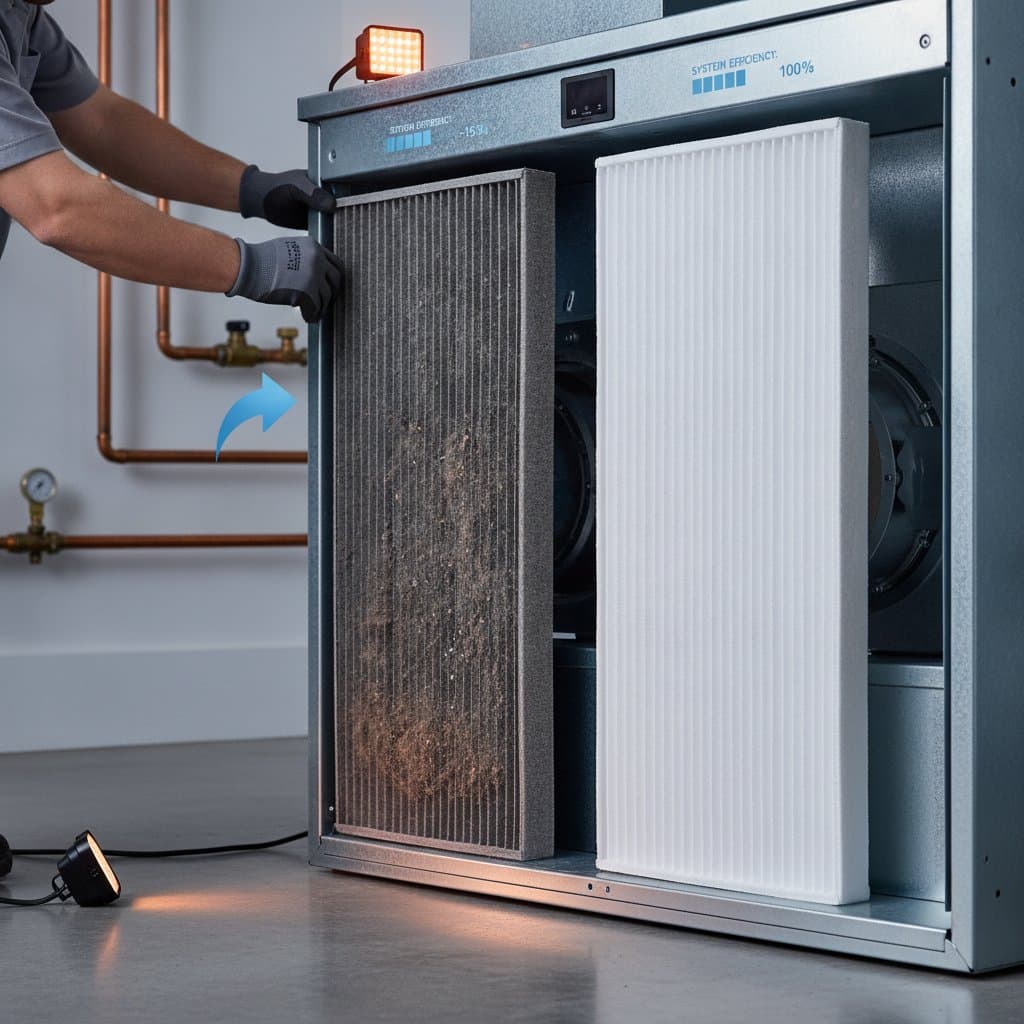
| Air Filter | Replaces or cleans as needed | Sustains airflow and operational efficiency |
| Heat Exchanger | Examines for fissures or wear | Blocks carbon monoxide infiltration |
| Blower Assembly | Cleans surfaces and lubricates | Minimizes wear and operational sounds |
| Electrical Parts | Verifies voltage and secures wiring | Eliminates risks of shorts or fires |
| Gas Pressure and Burner | Fine-tunes for complete combustion | Optimizes fuel use and hazard prevention |
| Condensate Drain | Removes obstructions | Avoids water damage and blockages |
Expect the process to last one to two hours, based on system intricacy. Technicians furnish a detailed report outlining any necessary fixes or component swaps.
Preparatory DIY Tasks for Your HVAC System
Perform these straightforward actions to ready your setup and streamline the professional assessment.
- Install a New Air Filter: Select one with a MERV rating of 8 to 12 to balance filtration and air circulation.
- Declutter Furnace Surroundings: Maintain a minimum 30-inch clearance around the unit for unobstructed access.
- Verify Vent Accessibility: Ensure supply and return vents remain free from obstructions like furniture or carpeting.
- Clean the Outdoor Condenser: Remove vegetation, leaves, or debris within a 24-inch radius.
- Validate Thermostat Functionality: Raise the setting by several degrees to observe proper heat activation.
Such preparations allow technicians to concentrate on diagnostics rather than preliminary tidying.
Pitfalls to Avoid in HVAC Upkeep
Even proactive owners encounter oversights that undermine maintenance effectiveness. Recognizing these helps prevent avoidable expenses.
- Overlooking Filter Replacements: Clogged filters restrict airflow, prompting overheating and strain.
- Dismissing Odd Sounds: Noises like rattling or grinding signal loose elements or degrading components.
- Postponing Fixes: Trivial concerns, such as damaged belts, evolve into extensive malfunctions.
- Misconfiguring Thermostat Modes: Continuous fan operation burdens the blower unnecessarily.
- Enclosing Outdoor Units: Complete coverings retain humidity, fostering corrosion.
Expert evaluations identify these concerns promptly, often sparing significant repair investments.
Investment Breakdown for Professional Tune-Ups
Standard tune-ups for furnaces or heat pumps range from $100 to $200. Dual heating-cooling systems incur marginally higher fees. In contrast, emergency interventions average over $400, while complete replacements demand thousands.
The value manifests quickly through 10 to 20 percent reductions in energy costs, frequently offsetting the service fee in one season. Moreover, documented maintenance upholds warranty terms from manufacturers.
Indicators for Engaging HVAC Professionals
Limit self-maintenance to surface cleaning and filter swaps. Tasks involving cabinet access, gas adjustments, or wiring demand certified expertise. Seek technicians endorsed by the North American Technician Excellence (NATE) or affiliated with the Air Conditioning Contractors of America (ACCA).
Book sessions early in autumn to circumvent delays from sudden weather shifts.
Addressing Accessibility and Safety in Heating
Reliable heating supports vital health needs, particularly in households with seniors or limited mobility. Inquire about smart thermostats featuring prominent displays and remote capabilities for enhanced usability.
For gas-based heating, position carbon monoxide alarms on every floor, positioned five feet above ground level and no farther than 10 feet from sleeping areas. Conduct monthly tests to verify reliability.
Final Preparations for Seamless Winter Heating
After completing the tune-up, implement these measures to sustain performance amid harsh conditions.
- Stock an extra air filter and refresh it every 60 to 90 days.
- Vacuum registers periodically to curb dust accumulation.
- Monitor for alterations in furnace operation sounds, which may forewarn issues.
- Apply weatherstripping to window and door frames to conserve heat and ease system demands.
Schedule Your Fall Maintenance Now
Act promptly to secure your HVAC system's readiness. Contact a qualified technician today to book an appointment and safeguard your home against winter uncertainties.