When to Stain Your Deck: Why Temperature Timing Matters
A deck serves as an essential outdoor extension of the home, ideal for entertaining guests, relaxing, and savoring warm afternoons. After enduring months of moisture, intense sunlight, and temperature fluctuations, the wood begins to fade, crack, and lose its protective layer. Many homeowners wonder about the ideal moment to stain their deck in spring. The response hinges on factors such as temperature, humidity, and the deck's surface condition. Proper timing distinguishes a long-lasting finish from one that peels prematurely.
The Importance of Timing in Deck Staining
Wood possesses a porous nature, causing it to expand and contract in response to weather changes. Applying stain under suboptimal conditions may trap moisture, lead to uneven drying, or prevent adequate penetration. Such issues result in blotchy coloration, rapid fading, or peeling.
Optimal results arise from recognizing the interplay of temperature, humidity, and sunlight with the deck surface. Conditions must allow the stain to absorb gradually and cure uniformly. Rapid drying leaves the stain on the surface without bonding to the wood. Slow drying invites dust accumulation or mildew growth.
The ideal period for staining occurs during mild, dry weather with daytime temperatures ranging from 50 to 85 degrees Fahrenheit and relative humidity under 60 percent. The deck surface requires complete dryness for at least 24 to 48 hours prior to application.
Inspecting and Preparing the Deck Surface
Assessment of the deck's condition precedes any staining efforts. Stain adheres poorly to dirty, weathered, or sealed surfaces. Preparation demands the most time yet ensures the finish's longevity.
Evaluating Moisture and Structural Integrity
Inspect the deck for rot, loose fasteners, or splintered boards. Probe the wood with a screwdriver; softness or sponginess indicates the need for replacement. To test for moisture, sprinkle water drops on the surface. Beading suggests an existing seal requiring stripping. Absorption within 10 seconds signals readiness.
Thorough Cleaning Process
Employ a specialized deck cleaner or a solution of one cup oxygen bleach per gallon of water to eliminate mildew and grime. Scrub using a stiff-bristle brush, followed by thorough rinsing with a garden hose or low-pressure washer. Allow full drying, which typically spans 24 to 72 hours based on weather.
Smoothing with Sanding
Sanding exposes the wood grain and eliminates raised fibers from cleaning. Select 80-grit sandpaper for horizontal areas and 100-grit for railings. Sand parallel to the grain direction. Remove dust via vacuuming or sweeping.
Pitfalls to Avoid in Preparation
- Applying stain to incompletely dry wood
- Omitting sanding post-pressure washing
- Substituting household bleach for oxygen bleach
- Neglecting removal of prior sealers
Invest time in preparation for even stain absorption and prolonged color retention.
Selecting Appropriate Stain and Sealer Options
With a clean, dry deck, choose the stain type suited to desired appearance, durability, and upkeep needs.
| Stain Type | Transparency | Typical Longevity | Best For | Notes |
|---|---|---|---|---|
| Clear Sealer | None | 6 months to 1 year | New wood decks | Provides limited UV protection |
| Semi-Transparent | Light color | 2 to 3 years | Older decks showing grain | Balances pigmentation and wood texture |
| Solid Stain | Opaque | 3 to 5 years | Weathered or repaired decks | Conceals flaws but reveals wear faster |
| Oil-Based Stain | Deep penetration | 2 to 4 years | Softwoods like cedar, pine | Accentuates grain; extended drying time |
| Water-Based Stain | Surface coat | 2 to 3 years | Hardwoods or humid areas | Simplifies cleanup; quicker drying |
Organizations such as the National Kitchen & Bath Association advise selecting exterior-rated products with UV inhibitors and mildew resistance. Match the choice to personal maintenance preferences: semi-transparent for straightforward touch-ups, solid for extensive coverage on aged decks.
Identifying the Optimal Weather Period
Spring's variable climate complicates scheduling. Seek a multi-day window of mild, dry conditions. Verify the forecast to ensure dryness before and after staining.
Key Weather Criteria
- Daytime temperatures from 50 to 85 degrees Fahrenheit
- No precipitation anticipated for at least 48 hours post-application
- Humidity below 60 percent
- Partial shade or diffused sunlight during application
Steer clear of direct sun or peak heat, which accelerate surface drying and trap underlying moisture. Opt for early morning or late afternoon sessions.
Measuring Surface Moisture
A moisture meter provides precise data; levels should fall below 15 percent. Without one, secure a plastic sheet to the deck overnight. Condensation underneath confirms dampness.
Practical Application Advice
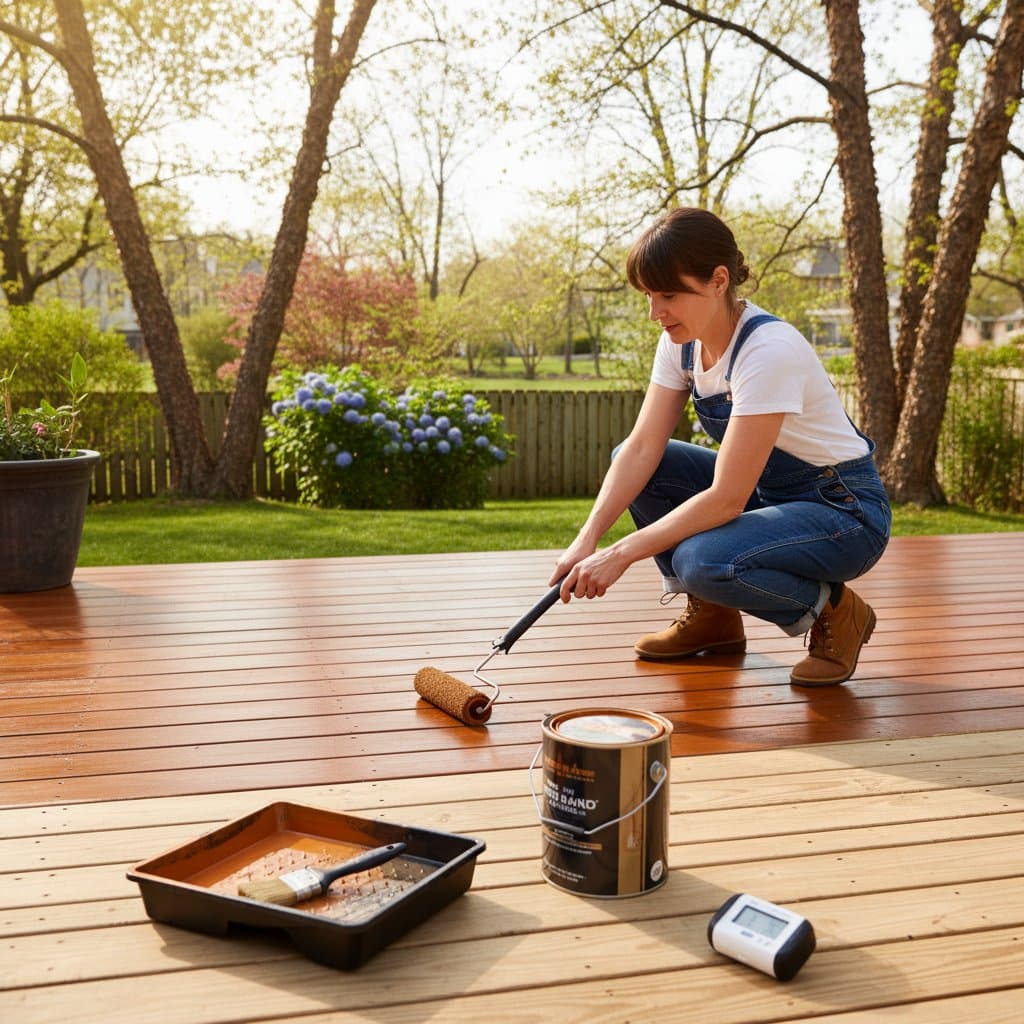
Begin with railings before progressing to floorboards. Utilize a 4-inch natural-bristle brush for oil-based products or synthetic for water-based. Maintain a wet edge to prevent overlaps.
Mastering Application Techniques
Proper execution ensures even coverage without excess or gaps, regardless of stain and timing choices.
Essential Tools
- Paint pad or roller for broad areas
- High-quality brush for details and railings
- Drop cloths and painter's tape for safeguarding
- Stir stick and rags for excess removal
Detailed Application Steps
- Stir the stain to evenly distribute pigments.
- Apply thin coats aligned with the wood grain.
- Back-brush promptly after rolling to integrate into the wood.
- Wipe surplus after 15 minutes to avoid tackiness.
- Permit full curing before foot traffic, generally 24 to 48 hours amid low humidity.
Adhere to drying durations to prevent imprints or irregularities.
Errors to Sidestep
- Thick applications lacking penetration
- Working in breezy conditions that deposit dust
- Inconsistent stirring causing shade variations
Address uneven uptake by light sanding and a subsequent thin layer. Deliberate pacing minimizes corrections.
Adapting to Spring's Seasonal Shifts
Spring variations necessitate adjustable approaches. Early phases often retain winter dampness, while later ones introduce heat and humidity.
Early Spring Focus
Prioritize cleaning, inspection, and repairs over staining. Complete washing and sanding to position the deck for later application once stability arrives.
Mid-Spring Opportunity
This interval usually offers balanced warmth and dryness. Schedule around three consecutive rain-free days for all phases: preparation, drying, and staining.
Late Spring Adjustments
Rising heat and UV intensity prompt flash-drying risks. Apply in shade, limit section sizes for edge continuity. Postpone if the surface warms excessively; resume in cooler evening hours.
Ongoing Maintenance Strategies
Post-staining care prolongs the finish's effectiveness against fading and moisture intrusion.
Everyday Upkeep Practices
- Weekly sweeping of debris to deter mold
- Mild cleanser application every two to three months
- Avoidance of aggressive pressure washing that erodes stain
- Light reapplication every two to three years per exposure levels
Test for beading; absence signals the need for renewal. Consistent habits maximize protection duration.
Safety and Accessibility Notes
For elevated or multi-tier decks, employ secure ladders and slip-resistant shoes. Individuals with mobility limitations may benefit from professional services handling prep and safety.
Deciding on Professional Assistance
Large or deteriorated decks may exceed DIY capabilities. Professionals manage extensive peeling, cracks, or subsurface mold through safe stripping and restoration.
Indicators for Hiring Experts
- Surfaces exceeding 300 square feet
- Evidence of rot or compromised boards
- Resistant prior coatings
- Intricate multi-level designs or railings
Expect costs of $2 to $5 per square foot, encompassing preparation. This investment often averts costly reapplications from subpar outcomes.
Strategies for Enduring Deck Protection
Preventive measures build on initial efforts to safeguard against future wear. Integrate seasonal inspections into routines, addressing minor issues promptly to avoid escalation. Select weather-resistant furnishings and limit direct water exposure from planters or sprinklers. By combining meticulous staining with vigilant care, the deck retains its appeal and functionality across years, enhancing outdoor living without frequent interventions.