Save Big on Winter Bills: Fall HVAC Tune-Up Essentials
A fall HVAC tune-up represents one of the most strategic investments for homeowners as cold weather approaches. This proactive service maintains the heating system's safety, reduces energy expenses, and minimizes the risk of unexpected failures during peak usage. By addressing maintenance early, individuals avoid costly emergency repairs that often arise in the midst of winter.
Why Fall Represents the Ideal Season for HVAC Maintenance
As temperatures decline, the furnace prepares to operate continuously. Conducting an inspection during this period verifies that all components perform optimally before heavy reliance begins. Service providers typically experience lighter schedules in autumn, resulting in quicker scheduling and more competitive pricing. Furthermore, this timing allows for the timely replacement of any deteriorating parts, preventing complications when heating demands intensify.
Essential Benefits of a Fall HVAC Tune-Up
-
Reduced Energy Expenses
Well-maintained systems, free from dust accumulation and with properly lubricated elements, require less energy to generate equivalent warmth. Obstructed filters and inefficient parts force the furnace to expend additional effort, which elevates monthly utility charges. -
Prolonged Equipment Durability
Routine care alleviates stress on critical elements such as motors and fans. Such attention extends the operational lifespan of furnaces or heat pumps by several years, deferring the substantial costs associated with premature replacements. -
Enhanced Indoor Air Quality
Routine filter replacements and duct cleanings eliminate accumulated allergens, including pollen, dust particles, and pet hair. This process leads to reduced allergy occurrences and decreased residue on household surfaces. -
Heightened Safety Measures
Professionals evaluate potential hazards like gas leaks, carbon monoxide risks, and electrical irregularities. These assessments safeguard occupants and ensure adherence to prevailing building codes.
Comprehensive Fall HVAC Tune-Up Checklist
Follow this detailed guide to ready the heating system for colder months. Certain steps suit independent efforts, while others demand specialized equipment and expertise.
-
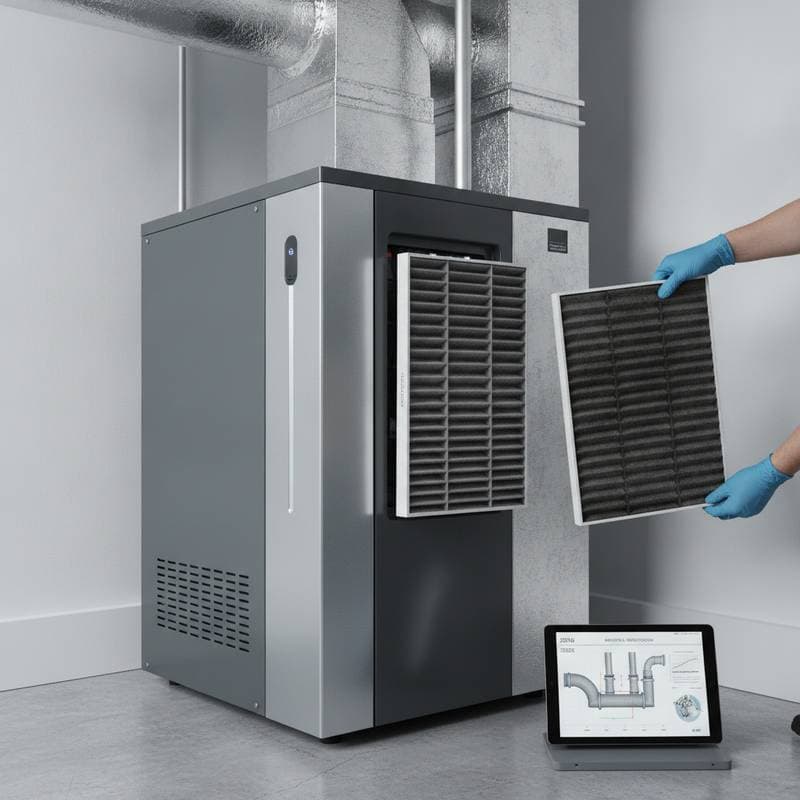
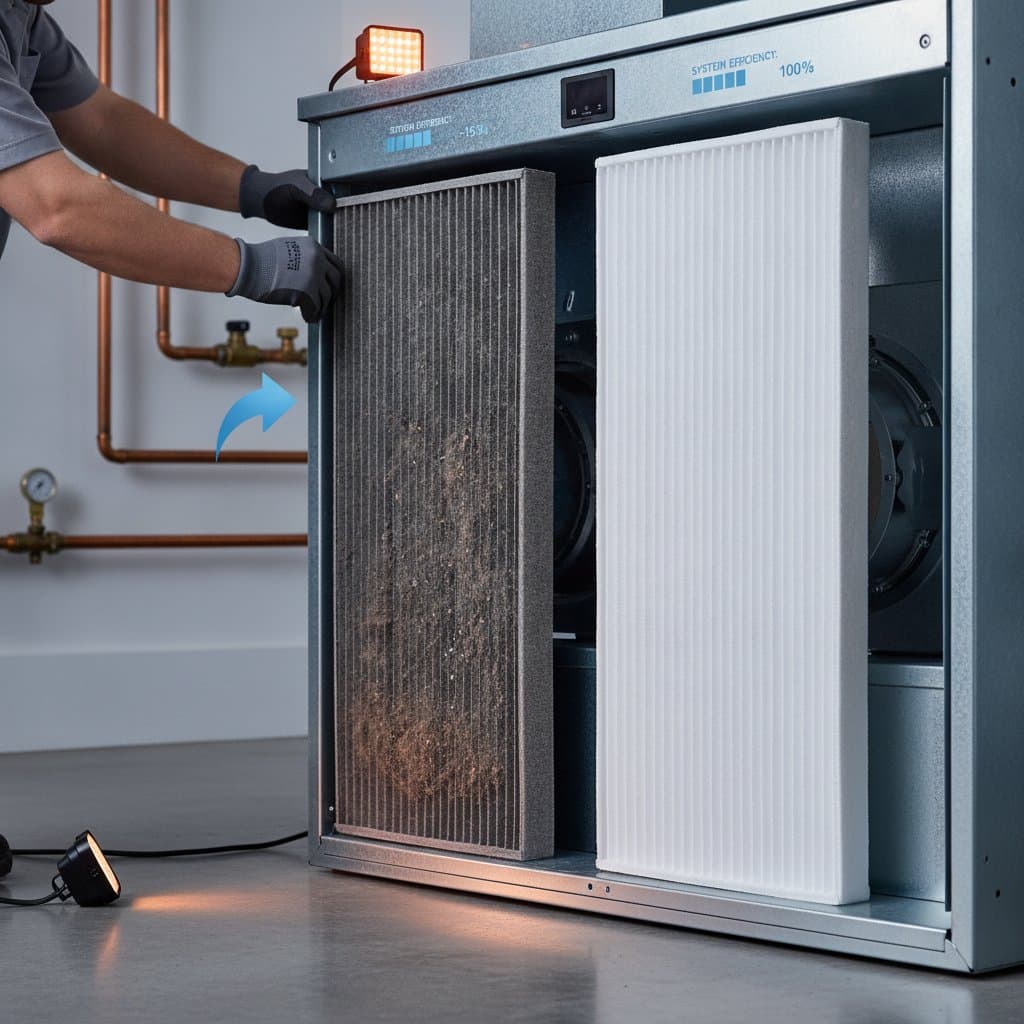
Evaluate and Renew Filters
Clogged filters impede airflow and compromise performance. Homeowners should install new disposable filters or cleanse reusable variants at intervals of one to three months, depending on usage and environmental factors. -
Clean Vents and Registers Thoroughly
Employ a vacuum cleaner or a slightly moistened cloth to dislodge accumulated dirt and debris. Ensure no household items, such as chairs or carpets, obstruct these openings, as blockages hinder effective circulation. -
Verify Thermostat Functionality
Confirm accurate temperature readings and explore the installation of a programmable model. These devices optimize schedules, such as lowering settings during unoccupied hours, to conserve energy without sacrificing comfort. -
Assess Belts and Blower Mechanisms
Pay attention to unusual noises like squealing or clattering, which indicate degraded belts or unsecured fasteners. Secure loose elements or procure replacements from hardware suppliers to restore smooth operation. -
Lubricate Essential Moving Components
Introduce appropriate lubricant to motor bearings and similar parts to minimize resistance and forestall accelerated deterioration. Consult the manufacturer's guidelines for the correct type and application frequency. -
Examine Heat Exchanger and Burner Assembly
Fractures or corrosion in the heat exchanger pose risks of harmful gas emissions into living spaces. Engage a qualified technician to scrutinize and sanitize the burner for reliable, secure performance. -
Validate Carbon Monoxide Detector Operation
Install fresh batteries and perform a functionality test on the device. Prioritizing this verification before winter activation remains crucial for family protection.
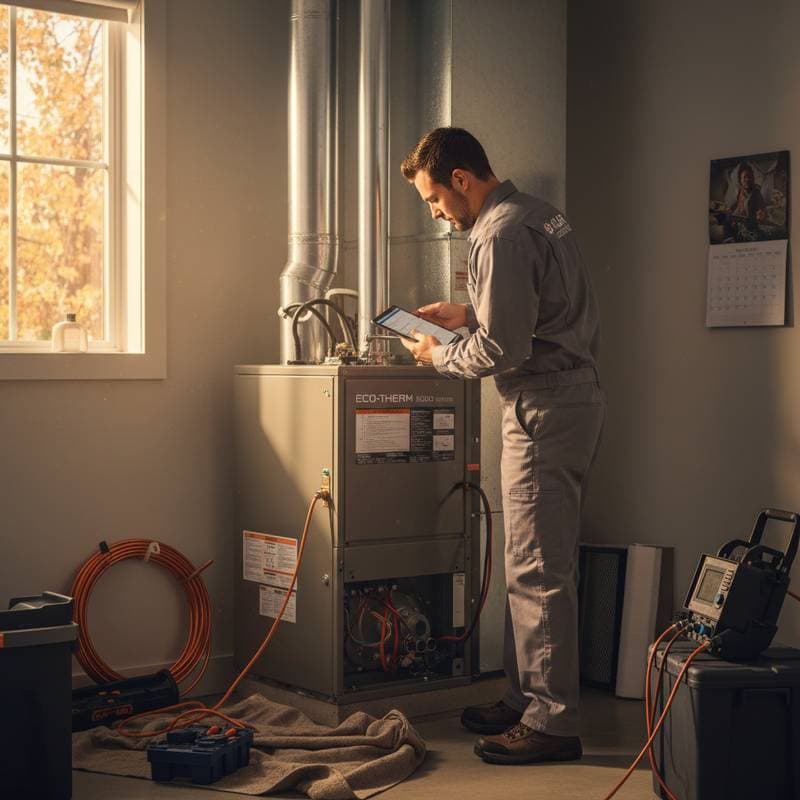
Suggested image: Technician examining a furnace interior with a flashlight, captioned HVAC professional conducting fall maintenance inspection.
Distinguishing Professional Services from DIY Approaches
Individuals can handle basic procedures like filter swaps and surface-level checks independently. However, intricate evaluations, including gas pressure calibration and electrical diagnostics, necessitate the involvement of licensed specialists. Expert tune-ups encompass advanced diagnostics such as efficiency evaluations, airflow quantification, and combustion assessments, which uncover concealed problems prior to escalation.
Annual service agreements provide numerous households with discounted rates on labor and components. Participants in such plans frequently report repair expense reductions of up to 30 percent, based on experiences shared in dedicated home care communities.
To illustrate the value, consider integrating a maintenance log that tracks filter installations, inspection timelines, and component updates. This documentation equips future service visits with valuable context, facilitating proactive issue resolution.
Cost Projections and Potential Savings
Autumn HVAC assessments generally incur fees lower than those for urgent winter interventions. Many owners recoup this expenditure via diminished heating costs over the initial weeks of use. Optimized systems demonstrate energy reductions of up to 15 percent, directly reflected in streamlined utility invoices. Proactive investment averts catastrophic breakdowns that could demand full system overhauls, preserving long-term financial health.
Suggested chart: Comparative bar graph depicting Energy Consumption Before and After Tune-Up, highlighting efficiency gains through visual data.
Implementing Your Tune-Up Plan
Establish an annual calendar alert to book services ahead of the initial frost. Maintain a detailed record of all maintenance activities to monitor trends and enhance system reliability. Through diligent adherence, homeowners secure consistent warmth, purified air circulation, and sustained economic benefits throughout the heating period.