Safeguard Your Home: Key Fall Chimney Maintenance Steps
Cooler temperatures signal the return of fireplace use, making chimney care a critical priority for home safety. Neglected chimneys invite smoke accumulation, compromised air quality, and potential fires. Proactive preparation optimizes performance and secures your living space through winter.
This guide outlines practical steps for homeowners to assess and maintain their chimneys effectively.
Evaluate the Chimney Exterior
Begin with a visual assessment of the chimney's outer structure. Identify cracks in the mortar joints, displaced bricks, or deteriorating stone. Such vulnerabilities permit water entry, which expands in cold weather and escalates into extensive damage.
Examine the flashing that seals the chimney-roof connection. Ensure seals remain intact without corrosion or separations. Water leaks here frequently cause interior water damage, including stained ceilings adjacent to the fireplace.
Address visible issues promptly by engaging a qualified masonry expert. Early intervention prevents minor problems from evolving into structural failures requiring significant investment.
Assess the Chimney Cap and Crown
The chimney cap serves as a barrier against precipitation, wildlife, and debris. Verify its secure installation and inspect the mesh for blockages from leaves, nests, or residue. Absence or impairment of the cap heightens risks of obstruction and ignition sources.
Inspect the crown, the protective top layer over the flue opening. Search for fissures or areas where water collects. Apply a breathable waterproof sealant to mitigate freeze-thaw cycles that degrade masonry.
Opt for flexible, durable coatings recommended by specialists to prolong the crown's integrity and resist environmental stresses.
Thoroughly Clean the Firebox
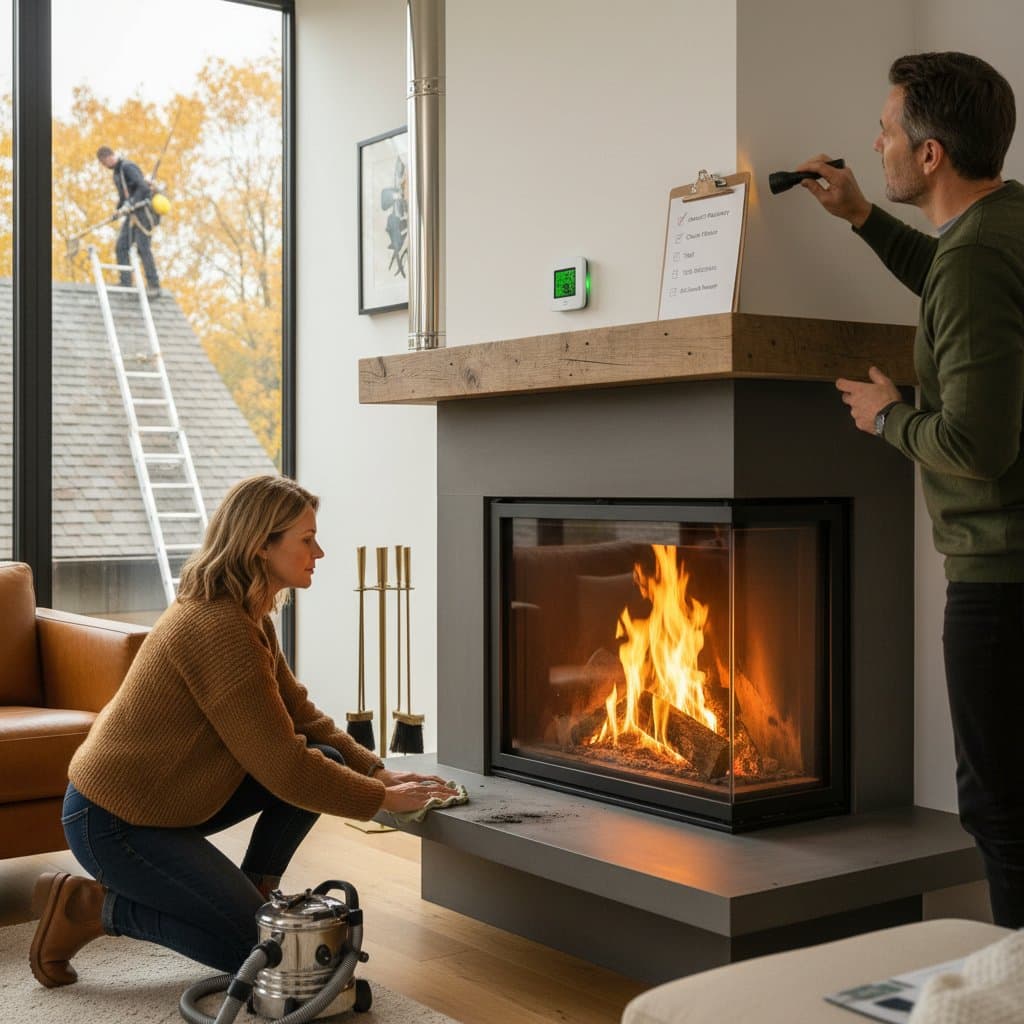
Prior to igniting the season's initial fire, clear the firebox of accumulated ash, soot, and remnants. Employ a metal scoop and designated ash container, followed by a vacuum suited for fine ash particles. Examine firebricks for fractures or eroded mortar; replace compromised sections to shield adjacent building materials from excessive heat.
Routine cleaning enhances aesthetics and reveals underlying deterioration early. Homeowners benefit from periodic firebox maintenance after several uses, simplifying comprehensive seasonal preparations.
Verify Damper Functionality
The damper regulates airflow from the fireplace to the chimney. Fully open it and confirm smooth operation without resistance or unusual noises. Clean stubborn components with a wire brush and lubricate hinges using a heat-resistant product.
Ensure complete closure to block unwanted drafts and outdoor elements. Inefficient dampers contribute to energy loss by allowing heated air to escape. Consider upgrading to a top-sealing damper, which enhances insulation and excludes pests more effectively.
Such improvements can substantially cut heat loss, promoting greater comfort and fuel economy during heating seasons.
Arrange for Professional Chimney Sweeping
Homeowner efforts complement but do not replace expert cleaning services. Burning wood generates creosote, a flammable deposit that builds within the flue and poses fire threats. Annual professional sweeps, or more frequently with heavy use, remove these hazards thoroughly.
Trained technicians deploy specialized tools to scour the entire flue, eliminating buildup and detecting issues like blockages or structural weaknesses. Services typically range from one hundred to three hundred dollars, scaled by chimney dimensions and regional factors.
Select certified professionals affiliated with recognized safety organizations. Request documentation of the inspection, including visual evidence of the cleaning process and a summary of findings.
Test Smoke and Carbon Monoxide Alarms
Fireplace operation influences indoor air composition significantly. Confirm the operational status of smoke and carbon monoxide detectors positioned near living spaces and sleeping areas. Swap out batteries and activate tests to verify prompt alerting capabilities.
Supplement existing units if multiple heating appliances exist in the home. Reliable detection systems provide essential protection against silent dangers like gas accumulation from incomplete combustion.
Advanced models with remote notifications offer enhanced vigilance for modern households.
Inspect the Chimney Liner
The liner channels exhaust gases outward while insulating the home from intense heat. Traditional clay or metal liners may develop cracks or rust over time. Peer into the flue with illumination for initial clues, though expert evaluation yields precise diagnostics.
Unlined chimneys demand liner installation to bolster safety and airflow. Contemporary stainless steel options withstand corrosion and endure for extended periods with diligent upkeep.
Initial costs for liners prove economical by averting premature chimney replacement and sustaining overall system longevity.
Clear the Fireplace Surround
Maintain clearance around the fireplace by removing combustible items like textiles, furnishings, or fuel stores. Position firewood stacks at a minimum distance of three feet to avert ember ignition. Secure a fitted screen over the opening to confine flying sparks.
Review the hearth for surface irregularities or instability. A solid, debris-free hearth extension minimizes accident risks and streamlines daily operations.
Resolve Odor and Draft Concerns
Persistent smells or reverse flows indicate ventilation deficiencies or home pressure imbalances. Experiment with slight window openings during fire startup to facilitate proper draft. Persistent challenges warrant professional analysis of flue configuration.
Solutions may involve damper adjustments, auxiliary air intakes, or minor height extensions. These targeted modifications elevate combustion efficiency and eliminate indoor smoke intrusion.
Sustain Long-Term Chimney Health
Fall maintenance extends beyond immediate tasks to foster enduring protection, efficiency, and security. Well-tended chimneys operate with reduced emissions, conserve resources, and lower fire incidence.
Document all maintenance activities in a dedicated record. This log aids in monitoring trends, justifying claims, and upholding home equity, particularly where fireplaces enhance aesthetic appeal.
With these measures in place, enjoy reliable, hazard-free hearth warmth throughout the season. Professional assistance streamlines the process for those with limited time, ensuring optimal results.