2025 Detached ADU Costs: Essential Permits Explained
Detached accessory dwelling units offer homeowners a versatile method to enhance property space and value. These standalone backyard structures provide independent living quarters suitable for rentals, guest accommodations, or dedicated workspaces. Homeowners must grasp the associated costs and permitting demands to ensure project viability and seamless execution.
Key Elements of Detached ADU Costs
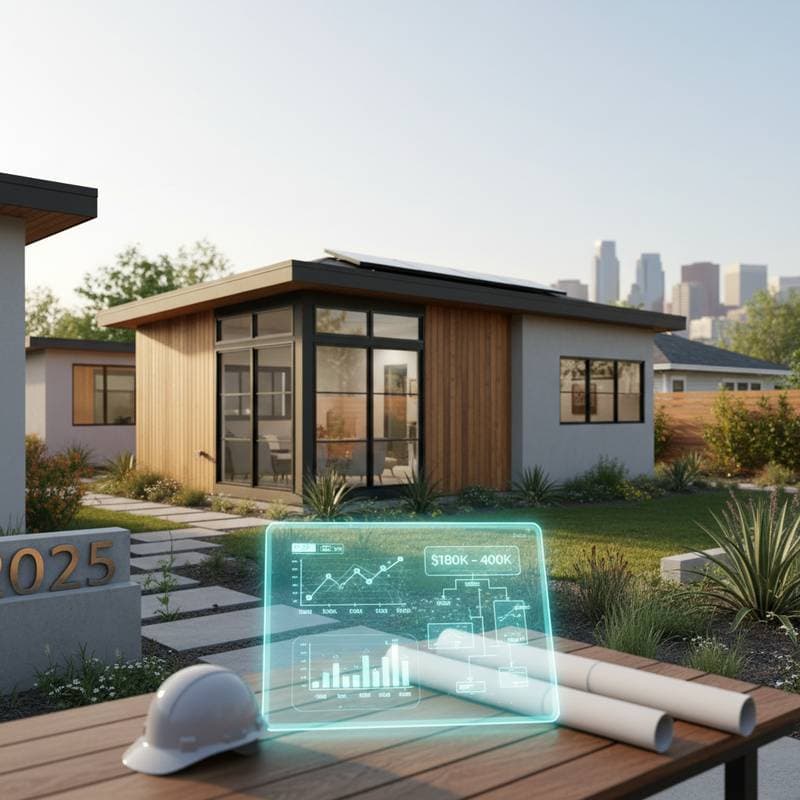
Erecting a detached ADU encompasses diverse expense categories that extend past foundational construction. Total expenditures generally span $180,000 to $400,000, varying with unit size, material selections, and terrain challenges. Basic configurations with essential amenities fall toward the lower threshold, whereas elaborate designs featuring premium kitchens and refined aesthetics reach the upper limit.
Primary Cost Breakdown
-
Design and Planning Phases
Architectural renderings, engineering assessments, and optional interior consultations comprise design expenses, totaling $8,000 to $20,000 based on project intricacy. Local municipalities frequently supply pre-vetted blueprints, which expedite approvals and curb outlays. -
Permitting and Administrative Fees
These charges fluctuate by locale, averaging $5,000 to $15,000, and cover building authorizations, infrastructure levies, utility hookups, and potential ecological evaluations. Consult jurisdiction-specific schedules promptly to anticipate financial commitments. -
Site Development and Utility Integration
Tasks such as earthmoving, leveling, and conduit installation contribute $10,000 to $25,000. Properties with uneven topography, mature vegetation, or intricate drainage connections incur elevated figures. Electrical service expansions or dedicated water installations may prove necessary. -
Core Construction Expenses
Framing, roofing, thermal barriers, piping, and surface treatments dominate the budget at $300 to $500 per square foot, influenced by supply choices and workforce pricing. Modular assemblies offer reductions yet constrain personalization options. -
Interior Outfitting and Equipment
Elements like surfacing, storage units, work surfaces, and built-in devices range from $15,000 to $50,000. Opt for balanced selections to harmonize durability and affordability; sustainable installations minimize ongoing energy demands. -
Exterior Enhancements and Landscaping
Pathways, illumination, and screening features finalize the installation, budgeted at $3,000 to $10,000 according to project scale.
Critical Permit Categories
Permits enforce adherence to regulatory standards for structural integrity and occupant safety. Noncompliance risks penalties or structure removal. Local authorities dictate specifics, though standard requirements include the following.
Building Authorization
This core permit governs foundational, mechanical, and wiring installations. Submissions demand comprehensive schematics, property diagrams, and load analyses. Approval timelines vary from weeks to months amid departmental workloads.
Zoning Verification
Prioritize confirming property eligibility for ADU placement within residential designations. Constraints typically involve parcel dimensions, boundary offsets, and elevation caps. Municipal guidelines cap impervious surface coverage; a preliminary zoning assessment validates design alignment.
Utility Linkage Approvals
Distinct endorsements often apply to water, waste, fuel, and power integrations. Shared infrastructure suffices in select regions, but dedicated lines predominate elsewhere. Utility providers conduct independent verifications, necessitating synchronized scheduling.
Infrastructure Impact Charges
Certain municipalities impose fees to fund community amenities like transportation networks, recreation areas, and educational facilities. Calculations derive from unit dimensions, with some areas easing or eliminating these for ADUs, though full assessments persist in others, inflating budgets by thousands.
Fire Protection Mandates
Proximity to primary residences or code stipulations may require flame-resistant barriers, suppression arrays, or widened access routes. Such provisions add $2,000 to $10,000 yet safeguard lives and secure approvals.
Structured Permitting Timeline
Dismantling the approval sequence clarifies procedural demands.
-
Investigate Regional Guidelines
Access municipal planning portals or engage staff to clarify size thresholds, vertical limits, and vehicle accommodation rules. ADU resource guides distill essential directives. -
Draft Initial Schematics
Collaborate with design specialists to outline configurations respecting site constraints, including margins, entry routes, and service provisions. Robust preliminary visuals accelerate subsequent phases. -
Initiate Zoning Evaluation
Present draft visuals for land-use scrutiny to affirm regulatory conformity prior to detailed engineering. -
Finalize Technical Drawings
Post-zoning clearance, produce in-depth illustrations for load-bearing, ventilation, and circuitry elements, aligned with prevailing standards. -
File for Construction Clearance
Tender complete documentation alongside fees of $3,000 to $10,000, retaining documentation of transactions and interactions. -
Arrange Progressive Reviews
Commence building upon endorsement, timing evaluations for basework, skeletal assembly, conduits, and culmination. Clearance at each juncture advances the sequence. -
Obtain Occupancy Certification
Final endorsements yield this validation, confirming code fulfillment for lawful habitation or leasing.
Strategies for Expense Reduction
Targeted choices mitigate outlays while upholding standards.
- Adopt Standardized Blueprints: Municipal templates satisfy norms and slash design expenditures by up to 40 percent.
- Streamline Architectural Forms: Straight-edged profiles and conventional coverings diminish fabrication demands.
- Select Practical Interiors: Resilient options like synthetic planking or synthetic surfaces trim completion costs without compromising appeal.
- Scale Down Dimensions: Units of 400 to 600 square feet suffice for most purposes, yielding lower upfront and operational savings.
- Engage Integrated Teams: Design-build entities oversee planning and execution, fostering efficiency and curtailing holdups.
Frequent Approval Obstacles
Anticipating pitfalls preserves momentum and funds.
- Boundary Encroachments: Measure offsets meticulously; employ surveying for precision.
- Service Pathway Impediments: Identify subsurface conduits via utility locates before digging.
- Community Covenants: Scrutinize association charters for supplementary aesthetic or material dictates.
- Submission Deficiencies: Verify completeness against checklists to evade resubmissions.
- Financial Surpluses: Allocate 10 percent reserves for mid-project adjustments.
Assembling Expert Support
Specialized collaborators optimize outcomes.
- Design Principal: Formulates code-compliant visions.
- Load Specialist: Validates stability against environmental stresses.
- Project Overseer: Directs trades and regulatory adherence.
- Approval Navigator: Accelerates bureaucratic navigation in congested systems.
Solicit ADU portfolios, client endorsements, and multiple bids; prioritize forthright billing and dialogue.
Funding Pathways
Secure resources through equity draws, build-specific advances, or refinance maneuvers. Flexible credit lines accommodate phased disbursements. Financial institutions weigh income projections from leasing. Community insights reveal that revenues frequently recoup advances swiftly post-occupancy.
Pair contractor projections with lender parameters, buffering for variances in services or approvals.
Enduring Advantages
ADUs elevate market appeal, with analyses indicating 20 to 35 percent premiums over non-equipped comparables. Leasing yields consistent returns, easing housing costs or aiding dependents.
Sustaining the Addition
Routine upkeep preserves performance. Conduct yearly checks on coverings, lines, and circuits; address drainage, facades, and coatings proactively. Archive approvals, verifications, and guarantees.
Practical Steps Forward
- Launch approvals ahead of timelines.
- Inform adjacent residents of disruptions.
- Mark controls and post contacts internally.
- Photograph progress for protection and transfer.
- Draw from peer networks for insights.
Advancing Your ADU Project
Detached ADU development demands diligence yet delivers substantial returns. Command of expenditures and approvals empowers strategic choices, sidestepping impediments. Methodical preparation, precise allocations, and adept counsel convert challenges into accomplishments.