Fall HVAC Filter Swap for Peak Comfort
A home never feels quite right when the air feels stuffy or the system struggles to maintain even temperatures. As cooler weather approaches, many homeowners overlook a simple yet impactful maintenance task that influences comfort, efficiency, and health: replacing the HVAC filter. The fall season provides an optimal opportunity to refresh the system, and grasping the how, when, and why of this process can transform the home environment for the months ahead.
Why Fall Marks the Ideal Time for Filter Replacement
HVAC systems operate intensively through cooling and heating cycles. Following a summer of continuous operation, filters accumulate substantial dust, pollen, and debris. Delaying replacement forces the system to force air through obstructions, which diminishes airflow and overall comfort. Clean filters enable smoother operation, consistent temperatures, and energy reductions of up to 15 percent, as noted by the U.S. Department of Energy.
Seasonal transitions from cooling to heating demand preparation. Fall filter changes clear summer residues and ready the furnace or heat pump for increased winter loads. With windows closed more frequently, this timing also enhances indoor air cleanliness.
Recommended Replacement Schedule
Most disposable HVAC filters require replacement every 60 to 90 days. In households with pets, smokers, or allergy sufferers, more frequent changes every 30 to 45 days prove necessary. For high-efficiency filters with MERV ratings of 11 to 13, perform monthly inspections to avoid airflow restrictions. Premium filters diminish in performance once they appear gray or dusty.
Understanding MERV Ratings
The Minimum Efficiency Reporting Value, or MERV, scale ranges from 1 to 16, with higher numbers indicating superior particle capture. Consider this reference guide:
| MERV Rating | Captures | Best For |
|---|---|---|
| 1 to 4 | Large dust and lint | Basic protection in older systems |
| 5 to 8 | Dust, mold spores, pet dander | Typical residential use |
| 9 to 12 | Fine dust, pollen, smoke | Allergy reduction |
| 13 to 16 | Bacteria, fine particles | Homes requiring hospital-grade air quality |
Homeowners often select MERV 8 to 11 for optimal balance between air purification and system flow. Consult the system manual or an HVAC technician if uncertain about upgrading ratings.
Indicators That Replacement Is Due
Busy schedules can disrupt planned maintenance. Recognize these symptoms of a clogged filter to address issues promptly:
- Reduced airflow from vents, even with the fan active
- Uneven heating or cooling across rooms
- Visible dust accumulation near vents or on the filter
- Increased energy bills without thermostat adjustments
- Heightened sneezing or stuffy indoor air
Upon noticing any sign, inspect the filter without delay. This action prevents costly repairs and extended run times.
Guide to Replacing the Filter
Filter replacement ranks among the simplest home upkeep tasks. Allocate ten minutes and proceed as follows.
- Power down the HVAC system at the thermostat to halt airflow.
- Identify the filter compartment, typically behind a return air grille or within the air handler.
- Note the dimensions on the existing filter, such as 16x20x1 inches, for accurate purchasing.
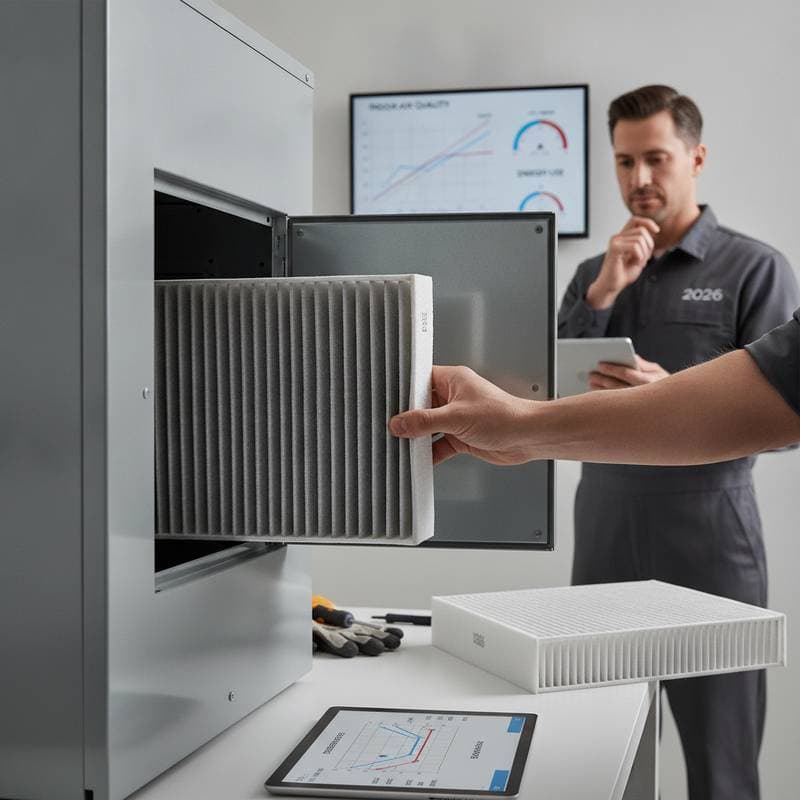
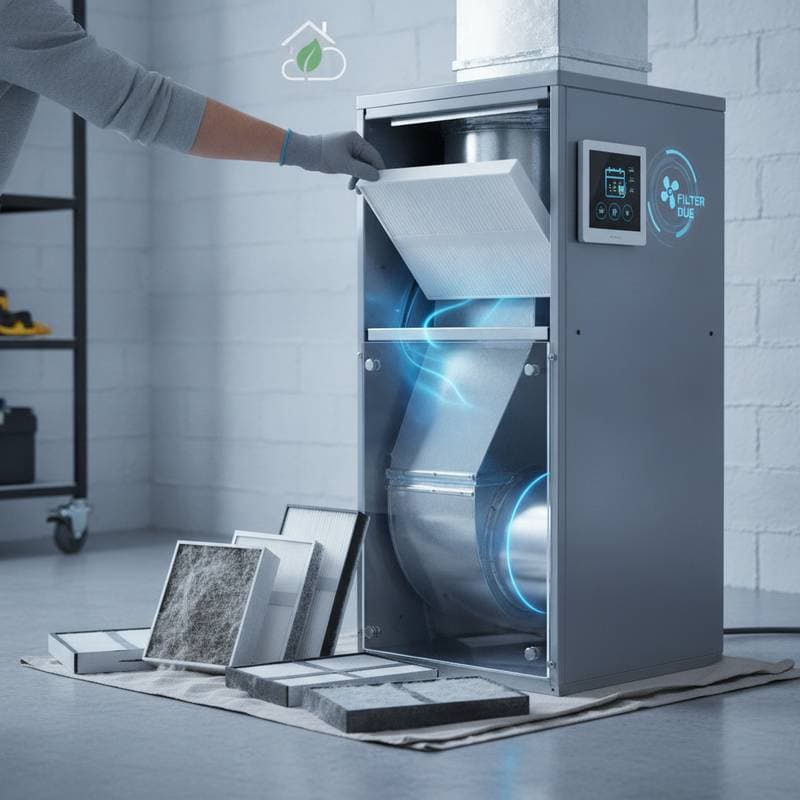
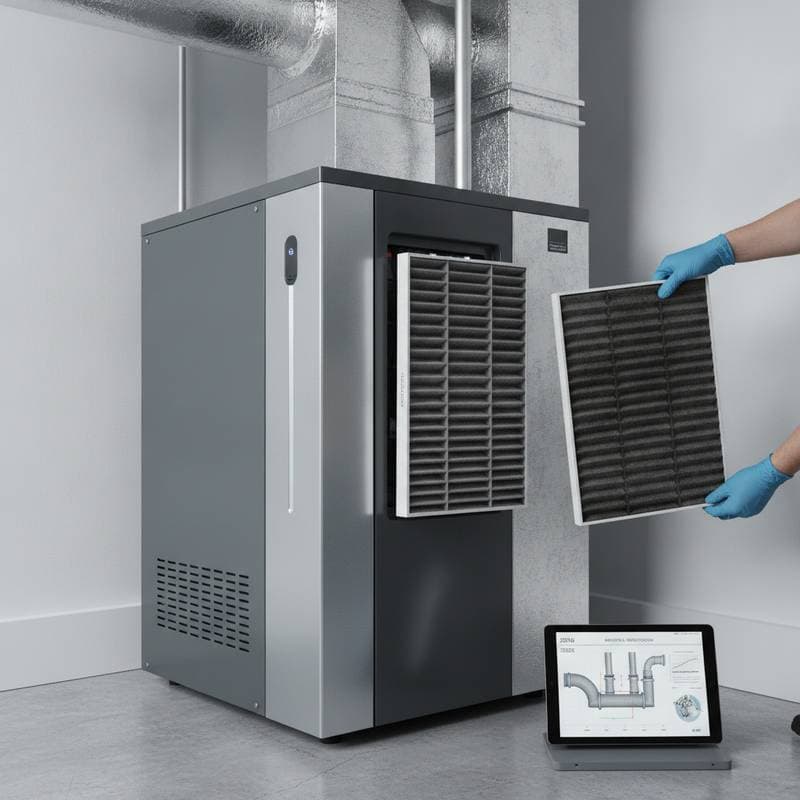
- Extract the old filter gently to minimize dust dispersal.
- Position the new filter with the airflow arrow aligned toward the blower.
- Reattach the cover securely and reactivate the system for improved quietness and air quality.
Mark the installation date on the filter frame with a permanent marker. This practice simplifies subsequent monitoring.
Selecting Appropriate Filter Materials
Filters vary by construction, each offering distinct advantages in durability, efficacy, and expense.
| Type | Lifespan | Cost Range | Description | Best For |
|---|---|---|---|---|
| Fiberglass | 30 days | Low | Thin, disposable with basic filtration | Budget-conscious homes |
| Pleated polyester | 60 to 90 days | Moderate | Enhanced capture of dust and pollen | General household use |
| Electrostatic | 90 days | Moderate to high | Static charge draws particles | Allergy-prone households |
| Washable | Up to 5 years | Higher upfront | Reusable following thorough rinsing | Eco-friendly users who clean monthly |
| High-efficiency (HEPA-like) | 90 days | Higher | Captures microscopic contaminants | Homes with sensitive residents |
Pleated polyester filters, properly sized, deliver reliable performance at a reasonable price point.
Pitfalls to Sidestep During Replacement
Even seasoned homeowners encounter common oversights. Steer clear of these to safeguard system performance.
- Selecting an ill-fitting size, which permits unfiltered air leakage
- Reversing the airflow direction, straining the blower motor
- Reinstalling damp washable filters, risking mold growth
- Postponing inspections until system malfunctions occur
- Layering multiple filters, which impedes flow and invites overheating
A properly installed, single filter outperforms improvised setups.
Addressing Accessibility and Unique Needs
Certain residences require tailored approaches to filter management and air purity.
- In apartments or condos, filters often hide behind ceiling vents; employ a stable ladder and screwdriver for access.
- For elderly or mobility-challenged individuals, schedule seasonal service from local HVAC providers.
- Allergy sufferers benefit from MERV 11 or higher filters replaced every 45 days.
- Pet owners face accelerated clogging from fur; supplement with weekly vent vacuuming.
- Energy-efficient homes with tight envelopes amplify indoor pollutants, underscoring regular filter upkeep.
If the filter location remains unclear, request a demonstration from an HVAC professional during routine service.
Deciding Between DIY and Professional Assistance
Most replacements suit DIY efforts, requiring just a screwdriver and flashlight. Standard pleated filters cost 10 to 30 dollars each, while high-efficiency models range from 40 to 80 dollars.
Engage a professional for scenarios such as:
- Compartments sealed within intricate air handlers
- Persistent dust post-replacement
- Suspected duct issues or imbalanced airflow
- Transitions to advanced MERV levels needing compatibility checks
Technicians also perform coil cleaning, refrigerant assessments, and duct inspections to maximize filter benefits.
Realizing Savings Through Proper Maintenance
Unobstructed filters promote efficient airflow, reducing system strain. Timely replacements yield 5 to 15 percent energy reductions, translating to seasonal cost decreases. They further avert damage to expensive parts like blower motors and heat exchangers.
Purchase filters in bulk for discounts, storing spares in a dry, flat area to encourage adherence to schedules.
Establishing Year-Round Maintenance Routines
Integrate the fall filter swap into broader upkeep practices. Adopt this seasonal checklist for sustained home efficiency:
- Vacuum supply and return vents thoroughly
- Examine weather stripping on doors and windows
- Replace thermostat batteries as needed
- Remove debris from outdoor condenser units
- Ensure furniture does not obstruct vents
Consistent habits preserve comfort, lower expenses, and extend equipment longevity throughout the year.